ON THE WINGS OF THE DAWN:
THE REMINISCENCES OF ARCHIMANDRITE
BONIFACE AT HIS GOLDEN JUBILEE OF PRIESTHOOD
Copyright 1992, The Metropolitan Andrey Sheptytsky Institute of Eastern Christian Studies.
Interviewer: Now that there is so much ado about priestly vocations, from encyclicals by a concerned Pope John Paul II to articles in diocesan papers, I am sure that this Jubilee has caused you to reflect on your own vocation.
Archimandrite Boniface: You are right. Yet, basically it is very simple to celebrate such a Jubilee. Only two basic things are required: God has to call you in the very beginning, and He has to keep you alive until the end!
Interviewer: You make it sound so simple, yet the basic problem remains the same: that of your vocation. May we know some more about that?
Archimandrite Boniface: Only, I would not call it a problem, but a Mystery. Perhaps we are used to seeing a vocation too much in the narrow parameter of the person himself (or herself), and not enough in the whole context of God’s plan that He gradually unfolds in the life of that particular person. And then it becomes a wonderful process of gradual incarnation. All this is, of course, sheer Grace, sheer gracious kindness from Above, in spite of the person’s unworthiness.
Interviewer: And has this happened in your life too?
Archimandrite Boniface: I really think so. It started very early. Here is just a little story of a child. In church, the boys were sitting on the “little benches” right in front of the Communion rail. I was five years old and had not yet received my first Communion, as was the custom in our village. A boy next to me came back from Holy Communion and spit out the Blessed Host. I was deeply shocked, picked up the Host and consumed it most reverently. At that moment something very strong happened deep within me. I was healed (I had always been a sickly little boy before), and I heard Somebody saying: “I love you. Be with Me always…” I had never told this story when I was young; but gradually I understood that I was “called.” And later on, as I grew up, I often heard the same voice at important moments of my life; I knew I was not to marry or stay in the world.
Interviewer: That is amazing. What role did your family play in the process?
Archimandrite Boniface: They played a very important role. First, my parents. My mother, for her whole life even until her death, had fasted every Friday and prayed on her knees every Thursday night until Friday morning to obtain the grace of the priesthood for one of her sons. I have always felt my vocation to be a direct result of my mother’s prayer and fasting. And I am convinced that, if all our Christian mothers would do the same, you would see so many vocations that our seminaries and monasteries would soon be too small to accommodate them.
Then there was the general “style” of our family. We were eleven children at home. I was born during the first World War, a time of great hunger and poverty. My parents adopted two more families of four and five children. Yet the spirit among all of them was so good. We were truly a praying and celebrating family because both my parents liked the way of life, and the whole social atmosphere of that blessed period helped them in living that way. Prayer at home and especially going to church was a very important part of our life, together with the education by my mother (mostly storytelling from the Bible and from the old wisdom and proverbs of the Limburg province—that beautiful patriarchal society), and there was much singing and playing the old folk songs which my mother knew by heart. Also, the village school, which was truly Catholic, had a deep impact upon my dawning young life.
The whole village was drawn up around the old church tower as around its beating heart: a colossal brown brick building from 1388, where still two of the five original bells kept calling the people to worship in the church—and this church was especially precious to us since it was built in 1902 by my father as his “masterpiece” to win the love of his future bride, my mother. All the people lived as an extended family around this tower as around an age-old patriarch. Yet they were not backward people; they shared with the whole world. For example, my father went to Germany to earn his diploma as a builder. Others went to France, still others to Russia; and all came back with the story of their adventures. It was in such a milieu that, while I was still very young, I got in touch with refugee children from Hungary and especially Ukraine who gave me that obscure, yet very real inner longing for the Eastern Church. That “nostalgia” for Eastern Catholicism never left me, and it has come to full fruition here at Mt. Tabor Monastery. Truly, people of olden times were not backward or closed in on themselves. They breathed the rhythm of the whole world and taught their children to do the same, but always on the basis of their own culture which had been built up and supported by their religion.
In short, a religious or priestly vocation found, in family and village, its natural soil where it grew up unhindered and strong. Not that all these people were saints, but all shared in the same deep-seated eagerness to live a truly Christian life, in the still “closed society” (often cursed yet truly blessed) of family and village community. I am so grateful for this irreplaceable grace of my childhood that has left its mark on my whole life.
Interviewer: Do you think that such an environment would still be possible in our modern fragmented society? Sometimes it seems that society itself is irreversibly broken up in our pluralistic world. There are tragic consequences for vocations, among other things.
Archimandrite Boniface: I agree with you; and some kind of romantic dreaming should not blind us to the reality of change. Yet, on the other hand, did we Christians not unduly and too quickly surrender to the pressure of secularism? Especially to the pressure of some modernistic theologians from our own ranks who have relentlessly insisted that this secularistic approach is the only right one and is here to stay, at the peril of Christianity itself? For them, the “world” (cursed by Christ! See John 17:9) is the only environment in which it is desirable to live. So, for example, we should not succumb to attacks on the family, the holiness of sex, the indissolubility of marriage, the parental authority above the pressure of peers, or our precious Christian freedom and orthodoxy. We need to be armed spiritually and intellectually against the constant brainwashing by the secularistic mass media and the erroneous teachings of those theologians who, blatantly or subtly, reject the doctrines and teaching authority of the Church. All this has created precisely the cultural atmosphere in which good vocations (all vocations—also to holy married life) are choked to death, or at least in which their survival is threatened. And so many of our spiritual leaders give the impression that they are not properly evaluating what is going on.
Interviewer: It seems clear that the divine Mystery of the Calling your mentioned in the beginning—which stands behind every vocation as the continuous power of Jesus’ love and Mary’s care—calls for its appropriate “environment,” just as the rediscovered need to preserve the natural environment for all living species has shown us. Where the “what” and the “why” of faith itself are rejected wholesale, a vocation becomes ridiculous. Monks are particularly aware of that. But what was the next step in the growth of your own vocation? How long did you stay in your village?
Archimandrite Boniface: The first deep crisis of my life happened when my parents sent me, eleven years old, as a boarding student to St. Josef College of the Jesuits in Turnhout (because there was no such school near our village in Limburg). From both sides, from my family and from the Jesuits, they tried to make this traumatic transition from home to a boarding school as congenial as possible. The first two years I wept inconsolably—but an old missionary from India came every evening, when I was in bed, to bless me, as my parents did at home; and that was very good. But gradually, as by osmosis, I felt the spirit of the place penetrating my life, even though I was too young to name it. But, seen in retrospect, it was the spirit of this faith community where everything and everyone was geared toward a closer walk with Christ. My professor of the third year (all the professors and “surveyors” of the College were Jesuits, often fairly young ones), Fr. Seeldrayers, made an especially deep impression upon me. He initiated us into the Flemish Mystics (e.g. Ruysbroeck), liturgical life (especially the Eastern liturgies) and, most importantly, a very personal and deep prayer life. I must say that during these hours of prayer in church during the vacation time of that year, my contemplative vocation was born. I am still puzzled how I could sit praying for hours without tiring. But it is as if these hours are still lingering on, down deep someplace where they have never stopped, even to this day.
This living in a community of faith must inevitably bloom open into many vocations. From our class of fifteen graduates, nine became priests or religious, and all the others founded beautiful Christian families. But through the crisis after the Council, secularism has wreaked havoc here as well. By giving up the religious, Catholic character of the college, the whole spirit has become secularized, and vocations are rather rare. It is so sad… As for me, I will always remain grateful for what I received there. It is remarkable: as they told me, I had talents for languages, for drawing, and for music. Several times I even played my cello on the radio, together with my brother Theo on the piano (both my brother and my cello have remained my intimate friends my whole life). So my spiritual directors strongly advised me to become a Jesuit, to put these talents to good use; but I wanted to become a monk and “disappear” into a monastery. And do you know what happened afterward? It was precisely these talents that I “buried” in a monastery that became the most useful tools for God’s work. The many languages I knew were very useful for my scientific work on liturgy. My talent for drawing and aesthetics made me the president of the Commission for Church Architecture later on in Africa. My talent for music enabled me to edit more than 200 authentic African compositions of liturgical music. So I kept telling myself, “Brother, don’t worry about following God’s plans with your life, for He will write straight in man’s crooked lines.”
Interviewer: But how did you ever land in that far-away Norbertine Abbey of Postel? That seems rather puzzling.
Archimandrite Boniface: For me, too—at least, humanly seen. But one should again see God’s hand in this. Postel was only eight miles away from my home village, with nothing but forests and heath between. We often trekked on foot through this moor to attend Vespers in the Abbey. So we knew it pretty well. Then came a good friend of the family, Fr. Emil Stalmans (the future abbot of Tongerlo Abbey) who knew me very well. He told me: “You have the contemplative soul of a monk. You want to live the simple life of the Gospel. Your dear mother has prayed so much for you to become a priest. For all these reasons, Postel will be the best place for you.” So I entered in 1934.
I have always loved the place, for many reasons. Although the lifestyle was a little rough, the winters cold, and the solitude often depressing, the spirit was good, as a true family under the late Abbot Hugo Bennebroek. I loved the Liturgy and the time for prayer. The natural environment was a gorgeous and the old Romanesque church from the twelfth century (uninterruptedly used for worship by the monks for 800 years) was the true “home of my soul.” It was also during this period that my love for the Eastern Church grew more and more, as for my true spiritual home. Our liturgical and spiritual formation was excellent, under the loving guidance of our novice-master, Fr. Sprenger, who became a very dear friend. I especially remember our dedicated cantor, Nicholas, who worked our choir up to be the best church choir in all of Holland and Belgium, and gave us unforgettable remembrances of beauty in the Lord.
I studied and worked hard. But my health was not good (that ever-present “thorn in the flesh”—2 Cor.12:7), and that has caused me so much suffering all my life, even until now. But I felt myself growing from a teenager to an adult man, in closeness to the Beloved. This was a very enriching time, for which I will always remain grateful to my Abbey and to all those who were instrumental in this enrichment. We really lived daily, as a fish in water, in the Mystery of Calling mentioned earlier, but now more and more fully “materialized” in daily life. Therefore, I remember that during these six years of formation, one of the Gospel texts that made a very deep impression upon me was the story of the calling of the first disciples in John 1:35-42. Andrew and John asked Jesus, “Master, where do you live?” and He answered them, “Come and you will see.” And I remembered then the beautiful homily of St. Augustine about the unspeakable sweetness of this first night’s meeting which these first-called disciples could never forget. This story was really meant for me; I know that, deep in my heart. And then I heard Jesus’ promise in John 1:50, “You will see greater things than these,” and I looked forward to what these greater things could be.
A year before my ordination my mother died, after a long illness. She, who had so eagerly longed and sacrificed to see one of her seven sons a priest, first had to make the extreme sacrifice of her very life to make this dream come true. It was a great riddle for me, but I grew more and more sure, throughout my maturing priesthood, that indeed her death was the price of God’s love for the grace and unfading fervor of my priestly life. It also confirmed my statement in the beginning, that a true vocation is really a Mystery of salvation, mysterious but real—and, after all, wonderful. My father especially suffered of his wife’s early decease. He lived twelve more years, surrounded by the love of all his children, but that void in his life always remained. They were a very close, loving couple. But his pain was also a part of that great Mystery of salvation that brings all into the Kingdom.
Interviewer: Since you are celebrating your golden jubilee of ordination now, in 1990, that means that you were ordained in 1940. Wasn’t that the year that World War II broke out?
Archimandrite Boniface: You are right indeed. But, again, this is such a long and complicated story that I can give but a few general lines. On May 10 the German army attacked Belgium, and two days later—it was the feast of Pentecost—they captured our Monastery. All the confrères had fled to our neighboring farms in the woods—all, except the Abbot, the Prior, the cantor Nikolaas, the lay Brothers, and the two deacons: my friend Fr. Deacon Servaas and myself (as well as the people of the village). All of us lived for a week in the old cellars of the Monastery, while above our heads relentless shooting went on. When the Allied Army withdrew from the area, one French soldier stayed behind as a sniper. Hidden in the woods behind the high medieval wall around the Monastery, he kept shooting at the German soldiers in the bell tower of the Abbey and killed several of them. So we (the two deacons) were made responsible and would have to die for it. But at the very moment they put us against the wall to be shot, an Allied bomb fell and exploded right on the spot. So we all had to run for shelter. Later on, they accepted our innocence and so we escaped death, at least for the first time.
The same threat of being shot to death happened more often during the next years. Indeed, we had entered a period in which no one’s life was safe at any moment. A “civilized” but very real threat hovered over all of us in the occupied countries, a situation of relentless propaganda and lawlessness. It is in that atmosphere that I was ordained a priest…
To come back to the outbreak of the war: when the initial attack on Pentecost was over and the throng of German soldiers left the Monastery (leaving behind only a small group of older Wehrmacht military, mostly very good, religious people), the Abbot could think of having our ordination in the Abbey. It was planned for July 25 as a part of the 800th anniversary of Postel Abbey. It was to be done by Cardinal van Roey, the Primate of Belgium, and candidates from other houses were to share in it—among others, my dear friend the author Jaak Theuws, OFM, and my confrère from Tongerlo Abbey, Werenfried van Straaten. He would later found the beautiful work, “Aid to the Church in Need,” which is now spread all over the world. We were all kneeling on the dark slate floor, each behind his little stool, all surrounding the altar. Never will I forget these moments of intense grace where we could “feel” the Holy Spirit at work, restructuring our souls unto the icon of Christ the High Priest. This was the moment for which my mother had to sacrifice her life, and for which so many faithful souls had so long prayed—in this atmosphere of war and tragedy and hope…
Interviewer: I think I can understand something of what that atmosphere and your own experience must have been like. That was a moment of great joy and grace; yet, as you always say, “Life goes on.” That must have been true for you back then in that highly tormented war time.
Archimandrite Boniface: In the Monastery they would soon need a professor of theology. So after a year the Abbot sent me to Leuven (Louvain) University for my doctorate in theology. It was a very different life, thrown from the contemplative quiet of a secluded monastery into the turmoil of an extremely busy university of thousands of young people, together with the demanding work of a very high-standard academy—all that in the pressure of the daily threat of the all-pervading Occupation. Just as for other episodes of my life, I cannot give more than some rapid snapshots.
Most of our professors were great names in the theological, scriptural, patristic, and liturgical world of those days. They were extremely demanding of their students (all young priests) and so they made an indelible impact upon all of us students. That was also the reason, together with the high quality of their teaching, that gave a unique reputation to the department of theology at Leuven University. I owe much for my whole life to this righteous, self-disciplined, extremely capable and wise group of professors. This was exactly what my priesthood needed: maturation by constant application to the sources, by absolute dedication to the truth, yet in love and submission to the Church. Again, the Lord had provided so well for making me a priest according to His plans. But He also called upon the reserves of my then youthful vitality in another direction.
The students, especially those threatened with deportation to work in the factories in Germany, had no priests to take care of them as they sought refuge with the underground resistance. Since all food was rationed through monthly cards, and since the classrooms were regularly screened out by secret police, they needed food cards, mimeographed courses, secret places to live, etc. So Fr. Dondeyne (the great philosopher with an international reputation, who became my dear friend) took their lot to heart and asked me if I would help him. All of a sudden the whole “underworld” of the war opened up for me, especially when the Underground Army (under the command of King Leopold III) called upon my services as a priest. As such I worked with the above-mentioned Abbot Stalmans of Tongerlo Abbey, who was also deeply involved in this secret organization. This life of daily exposure to deportation, hunger, insecurity, and even death, was also a part of God’s plan for me, especially since I had the full approval of my own Abbot in Postel. It taught me to be detached even from life and its commodities and, at the same time, to become a scholar and a disciplined researcher—by means of our scientific founders.
Interviewer: This is all quite amazing. The life of a monk is usually not so demanding and dangerous as yours has been. How could you keep up a deep prayer life in such turmoil?
Archimandrite Boniface: Prayer was the only secret of my survival. If I did not keep up a deep prayer life, I could not have done what I did. And I was deeply convinced that all this was meant by God only as a passing training, not to stay in—especially since the real test was yet to come. After the war, the Communists tried to take over Belgium as they tried in Holland and France. Therefore King Leopold III had to go. Therefore, also, they arrested practically all the spiritual leaders of the country among the lay, religious, and priests. Many were shot or died in prison as victims of torture, all under pretext of collaboration with the Germans. So they arrested me as well, and I spent five and a half terrible weeks in jail. As soon as my friends in the Underground Army learned of it, they freed me immediately. But most of my family, my father and my brothers, were much worse off (except my brother Theo, the historian and professor at the Universities of Ghent and Antwerp). I think the greatest pain of my life was to witness, powerless, how my father (an elderly man, highly respected over the whole province as a saint and a righteous man) was beaten up and received all kinds of refined and brutal tortures from the hands of a bunch of thugs while the parish priest let things go, although he could have prevented it. This has been my deepest experience of Jesus’ own scourging and torture by the soldiers.
The families of my brothers were broken and lived in deep poverty. My father died as a consequence of the ill-treatment he received. Also, the family’s business and factory were stolen by the communists. This was an unspeakable tragedy, repeated thousands of times in all these Flemish families. Therefore my good Abbot encouraged me to help my family, to visit the prisoners, to support their wives and children at home, etc. I think that without this help they would not have survived. Yet this injustice has marked them all for life.
But here again, let me try to discover the hand of God in this deep distress, especially in regard to my priesthood. Going down for several years into the depths of such seemingly bottomless sorrow teaches a young priest true human and priestly maturity, and a personal acceptance in faith of all that the Lord might do with us in life. A priest should learn to take the heavy burden of others’ sorrow into his heart and suffer with them as if it were his own.
Interviewer: I never knew that such deep wounds had been inflicted all over Europe after the war. I can begin to understand some of your reactions vis-à-vis suffering and endurance. Life is comparatively softer and easier here in America. But I suppose that for you life went on, especially in your monastery.
Archimandrite Boniface: In 1945 I was appointed there the professor of theology (fundamental, dogmatic, and sacramental). I enjoyed it very much, especially because it contrasted so felicitously with the sorrow described above. And I received also a very good response from the young fraters, my students. In fact, the present Abbot of Postel was one of my first students. It was a time of booming creativity, nourished by all the above described elements of maturation, especially by the blessings of daily monastic life. Yet somewhere deep down in my heart there was something lacking. In spite of all my activity, there grew again that strong hunger for a full monastic life. I had dreamed of it my whole youth, and it was the deeper reason why I had entered Postel. But now a new need was popping up more and more in my life: monastic life in the Eastern Church.
In contrast with the Order’s development after the Council in which most of the monastic tradition, so essential to the Order, has been given up, this tradition was still pretty strong in Postel before the Council. But even that could not satisfy me any longer. What the Lord ever more strongly aroused in my heart was the need of returning not so much to the original authenticity of a particular (Western) Order, but to the fullness of the Gospel and the Fathers, kept in Eastern Monasticism. And here I am very grateful to Abbot Gregory who understood this need, and to the age-old custom in the Order of allowing a member to work outside the Abbey, e.g. in a parish or in the missions.
So when the Superior General of the Scheut Fathers (a wonderful Flemish missionary Congregation), Fr. Omer de Gryse, asked me to help set up in the Belgian Congo a Pastoral Center of resource persons to help the bishops, I felt, after much prayer, that I had to accept the offer. I left Europe on January 3, 1960. (Let me remind you, by the way, that meanwhile, in 1959, I had been appointed Consultor in the Preparatory Commission on Liturgy for the announced Vatican Council. But I’ll speak of that at another opportunity.)
Interviewer: And so you became a missionary in Africa. It must have been an enormous change for you.
Archimandrite Boniface: Yes and no. I was prepared by the Lord by ten years of study of African religious anthropology and by five years of teaching missionaries. Without wanting to go into many details, I can frankly say that it was a very rough time indeed, yet extremely blessed. Being 45 years old and having a long past of academic and priestly work, I was supposed to know nothing and to start from scratch: a very sobering experience. There missionaries were a pretty “rough breed,” but also very kind-hearted, understanding and wise. They gave me all the help I needed to initiate me into the work, and especially into the African soul and culture. I soon made friends with all of them. We worked together like a family, under the wise guidance of the Provincial Superior, Fr. Marcel van Dyck. (My dear friend Marcel, how could I ever forget you!)
In Africa, I always tried to live and think as an African, thus even growing in true contemplative life, in spite of the external work, because in Africa all life goes by at a calmer pace and close to nature. I noted down African music and tales. I listened much, in sincere love (sometimes perhaps with a little naïveté, too). I gave chant practice and catechism to thousands of children. I went all over the country, and to other African countries, to give retreats (what the missionaries need the most) and workshops. Thus I may truthfully say that I learned to know the African very quickly. Meanwhile, I was appointed professor at Lovanium University (that prestigious extension of Leuven University in Belgium, one of the most important centers of Black Africa). This was a hard job—especially because of lack of scientific equipment on liturgy, which I had to teach—in spite of the good rapport between professors and students. I also had to do a very important work to prepare for the Council, as mentioned earlier.
But another important event occurred, more decisive than the others. In the second week after my arrival, several young missionaries came to me, insisting with great urgency: “Don’t waste your time here by doing the work that we can do. You are a monk and have the unique experience of a life-long monastic practice. That is exactly what we need here, we missionaries as well as the people. We need a monastery—a truly African monastery, period! All the rest is secondary.” I submitted this insistent request to the Archbishop of Kinshasa, Msgr. Scalais, and the Apostolic Nuncio, Msgr. M. Maury (who became our great friend and supporter). Both fully agreed and were very outspoken: “As long as our people identify the Church with the busy-busy missionaries who drive cars, who teach and run the show, they will cling to this false image and their hearts will not convert, because they will never know what the Gospel really entails for life. Only a monastery can show that, because it fully lives the Gospel for its own sake.”
I submitted all this to my friend Fr. Marcel, the Provincial of Scheut, and to several other missionaries. Their unanimous conclusion was that here God was speaking. The Abbot at home gave permission, too. And so I began. From this moment on, I could write a book about all that happened—about the search for land; the endless palavers with the chief of the Bateke and his tribal council; the recruitment of the first candidates; and about the building of the Monastery, first by Fr. Athanaas, then by Fr. Otto, and finally by our Fr. Deacon Jan. On March 19, 1966, the feast of St. Joseph, we officially commenced our monastic life. The Apostolic Nuncio was there, as were many missionaries and friends.
To describe our life in the “Monastère de l’Assomption” on the top of Mt. Uzana would take another book. But it is hard for me to keep back my tears when I think of all the love and kindness that I received from our African Brothers: Matumwene, the pygmy Alexander, Kalala, Kimbo, Laurent the beloved, Pachome, and the others—and later, my nephew Wim, who came to help us out. We lived a very simple life, totally in nature and close to the Gospel, with beautiful worship in the style of Africanized Eastern monasticism. Life was hard, I know; but it had a mystical power—to make you go down into the depths of life where one meets God. Never have I felt Jesus so close as my loving Friend, and the care of Mary as our beloved Mother.
Interviewer: All this is very beautiful indeed. But why did it not go on? Or did it? What made you leave that place which you loved so much, that way of living that has influenced you so deeply?
Archimandrite Boniface: It is true that, after my own home, perhaps nothing has shaped my soul so thoroughly as my stay in Africa. There I learned true poverty, true simplicity of thinking and of life, true understanding of the Gospel. I became basically another person—not necessarily because I wanted that, but because in the crucible of that African experience the Lord was doing thus. I will always be grateful for what Africa has given me. I think now that only through Africa—in spite of all the precious formation that had come before (academic, theological, religious), the Lord was really shaping me.
But at the same times, another development took place. In Africa I daily experienced in body and soul what I had suspected for many years before: that the Western form of Christianity is not for the Third World, and can certainly not serve as the matrix for a truly incarnated Christianity there. Only the Eastern Church—Byzantine or Ethiopian—can fulfill that role of a matrix for a true African Christianity. Otherwise we’ll have there the same tragedy as in South America, where undigested “paganism” goes on living underneath an imposed Christian veneer. Perhaps this role of Eastern Christianity seems wonderful but terribly impractical, as long as the Church leaders go on opting for the easy and immediate solutions for daily problems, without envisioning their implications on a longer range. But the above experience, which is shared by so many experts in missiology, should at least make the Eastern Churches aware of their enormous responsibility towards the future of Christianity in the Third World, so that they start “doing something.”
But alas, my health gradually got worse, in spite of the good care I received from my beloved brothers, Br. Koen and Fr. Deacon Jan. Moreover, in 1968 we had that terrible attack of five armed bandits—which almost cost us our lives. The next year I almost got killed in a car accident; I was declared dead and, according to African custom, put in a coffin to be buried, but in the evening I revived. (Who of you has been placed in your own coffin?) I was brought to the clinic of the University where they restored my left leg and put my severed right foot back on. Later I got an almost fatal hepatitis from all the bad blood that I had received during the previous critical time. Yet I miraculously survived all these trials. But it had been too much; I could not stay any longer. So I had to make the heavy decision to leave my beloved family, to leave it without leadership. Would it survive? The Brothers brought me to the airport. Fr. Deacon Jan wept, as did all the Brothers: Tika, Sango; tikela na biso (“Stay, Father; stay with us”). Kimbo pressed himself to me, sobbing: “How shall I be able to live without you, my Father? Don’t you feel that I cannot live without you?” I told them to be faithful and to support Fr. Deacon Jan as one family. But many letters kept coming later on, with heart-rending entreaties to let them come over and follow me wherever I’d go…
Interviewer: This sounds like a story from the Old Testament. And I understand how deeply it must have affected you. But again, as you often say, life goes on. How did it go on for you then?
Archimandrite Boniface: It was April 24, 1971, when I left Africa and arrived back in the Abbey. Not really knowing what to do, I first wanted to write a book on my main “job” in Africa, the liturgical adaptation. My friend, Abbot Capelle of Keizersberg Abbey in Leuven, under whom I had done my doctorate in 1945-46, was so kind as to give me hospitality for writing that book. It appeared in 1974 in Beckenried, Switzerland, under the title, Culte Chrétien en Afrique après Vatican II. But what next? My abbot pressed me to go back to Africa where they needed me. But I felt that for me it was un chemin sans retour. Myself, I wanted to have a couple of years of sabbatical rest in order to recover from the terrible shocks of the last years.
But when I was back in America that very summer (I had been going there since 1951) to teach at St. John’s Provincial Seminary in Plymouth, Michigan, several of my friends urged me not to waste the precious experience of founding a monastery in Africa. (Among them was my dear friend Damasus Winzen, founder and Prior of Mt. Savior Monastery in upstate New York, where I had often given retreats of monastic workshops. He even offered me to take over his new foundation, “Christ in the Desert,” in New Mexico.) Again after much prayer and with the full approval of my Abbot, I decided to “try it out.” It should be in the Detroit area, whose archbishop, the good Cardinal Dearden, had invited us. When I asked the Abbot’s permission he answered: “After having gone through such heavy trials as you did, others at your age (I was 56) would only think of retiring into a quiet old age! But you have my blessing.”
Interviewer: So then, that was the birth of Mt. Tabor Monastery! How did it really come about? Did you build upon your African past or was it a wholly new and “American adventure”?
Archimandrite Boniface: It was (and still is) both. But here again, I have to limit myself to just a few snapshots (I have written the Monastery’s early history elsewhere). I have always considered myself “one who follows orders” in setting up Mt. Tabor, as the boy of the centurion in the Gospel (Matt 8:8); I did it because it was asked of me. So during the first three years—a time of great trials and deep personal suffering—I certainly did my best, but the full and total commitment was lacking. Therefore it did not work well. After my assistant left and our chapel burned down (with everything in it: the Blessed Sacrament, my ordination chalice, all our vestments, icons, relics, books, etc.), I was convinced that this should be the end. But the few Brothers wanted to go on; and so I went to my beloved place, New Camaldoli Monastery in Big Sur, California, to learn what the Lord had in store for me. Indeed, the Lord was waiting for me there. Several times He spoke very distinctly: “I love Mt. Tabor! Go on!” When I tried to make my conditions, He answered right away: “No conditions! I will take over…”
He has done that, indeed, and He has kept His promise up to now, in spite of the warning of one of our Abbots: “Whoever wants to start a foundation now must be crazy.” And, yes, it was a little crazy, but it became Jesus’ foundation, Jesus’ vision and dream. He just used me and the talents which He gave me for His merciful plans. He started by sending us our beloved Fr. Michael, who became my precious assistant. The Lord purchased an excellent property for us (the one where we are now) that answers all the requirements for a monastery. He sent all of my dear Brothers, monks of Mt. Tabor, to build up this unique “family of Jesus” that amazes so many visitors, for the glory of the Lord.
He is the Good Shepherd who called us by name to gather around Him as the true anawim (the poor of spirit), together with Mary and the Angels and Saints whose heavenly worship and “angelic life” we reproduce here on earth. We re-enact His saving Mysteries all year round, which nourish us so plentifully and which, through us, spread all over the world to redeem it in His Spirit and His Blood. And it is to listen to the whispers of His Spirit that we jealously keep our monastic silence. The Lord also kept sending us the necessary funds to build our wonderful little temple and all the other buildings which we need for a decent monastic life. He built up our “extended community” with so many women and men. He got (and kept) us out of trouble more often than we even know.
He surrounded us with so much love and appreciation from our Bishops and Superiors. He gave our prayer and fasting such a tremendous power of solving problems, of conversion and of healing (I myself have been miraculously healed three times). The Lord shows that He is pleased with our beautiful worship and our sincere endeavors to live close to the Gospel, in the footsteps of the great monks of the Eastern Church and with the support of the Ukrainian heritage. In short, Mt. Tabor has grown in a short time into a strong monastery, in spite of countless hardships. But it is all the work of the Lord, who told us: “I love Mt. Tabor! I will take over!” And whenever the history of this monastery is published, it will be an uninterrupted hymn of praise for the Most Holy Trinity who did it all, through the wonderful cooperation of our Ukrainian bishops Yaroslav and Innocent, and also the higher authority of the Oriental Congregation in Rome, and so many victim souls who sacrificed themselves for us.
Interviewer: That is very true. You have always emphasized the primary dimension of Mt. Tabor, which is vertical: our total orientation to God, in a contemplative longing and love for the Most Holy Trinity. The Father has loved us and called us to be an icon of His Son, by the constant operation of the Holy Spirit. In this divine love-process, Mt. Tabor has been nothing else than what Mary was: a living Answer, a constant Yes. But I’m sure that this could not have happened in an attitude of self-gratification or conceit, looking down on the vulgus plebs below. You must have seen it as a function in the whole of the Church and society.
Archimandrite Boniface: You know very well how strongly and how often I repeated that our whole reason-of-being is to be servants, not only as Christians, but also as monks. Servants—not by running around in ceaseless activism, but in a burning awareness of our responsibility of sacrificial prayer and fasting, and of fully re-living the life of Christ in the pure spirit of the Gospel. We are like Moses on the mountain (Ex 17:8-16): While the armies of YHWH were waging war in the valley against Amalek, God called Moses to the mountain to pray. Do you think he stood there just for fun? You know what happened: when tired, he dropped his outstretched arms… and the armies lost. So he asked Aaron and Hur to keep his arms raised up and to quicken his spirits, and only in this way was Amalek defeated. That is a faithful image of what we are doing. God has called us to this mountain. When we become “bourgeois” and lose our spirit, the Church as a whole will lose the battle she is engaged in. We stand next to Christ before the face of the Father, in the very act of shaping the future and redeeming the world (See Heb.7:25). And so, in Him we stand on the front line of the wars of the Kingdom, especially of the confrontation in Ukraine and the cosmic warfare all over, from abortion to the general corruption of society and the rebellion in the Church. For, on Mt. Tabor, we are gathered around our High Priest to apply his redeeming priesthood to our times, not only the ordained priests and deacons, but all the monks, in virtue of our calling in the Church. This is what the Eastern Churches have always taught.
But this charism has nothing to do with activism, or even with undue trust in our own efficacy or in all kinds of pastoral “tricks” and catching methods that are advertised in workshops and magazines. (We don’t condemn them, but where are the results, so surely promised?) May I tell you the story of 2 Chr.20:1-30? Three very strong enemies had advanced together and encamped before Jerusalem. King Jehoshaphat hastened to consult the Lord, as representatives from every city of Judah had done; they prayed and fasted day and night. “All Judah was standing before the Lord,” as the Bible says. Then God sent a prophet in the midst of the assembly and he said: “Do not fear, for the battle is not yours, but the Lord’s. You will not even have to fight; go out tomorrow and the Lord will be with you.” They all fell down before the Lord in worship. In the early morning they hastened out to the wilderness, without weapons, only praising the Lord and trusting in Him. As soon as this chorus sounded, the different attackers turned toward each other and exterminated one another; and the fear of the Lord fell upon all the surrounding lands. This will happen again if our people turn totally to God as his consecrated ones. This is the deeper meaning of Mt. Tabor.
Interviewer: What you say is so true. And as a proof, God makes your prayer and sacrifice so powerful in the form of healings, conversions, and other good fruits, as Our Lady has so often promised as well. But how much is there of your own in all the above vision of Mt. Tabor and of its “service”? There is in you a sense of urgency that is so uncommon…
Archimandrite Boniface: I have, to be honest, given myself totally to this work the Lord has called me to, and therefore I have given up all the rest: my scholarly pursuits and publishing, teaching, and even most of my retreat work, etc., so that the Lord may find me available for His vision, which thus has to become mine, as St. Paul so often wrote in his letters. Yet, on the other hand, one would have to be “blind with his eyes open” not to see that the time of decision for the West has come. It is more serious and more urgent than we think. The events in Eastern Europe manifest the power of prayer and sacrifice (Moses on the mountain!), but all this is only the beginning of the great spiritual battle. While Communism seems to crumble down, the West hurries to fill the gap with a more subtle but perhaps more insidious paganism. We have to pray it back to its Christian roots.
Here the Eastern Church has to step in. As Pope John Paul II has manifested on several occasions, in this return to the Christian roots Eastern Christianity will have to play a leading role. It has creatively preserved intact what both the Communist East and the pagan West are crying for. I have described all this in my forthcoming trilogy, We Worship, especially the first volume, Fundamentals of Byzantine Liturgy. When you really know by daily experience the living treasures that are hidden in the Eastern Churches—just for the taking by those who approach them properly—then you can hardly understand or accept the general ignorance and indifference that is so common in the West, especially among Church authorities, liturgists, and theologians. I see this as a serious lack of which the Western Church is more and more the victim, especially now with the deep crisis of the Roman Liturgy after Vatican II.
Interviewer: Could you perhaps give some examples of this indispensable contribution of the Eastern Churches to a renewed Christianity in the West and in the Third World? For we touch here a most important topic, for the future of the Church.
Archimandrite Boniface: Only a few examples. For the rest I’d like to refer to my above-mentioned anthropological trilogy. [Editor’s note: Archimandrite Boniface did not live long enough to write his planned trilogy.] And these examples move as well on the highest theological level as on the practical level of daily spiritual life.
I. The Most Holy Trinity.—It is my strong conviction that besides a few exceptions (e.g. Blessed Elizabeth of the Trinity), and especially in comparison with the very extensive and incomparably beautiful worship in the Eastern Church, there is little deep and true spirituality of the Holy Trinity in the Western Liturgy or devotion. It has remained practically a foreign land, apart from the hasty and cursory “mentions” in the doxologies and creeds. But it has never deeply penetrated the popular devotion or been fully celebrated in the daily worship. Yet it is the central and life-giving Mystery of Christendom, not only for its theology and celebration, but as a paradigm and source of all Christian life. And this, the West has to learn from the East—not only the post-Christian West, but also the un-christianized Third World, so that the Holy Trinity can truly form the core of the new evangelization efforts.
II. The Place of Christ as Fully God and Man.—No doubt the West has always had a deep devotion to Christ’s humanity, especially since the Middle Ages. Yet how could the West ever come, precisely in this era of humanism and of a wholesale man-centered civilization, to practically reject the unique role of Christ? Not only in giving up Christ as the only Savior, as several (even missionary) Orders and theologians do, in favor of other mediators such as the Buddha, Vishnu and others, and thus destroying the very raison d’être of Christianity, but also in practically giving up His Divinity as the Only-begotten Son of the Father, in reaction (they say, but wrongly) against the previous exaggeration of His Divinity. Here again the Eastern (esp. Byzantine) Church could heal the Western crisis by her balanced but very explicit worship of Christ as both God and man, in the abundance of her very theological yet very simple texts that make up her worship.
III. The Mother of God.—The same should be said about the Mother of God. Here as well, all the controversies could easily be bridged if we would just accept the approach of the Eastern Church as she expresses it in her worship. Mary is the great worshipper, standing in the bosom of the Mystery of the Most Holy Trinity. We join her there and project this worship into our daily lives. She gives that creative freshness and simplicity to Christian life, standing at our side on our way to the Great Meeting with the Lord (Exod.3:3).
IV. The Angels and Saints.—In the same line come the Angels and Saints in Christian life and worship. The West has always had to fight against the encroachment of the Saints upon its worship, and constant reforms of its Liturgy have not been able to solve the problem, for many reasons, too long to mention here. But it has become clear to me that it will never end, as long as the West does not adopt the approach of the East. For example, the Saints are not primarily the object of our veneration but our companions in worship. We all together join the Angels, the principal worshippers in heaven and on earth. Therefore our worship is always and above all else vertical and not horizontal. It is to praise God and share in His Mysteries and thus build up a community of faith and worship and Christian life. This is absolutely fundamental in the whole Eastern approach. And it could be a salvation for the West.
V. The Mystery of Pascha.—I have often maintained in the past that nobody knows what the Mystery of Pascha really means in the whole of salvation and of his own life as long as he has not celebrated it in an Eastern Monastery or in a good Byzantine parish—in the whole dramatic context of Pre-Lent, Lent itself with is vigorous fasting, the deeply gripping and dramatic Great and Holy Week, the holy exuberance of Easter Night and of the whole Bright Week, of the 50-day Pentecost and its after-feast. And this glorious drama is extended in every Sunday of the year as a “little Pascha,” since every single Sunday contains more Easter texts than the whole Western celebration of Easter, in all its parts. We know that the Western liturgists have worked seriously at restoring this central place of Pascha and Paschal dimensions of Sunday, but it does not really work, for many reasons. And, I am sure, it will not work as long as they do not want to learn from the Eastern Church.
VI. The Deification (Theosis) of Man.—Close to this overarching Paschal dimension of life, expressed in the Liturgy, is the deification (theosis) of man. This is the summary and apex of all Eastern Christian spirituality. It is not a horizontal moralizing about bourgeois decency (however good and necessary this ordinary decency might be), but a total and vertical assumption into God’s very life, as Jesus Himself proposes it in John’s Gospel; to become icons of His own Son (Letter to the Hebrews), working towards the full breaking-through of Christ’s glory, in the power of the Spirit. This gradual theosis, as the real goal of Christian life, lends an enormous power and nobility to Christian life, in spite of our sins—not because of our own strength, but because of the victory of the Cross of Christ in us. This truly Christian perspective of Eastern Spirituality will give the West the only effective antidote to the “New Age” and other modern cults, and re-invigorate all of Christendom itself.
VII. The Sense of Real Celebration.—All the above does not create a disincarnate worship; rather the opposite. To our regret, oftentimes worship has been “protestantized” into one flat, horizontal talk-session. Many of our Western brethren seem to have lost the sense of real celebration. Therefore they have desperately looked for foreign elements to “enliven it and to catch the attention,” like balloons, banners, liturgical dancing, even clown Masses, etc. This is improper incarnation of worship, for all the holiness and reverence for the Mystery of God and the vertical dimension of our approach to it has gone.
Behind all the above examples there is often a wrong theology, unfortunately becoming more common in the West. We have no time to speak about that at length. Only a few suggestions, which at the same time touch the heart of monastic life, can be found in other sections of this book. The common reproach that the Eastern Liturgy is very beautiful indeed but too long for our hurried Western lifestyle, comes forth from the same man-centered approach in modern theology that often serves to justify a bourgeois lifestyle, devoid of sacrifice and holy idealism. (Yet I must frankly recognize that the Byzantine Office is at times uselessly long and should be reformed, but intelligently and according to the sources of the Liturgy, as e.g. Fr. Juan Mateos has done so well in his many studies.) Therefore, if there is one thing that I want to convey with all my strength to the Church (our Ukrainian Catholic Church as well), it is this: reject all compromise with the spirit of the world and with theological and liturgical trends of dubious value, and live up to the heroism that this decisive moment in history demands.
Interviewer: I did not want to interrupt you, because you spoke about very important topics, ones that I know are very dear to you, because they touch so closely the inner life of the Church, which is the paramount concern and challenge of your life as well. This has all shaped your life considerably, and has stamped it with the mark of struggle and spiritual warfare.
Archimandrite Boniface: That is very true. The element of struggle has always been very real in my life. But that has also given me the creative strength that kept me going. The following are some examples. I was still a boy when I was involved in the national struggle of the Flemish people against the denationalizing ambitions of the Walloons (French) in Belgium, and for recognition by our brethren of the same culture in Holland. I have suffered enormously for my involvement in our national struggle, from the Church as well as from the secular institutions. But I made a wholehearted sacrifice of this involvement from the moment I entered the Monastery in Postel.
Then, after World War II was over, I had to wage another war against all odds to save my family from a wholesale destruction by the “Whites” (Communists and street thugs). Several books have been written to keep record of the witnesses of these victims. Let us hope that the world media will soon recognize them. For example, several priests, even an abbot, died in jail: naked, castrated, beaten, and starved to death.
A struggle that has affected me very seriously has been the struggle for my vocation. First, at College, to assure the contemplative direction of my life. Later, in the Abbey, to preserve the monastic dimension of the Order (together with its priestly character). Then the great efforts to set up the Monastery in Africa (and I am so glad that it is now doing very well, even though they gave up its original vision in order to become just a good Norbertine house: God bless them!). Finally, the foundation and growth of Mt. Tabor Monastery here in America: when I prepared it several years before, I was twice physically attacked by the devil to prevent the Monastery. He could have done me no greater service, for, instead of frightening me, he gave me the proof that he is always there, and with God’s grace I have had the courage to fight him in his own backyard. The long and painful birth pangs of this foundation were so fruitful because it finally realized my life-long dream of true Byzantine monasticism, according to a prophecy of my dear friend, Dom Lambert Beauduin, in 1946 (Vous mourrez un moine oriental: you will die as an Eastern monk) and of my own deep longing, my whole life from my early youth. I am so grateful for this enormous grace, yet I am sure that the struggle is not over; God knows, we live in a decisive moment of history.
Interviewer: So the Lord has hardened you in the battle for the Kingdom, according to the beautiful prayer of Bishop Ignatius the Martyr. Yet you do not look like a soldier or a fighter. How come? I know this touches again on your private life, but I hope that you will share some more of it with us.
Archimandrite Boniface: I don’t “look like a fighter” for two reasons, I think. First, the Lord Jesus has brought so much love into my life, from home, from friends, from my monastic families in Postel, in Africa, and now at Mt. Tabor, that my heart has always overflowed with love. I could write books about all the friendships, kindness, understanding, and helpfulness that I have met from my early years up to now. I grew up in a very loving home; at the college I met so much friendship and guidance from the Jesuits; Postel Abbey was a real family under the fatherhood of Abbot Hugo; the missionaries in Africa and especially our African Brothers in the Monastery surrounded me with so much love; and especially, Mt. Tabor is a true “family of Jesus” in real love and understanding.
Yet the Lord only sent this balm of love to heal a deeper wound: I have never had strong health, so that pain and suffering and a feeling of being physically “diminished” has always put its mark on my life. So, for example, at College, I was the first in my class every year, so I deserved the famous “gold medal.” But in the last trimester before graduation I fell sick, so that I received the award only on paper. In the Abbey I grew very close to Christ, but it was only at the price of the deepest sufferings. In Africa I was left practically alone with the enormous task of setting up the Monastery “in an alien land,” as we sing in Psalm 136. In the beginning it was the same in America (where our first group of collaborators embezzled our funds). And later on, perhaps because of the deep love that bound us together as a family, I suffered unspeakable pain for every brother who left. In the final analysis, it was always a revival of that old wound of loneliness that hurts deep down in every human soul. For me this pain was intensified by constant physical infirmities that have been the most faithful companions of my life up to now—from birth to my last breath, I am sure.
Interviewer: Since you have been willing to share some personal experiences, I’d like to ask if you ever had any doubts about the faith or your priestly and monastic vocation. You never mentioned that. Such steadfastness seems quite rare.
Archimandrite Boniface: It is true that I have never had any doubt about the faith or about my priestly and monastic vocation. This has been one of the most valued blessings of my life: that I always lived, even in times of deepest darkness, in the even deeper peace of soul that nothing could disturb, even prison or failures, or being cheated or being pushed against the wall. There have been times that I had to give up a particular project, not because of lack of faith or commitment but rather the opposite—because of my very faith and commitment. There is but one thing that really disturbs me: it is the indifference and lack of clear-sightedness and of initiative in the leaders of the Church, in the face of the gradual destruction of the faith by her enemies from outside, and especially by the rebellious theologians, priests and religious from within. But this is not the place to discuss that problem.
Interviewer: Allow me to ask you a last question. I am sure you must often have looked back upon these 50 years and tried to make up a “balance sheet.” What do you think is your greatest joy, your main point of gain or contribution of your life?
Archimandrite Boniface: It is very hard to answer such a question. God alone knows if I have contributed anything worthwhile in His eyes. As St. Paul, I try to scrupulously abstain from all self-appraisal. I have always tried to be just the humble, faithful servant of the Gospel parable, waiting for the Lord’s return (Matt 24:25 and 25:21). In the eyes of men it is perhaps a great thing to have founded two monasteries; to have taught the orthodox Church teaching for 45 years; to have played a role as a member before, during, and after the Council and in the Sacred Congregation of Divine Worship. But I really don’t know what all that means in God’s eyes. I myself appreciate the privilege much more of having had such a beautiful home and family life, of receiving such an excellent education with the Jesuits and at Leuven University, and especially of having made so many good friendships and met so much love and beauty throughout my whole lifetime. What would I have done without them?
And what would my life have been without its “crown,” its blessed fulfillment in Holy Transfiguration Monastery on Mt. Tabor? It is the fruit of almost a life-long preparation, of so much hope and holy dreaming, also of so much inevitable suffering and disappointment. It is the fruit of a blessed Vision that took shape in the hearts of our holy monks and of so many retreatants and visitors; in our wonderful little temple with its heavenly worship; in our eagerness for unceasing prayer; in the faithfulness to the Brotherhood and our loving family life. Perhaps I idealize just a little bit, but I try to see it as our Lord Himself looks upon it and as His Blessed Mother with our Guardian Angels watch over it. I pray that in spite of our unworthiness, this blessed Vision may grow ever stronger through the grace and mercy of our Lord Jesus Christ, our God.
Wednesday, June 06, 2007
Reminiscences of Archimandrite Boniface
Mike Aquilina's review of Fr. Taft's latest
Unwashed Masses
Through Their Own Eyes: Liturgy as the Byzantines Saw Itby Robert F. Taft, S.J.InterOrthodox Press, 2006(200 pages, $19.95, paperback)
Through Their Own Eyes: Liturgy as the Byzantines Saw Itby Robert F. Taft, S.J.InterOrthodox Press, 2006(200 pages, $19.95, paperback)
Tuesday, June 05, 2007
Xavier Zubiri
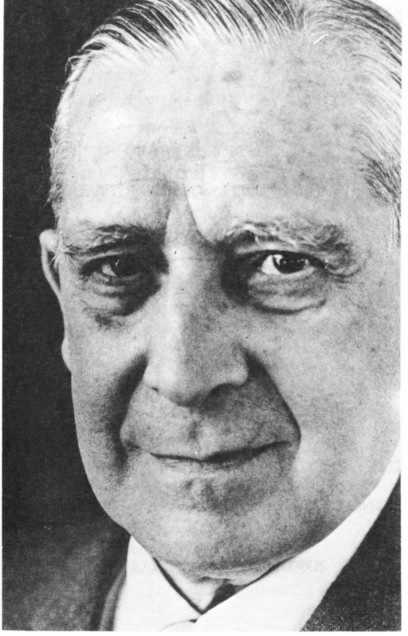
website introducing Zubiri and his works
FUNDACIÓN XAVIER ZUBIRI
Often proposed as a modern-day successor to Aquinas. (The same claim is made about Lonergan.) I don't know much about his reasoning, but his followers oppose him to Aristotelian metaphysics, and that makes me suspicious.
Plus:
The Philosophy Homepage of Jaap Bax
He uses crystals as an analogue for understanding life. The problem is that
crystals may not be substantial unities, but rather the product of interactions between individual substances, the constitutents of the crystals.
As for organization and structure--one finds similar reasoning in the writings of chaos theorists and those proposing non-reductionist alternatives to the dominant understanding of life. While simpler substances may be ordered towards combining or cooperating with other substances by their very nature, still, the whole that is an organism is more than just a set of such substances and the systems they form one with another. The whole is "ontologically" prior to its parts.
Monday, June 04, 2007
Israel Museum displays rare manuscript
Israel Museum displays rare manuscript
By BEN HUBBARD, Associated Press Writer
Mon Jun 4, 4:21 PM ET
JERUSALEM - A rare Old Testament manuscript some 1,300 years old is finally on display for the first time, after making its way from a secret room in a Cairo synagogue to the hands of an American collector.
The manuscript, containing the "Song of the Sea" section of the Old Testament's Book of Exodus and dating to around the 7th century A.D., comes from what scholars call the "silent era" — a span of 600 years between the third and eighth centuries from which almost no Hebrew manuscripts survive.
It is now on public display for the first time, at the Israel Museum in Jerusalem.
"It comes from a period of almost darkness in terms of Hebrew manuscripts," said Stephen Pfann, a textual scholar at the University of the Holy Land in Jerusalem. Scholars have long noted the lack of original biblical manuscripts written between the time of the Dead Sea Scrolls, the latest of which come from the third century, to texts written in the ninth and 10th centuries, Pfann said.
Scholars can only piece together scraps of information on the period using translations into Greek and other languages, he said, "so to have a piece of the original text from this period is quite remarkable."
The parchment is believed to have been left in the Cairo Genizah, a vast depository of medieval Jewish manuscripts discovered in the late 1800s in a previously unknown room at Cairo's ancient Ben Ezra Synagogue. It was in private hands until the late 1970s, when its Lebanese-born American owner turned it over to the Rare Books, Manuscripts, and Special Collections Library at Duke University.
The manuscript is now on extended loan to the Israel Museum and is on display in the museum's Shrine of the Book, which also houses the Dead Sea Scrolls.

Friday, June 01, 2007
Another puzzle from Pruss
Is love disposed to do good to the beloved?
How exactly is this puzzle different from the question of whether virtue destroys free choice?
How exactly is this puzzle different from the question of whether virtue destroys free choice?
Dr. Fleming discusses Before the Dawn
Descent of Man, Ascent of Apes?
by Thomas Fleming
Before the Dawn: Recovering the Lost History of Our Ancestors by Nicholas Wade. Penguin 2006.
by Thomas Fleming
Before the Dawn: Recovering the Lost History of Our Ancestors by Nicholas Wade. Penguin 2006.
Thursday, May 31, 2007
Pope Says Theologians Need Humility
Pope Says Theologians Need Humility
Reflects on Tertullian's Lack of Tolerance
VATICAN CITY, MAY 30, 2007 (ZENIT.org).- Benedict XVI says Tertullian's life offers a reflection on the need for humility, which the Pope says is the "essential characteristic of a great theologian."
The Holy Father spoke about Tertullian, a second-century theologian and apologist, at today's general audience in St. Peter's Square.
With his reflection on Tertullian, Benedict XVI resumed his series of catecheses on the Apostolic Fathers. He had interrupted the series with his trip to Brazil and last week's overview of the apostolic trip's highlights.
"This great moral and intellectual personality, this man who gave such a great contribution to Christian thought, makes me think," the Pope said of Tertullian. "It is evident that at the end he lacks simplicity, the humility to belong to the Church, to accept his weaknesses, to be tolerant of others and with himself.
"When you evaluate your thought in terms of your greatness, in the end it is this greatness that is lost."
Benedict XVI noted that Tertullian gradually left communion with the Church and joined a Montanist sect.
"The essential characteristic of a great theologian is the humility to stay with the Church, to accept her and ones own faults, because only God is all holy," the Pontiff said. "We, on the other hand, are always in need of forgiveness."
Tuesday, May 29, 2007
Scientists against the theory of anthropogenic climate change
Climate Momentum Shifting: Prominent Scientists Reverse Belief in Man-made Global Warming - Now Skeptics
Growing Number of Scientists Convert to Skeptics After Reviewing New Research
via American Papist
Growing Number of Scientists Convert to Skeptics After Reviewing New Research
via American Papist
Vatican Posts Document on Unbaptized Infants
Vatican Posts Document on Unbaptized Infants
VATICAN CITY, MAY 27, 2007 (Zenit.org).- The Vatican Web site has posted the document "The Hope of Salvation for Infants Who Die Without Being Baptized," published by the International Theological Commission.
See: www.vatican.va/roman_curia/congregations/cfaith/cti_documents/rc_con_cfaith_doc_20070419_un-baptised-infants_en.html.
Thursday, May 24, 2007
2 essays by William Cavanaugh
Radical Orthodox (Catholic) theologian William Cavanaugh
The Unfreedom of the Free Market
The World in a Wafer: A Geography of the Eucharist as Resistance to Globalization
The Unfreedom of the Free Market
The World in a Wafer: A Geography of the Eucharist as Resistance to Globalization
Tuesday, May 22, 2007
The Science of God by Gerald Schroeder
Gerald Schroeder - The Hidden Face Of God - How Science Reveals ...
wiki
Atheist Becomes Theist
Exclusive Interview with Former Atheist Antony Flew
pdf
wiki
Atheist Becomes Theist
Exclusive Interview with Former Atheist Antony Flew
Monday, May 21, 2007
Call for Papers, Center for Ethics and Culture
CALL FOR PAPERS
NOTRE DAME CENTER FOR ETHICS & CULTURE
ANNUAL FALL CONFERENCE
The Dialogue of Cultures
November 29-December 1, 2007
In his address at the University of Regensburg on September 12, 2006, Pope Benedict XVI made an argument whose crucial import was obscured by the unproductive furor that followed his speech. Pope Benedict argued:
Our world is characterized by a dizzying array of cultural conflicts. The news from Iraq that greets us every morning reminds us of the deep cultural conflicts between the West and the various Islamic cultures of the Middle East. Other cultural conflicts manifest themselves in the various efforts to secure basic human rights across the globe. And then there is the cultural crisis in Europe, where the Church, led by Pope Benedict, attempts to keep Europe from forgetting its Christian roots and sliding ever more deeply into secularization. This is not even to mention the deep cultural divides within our own polity, and even, most regrettably, within the Church Herself.
The solution to such widespread division, Pope Benedict urges us to realize, is a reconciliation of Christian faith and natural human reason that conceives of the latter according to the full capacities of its freedom; that is, as open to a reality that transcends the empirically verifiable. Only with such a conception of reason, Pope Benedict concludes, will human beings become capable “of that genuine dialogue of cultures and religions so urgently needed today.”
The Notre Dame Center for Ethics and Culture, concerned by the deep cultural divides that characterize so much of our world, has found inspiration in Pope Benedict’s Regensburg Address, and has decided to devote its eighth annual Fall conference to the theme: The Dialogue of Cultures. In interdisciplinary fashion, this conference will take up a variety of questions related to both the difficulties and opportunities involved in addressing cultural conflict. Contemporary political issues will certainly be on the table, as will philosophical and theological inquiries into the broader conception of reason of which Pope Benedict speaks, along with its relation to Christian faith. Legal theorists, also, will bring their
perspective to the discussion, perhaps especially in regard to questions of natural law. And, if pattern holds, historians, literary theorists, artists, and people in business will make their own substantial contributions.
One of the key purposes of The Dialogue of Cultures is to help restore the richness in the notion of dialogue itself, which too often has devolved into a cultural cliché. But above all, the Center wants to follow the lead of Pope Benedict, who closes the Regensburg Address by declaring: “The courage to engage the whole breadth of reason, and not the denial of its grandeur—that is the program with which a theology grounded in Biblical faith enters into the debates of our time….It is to this great logos, to the breadth of reason, that we invite our partners in the dialogue of cultures.”
Distinguished speakers invited to the conference include:
* George Weigel
* Jean Bethke Elshtain
* Leon Kass
* Bishop Hilarion Alfeyev, Russian Orthodox Bishop of Vienna and
Austria
* Russell Hittinger
* H. Tristram Engelhardt, Jr.
* Ralph Wood
* Paolo Carozza
We welcome the submission of abstracts drawing on a wide range of moral and religious perspectives and academic specialties. Special consideration will be given to submissions of ideas for panel discussions that would bring together several people to discuss a focused theme. Possible issues to be explored are:
* The nature of dialogue itself: going beyond the cultural cliché
* Pope Benedict XVI’s Regensburg Address and his other writings on the dialogue of cultures
* The possibility of peace between Islamic nations and the democracies of the West
* The dialogue of cultures between European, Asian, and African cultures
* Terrorism
* The European crisis of secularization
* Universal human rights
* The natural law and cultural dialogue
* Cultural divisions within the Church
* The challenge of immigration
* Cultural issues affecting the dignity of women
* Models of peacemaking and fruitful cultural dialogue
* The Greek philosophical inheritance of Catholic theology
* The aftermath of the war in Iraq
* The role of technology in fomenting/overcoming cultural conflict
* Globalization
* Obligations to developing nations
* The dialogue of cultures and the specter of incommensurability
* Literature and the arts as vehicles of cultural dialogue
One-page abstracts for individual papers should include name, affiliation, address, and e-mail address (if available). Session presentations will be limited to twenty minutes for individuals, one hour for panels.
Deadline for submissions is Friday, July 27, 2007. Notification of acceptance will be mailed by Friday, August 31, 2007. One-page abstracts, along with your full contact information, should be emailed to ndethics@nd.edu or mailed to:
Notre Dame Center for Ethics and Culture
8th Annual Fall Conference – The Dialogue of Cultures
1047 Flanner Hall
Notre Dame, IN 46556
Up-to-date conference information can be found on our web site: http://ethicscenter.nd.edu.
NOTRE DAME CENTER FOR ETHICS & CULTURE
ANNUAL FALL CONFERENCE
The Dialogue of Cultures
November 29-December 1, 2007
In his address at the University of Regensburg on September 12, 2006, Pope Benedict XVI made an argument whose crucial import was obscured by the unproductive furor that followed his speech. Pope Benedict argued:
While we rejoice in the new possibilities open to humanity, we also see the dangers arising from these possibilities and we must ask ourselves how we can overcome them. We will succeed in doing so only if reason and faith come together in a new way, if we overcome the self-imposed limitation of reason to the empirically verifiable, and if we once more disclose its vast horizons….Only thus do we become capable of that genuine dialogue of cultures and religions so urgently needed today.
Our world is characterized by a dizzying array of cultural conflicts. The news from Iraq that greets us every morning reminds us of the deep cultural conflicts between the West and the various Islamic cultures of the Middle East. Other cultural conflicts manifest themselves in the various efforts to secure basic human rights across the globe. And then there is the cultural crisis in Europe, where the Church, led by Pope Benedict, attempts to keep Europe from forgetting its Christian roots and sliding ever more deeply into secularization. This is not even to mention the deep cultural divides within our own polity, and even, most regrettably, within the Church Herself.
The solution to such widespread division, Pope Benedict urges us to realize, is a reconciliation of Christian faith and natural human reason that conceives of the latter according to the full capacities of its freedom; that is, as open to a reality that transcends the empirically verifiable. Only with such a conception of reason, Pope Benedict concludes, will human beings become capable “of that genuine dialogue of cultures and religions so urgently needed today.”
The Notre Dame Center for Ethics and Culture, concerned by the deep cultural divides that characterize so much of our world, has found inspiration in Pope Benedict’s Regensburg Address, and has decided to devote its eighth annual Fall conference to the theme: The Dialogue of Cultures. In interdisciplinary fashion, this conference will take up a variety of questions related to both the difficulties and opportunities involved in addressing cultural conflict. Contemporary political issues will certainly be on the table, as will philosophical and theological inquiries into the broader conception of reason of which Pope Benedict speaks, along with its relation to Christian faith. Legal theorists, also, will bring their
perspective to the discussion, perhaps especially in regard to questions of natural law. And, if pattern holds, historians, literary theorists, artists, and people in business will make their own substantial contributions.
One of the key purposes of The Dialogue of Cultures is to help restore the richness in the notion of dialogue itself, which too often has devolved into a cultural cliché. But above all, the Center wants to follow the lead of Pope Benedict, who closes the Regensburg Address by declaring: “The courage to engage the whole breadth of reason, and not the denial of its grandeur—that is the program with which a theology grounded in Biblical faith enters into the debates of our time….It is to this great logos, to the breadth of reason, that we invite our partners in the dialogue of cultures.”
Distinguished speakers invited to the conference include:
* George Weigel
* Jean Bethke Elshtain
* Leon Kass
* Bishop Hilarion Alfeyev, Russian Orthodox Bishop of Vienna and
Austria
* Russell Hittinger
* H. Tristram Engelhardt, Jr.
* Ralph Wood
* Paolo Carozza
We welcome the submission of abstracts drawing on a wide range of moral and religious perspectives and academic specialties. Special consideration will be given to submissions of ideas for panel discussions that would bring together several people to discuss a focused theme. Possible issues to be explored are:
* The nature of dialogue itself: going beyond the cultural cliché
* Pope Benedict XVI’s Regensburg Address and his other writings on the dialogue of cultures
* The possibility of peace between Islamic nations and the democracies of the West
* The dialogue of cultures between European, Asian, and African cultures
* Terrorism
* The European crisis of secularization
* Universal human rights
* The natural law and cultural dialogue
* Cultural divisions within the Church
* The challenge of immigration
* Cultural issues affecting the dignity of women
* Models of peacemaking and fruitful cultural dialogue
* The Greek philosophical inheritance of Catholic theology
* The aftermath of the war in Iraq
* The role of technology in fomenting/overcoming cultural conflict
* Globalization
* Obligations to developing nations
* The dialogue of cultures and the specter of incommensurability
* Literature and the arts as vehicles of cultural dialogue
One-page abstracts for individual papers should include name, affiliation, address, and e-mail address (if available). Session presentations will be limited to twenty minutes for individuals, one hour for panels.
Deadline for submissions is Friday, July 27, 2007. Notification of acceptance will be mailed by Friday, August 31, 2007. One-page abstracts, along with your full contact information, should be emailed to ndethics@nd.edu or mailed to:
Notre Dame Center for Ethics and Culture
8th Annual Fall Conference – The Dialogue of Cultures
1047 Flanner Hall
Notre Dame, IN 46556
Up-to-date conference information can be found on our web site: http://ethicscenter.nd.edu.
Sunday, May 20, 2007
Saturday, May 19, 2007
Articles by Rev. Dr. Papademetriou
Saint Augustine in the Greek Orthodox Tradition
Rev. Dr. George C. Papademetriou
source
"P. Papademetriou: Saint Augustin d'Hippone, Orthodoxie et Consensus Patrum" Le professeur émérite du Holy Cross Seminary (Boston) donne un aperçu patristique et théologique de la place du grand évêque d'Hippone dans l'Église
Rev. Dr. George C. Papademetriou
source
"P. Papademetriou: Saint Augustin d'Hippone, Orthodoxie et Consensus Patrum" Le professeur émérite du Holy Cross Seminary (Boston) donne un aperçu patristique et théologique de la place du grand évêque d'Hippone dans l'Église

Some questions on sexual morality
If sex is purely for the sake of pleasure, on what basis can we argue that it should be exclusive? Why shouldn't I be able to have sex with as many people as I want, so long as I "love" them? And what reason would you have to say that I shouldn't, even if I am in a "relationship" with you? Why should you prevent me from loving others? After all, are we not supposed to love?
As for the permissibility of married couples to use condoms in order to prevent the transmission of AIDS or some other STD (when one is infected), is this really what love requires? If I know that I have an STD that can be spread to a partner, should I get married to someone else? If I had the plague, would I say it's ok for me to get close to someone else, if I had a 99% effective means of preventing that person from getting the plague? Or would I play it safe, out of love, and stay away from that person as much as possible? Really, which makes more sense in the context of love?
Do some STDS inhibit procreation? I suppose even if they did, it would be ok to have sex, as long as that inhibition falls outside our intention. But is it right to jeopardize someone else's health? Or would it be better to abstain?
As for the permissibility of married couples to use condoms in order to prevent the transmission of AIDS or some other STD (when one is infected), is this really what love requires? If I know that I have an STD that can be spread to a partner, should I get married to someone else? If I had the plague, would I say it's ok for me to get close to someone else, if I had a 99% effective means of preventing that person from getting the plague? Or would I play it safe, out of love, and stay away from that person as much as possible? Really, which makes more sense in the context of love?
Do some STDS inhibit procreation? I suppose even if they did, it would be ok to have sex, as long as that inhibition falls outside our intention. But is it right to jeopardize someone else's health? Or would it be better to abstain?
Friday, May 18, 2007
Thursday, May 17, 2007
Being asleep and unconscious
Why wouldn't being asleep or unconscious or in a coma be considered an attainment of the Buddhist ideal? Would not the response entail some sort of desire, striving? (At the very least consciousness and voluntariness, which would imply desire and striving.)
Wednesday, May 16, 2007
Papal Homily on Augustine's Conversions
Papal Homily on Augustine's Conversions
"Passion for the Truth Truly Guided Him"
VATICAN CITY, MAY 15, 2007, Zenit.org - Here is a Vatican translation of Benedict XVI's homily on Augustine's three stages of conversion. He delivered it April 22 during his pastoral visit to Pavia, Italy.
* * *
PASTORAL VISIT TO VIGEVANO AND PAVIA (ITALY)
EUCHARISTIC CONCELEBRATION
HOMILY OF HIS HOLINESS BENEDICT XVI
"Orti Borromaici" Esplanade, Pavia
Third Sunday of Easter, 22 April 2007
Dear Brothers and Sisters,
Yesterday afternoon, I met the diocesan Community of Vigevano and the heart of my Pastoral Visit was the Eucharistic concelebration in Piazza Ducale; today, I have the joy of visiting your Diocese and a culminating moment of our encounter is also here at Holy Mass.
I greet with affection my Brothers who are concelebrating with me: Cardinal Dionigi Tettamanzi, Archbishop of Milan, Bishop Giovanni Giudici, Pastor of your Diocese, Bishop emeritus Giovanni Volta, the retired Pastor, and the other Prelates of Lombardy.
I am grateful to the Government Representatives and local Administrations for their presence. I address my cordial greeting to the priests, deacons, Religious, leaders of lay associations, the young people, the sick and all the faithful, and I extend my thoughts to the entire population of this ancient and noble City, and of the Diocese.
During the Easter Season, the Church presents to us, Sunday after Sunday, some passages from the preaching with which, after Easter, the Apostles, particularly Peter, invited Israel to have faith in Jesus Christ, the Risen One, thereby founding the Church.
In today's reading, the Apostles stand before the Sanhedrin -- before that institution which, having sentenced Jesus to death, could not tolerate that this same Jesus was now beginning to be active again through the Apostles' preaching. They could not tolerate that his saving power was once more making itself felt and that his Name was attracting people who believed in him as the promised Redeemer.
They accused the Apostles. Their accusation is: "You want to make us responsible for that man's blood".
Peter, however, reacted to this accusation with a brief catechesis on the essence of Christian faith: "No, we do not want to make you responsible for his blood. The effect of the death and Resurrection of Jesus is quite different. God has exalted him as "'Head and Saviour' of all, and of you, too, his People of Israel". And where will this "Head" lead us? What does this "Saviour" bring?
He leads us, St Peter tells us, to conversion -- creates for us the leeway and opportunity to mend our ways and repent, begin again. And he offers us forgiveness for our sins: he introduces us into the proper relationship with God, hence, into the proper relationship of each individual with himself or herself and with others.
Peter's brief catechesis did not only apply to the Sanhedrin. It speaks to us all, for Jesus, the Risen One, is also alive today. And for all generations, for all men and women, he is the "Head" who shows us the way and the "Saviour" who straightens out our lives.
The two terms: "conversion" and "forgiveness of sins", which correspond to the titles of Christ "Head", archegòs in Greek, and "Saviour", are the key words of Peter's catechesis, words intended to move our hearts too, here and now. And what do they mean?
The path we must take -- the path that Jesus points out to us -- is called "conversion". But what is it? What must we do? In every life conversion has its own form, because every human being is something new and no one is merely a copy of another.
But in the course of history, the Lord has sent us models of conversion to whom we can look to find guidance. We could thus look at Peter himself to whom the Lord said at the Last Supper: "[W]hen you have turned again, strengthen your brethren" (Luke 22: 32).
We could look at Paul as a great convert. The City of Pavia speaks of one of the greatest converts in the history of the Church: St Aurelius Augustine. He died on 28 August in 430 in the port town of Hippo, in Africa, at that time surrounded and besieged by the Vandals.
After the considerable turmoil of a turbulent history, the King of the Longobards acquired Augustine's remains for the City of Pavia so that today they belong to this City in a special way, and, in it and from it, have something special to say to all of us, to humanity, but to all of us here in particular.
In his book, Confessions, Augustine touchingly described the development of his conversion which achieved its goal with Baptism, administered to him by Bishop Ambrose in the Cathedral of Milan. Readers of his Confessions can share in the journey that Augustine had to make in a long inner struggle to receive at last, at the baptismal font on the night before Easter 387, the Sacrament which marked the great turning point in his life.
A careful examination of the course of St Augustine's life enables one to perceive that his conversion was not an event of a single moment but, precisely, a journey. And one can see that this journey did not end at the baptismal font.
Just as prior to his baptism Augustine's life was a journey of conversion, after it too, although differently, his life continued to be a journey of conversion -- until his last illness, when he had the penitential Psalms hung on the walls so that he might have them always before his eyes, and when he excluded himself from receiving the Eucharist in order to go back once again over the path of his repentance and receive salvation from Christ's hands as a gift of God's mercy.
Thus, we can rightly speak of Augustine's "conversions", which actually consisted of one important conversion in his quest for the Face of Christ and then in the journeying on with him.
I would like to mention briefly three important landmarks in this process of conversion, three "conversions".
The first fundamental conversion was the inner march towards Christianity, towards the "yes" of the faith and of Baptism. What was the essential aspect of this journey?
On the one hand, Augustine was a son of his time, deeply conditioned by the customs and passions prevalent then as well as by all the questions and problems that beset any young man. He lived like all the others, yet with a difference: he continued to be a person constantly seeking. He was never satisfied with life as it presented itself and as so many people lived it.
The question of the truth tormented him ceaselessly. He longed to discover truth. He wanted to succeed in knowing what man is; where we ourselves come from, where we are going and how we can find true life.
He desired to find the life that was right and not merely to live blindly, without meaning or purpose.
Passion for truth is the true key phrase of his life. Passion for the truth truly guided him.
There is a further peculiarity: anything that did not bear Christ's Name did not suffice for him. Love for this Name, he tells us, he had tasted from his mother's milk (cf. Confessions, 3, 4, 8). And he always believed -- sometimes rather vaguely, at other times, more clearly -- that God exists and takes care of us (cf. Confessions, 6, 5, 8).
But to truly know this God and to become really familiar with this Jesus Christ and reach the point of saying "yes" to him with all its consequences -- this was the great interior struggle of his youthful years.
St Augustine tells us that through Platonic philosophy he learned and recognized that "in the beginning was the Word" -- the Logos, creative reason. But philosophy, which showed him that the beginning of all things was creative reason, did not show him any path on which to reach it; this Logos remained remote and intangible.
Only through faith in the Church did he later find the second essential truth: the Word, the Logos, was made flesh.
Thus, he touches us and we touch him. The humility of God's Incarnation -- this is the important step -- must be equalled by the humility of our faith, which lays down its self-important pride and bows upon entering the community of Christ's Body; which lives with the Church and through her alone can enter into concrete and bodily communion with the living God.
I do not have to say how deeply all this concerns us: to remain seekers; to refuse to be satisfied with what everyone else says and does; to keep our gaze fixed on the eternal God and on Jesus Christ; to learn the humility of faith in the corporeal Church of Jesus Christ, of the Logos Incarnate.
Augustine described his second conversion at the end of the 10th book of his Confessions with the words: "Terrified by my sins and the pile of my misery, I had racked my heart and had meditated, taking flight to live in solitude. But you forbade me and comforted me, saying: "That is why Christ died for all, so that those who live should not live for themselves, but for him who died for them' (2 Corinthians 5:15)"; Confessions, 10, 43, 70).
What had happened? After his baptism, Augustine had decided to return to Africa and with some of his friends had founded a small monastery there. His life was then to be totally dedicated to conversation with God and reflection on and contemplation of the beauty and truth of his Word.
Thus, he spent three happy years in which he believed he had achieved the goal of his life; in that period, a series of valuable philosophical and theological works came into being.
In 391, four years after his baptism, he went to the port town of Hippo to meet a friend whom he desired to win over for his monastery. But he was recognized at the Sunday liturgy in the cathedral in which he took part.
It was not by chance that the Bishop of the city, a man of Greek origin who was not fluent in Latin and found preaching rather a struggle, said in his homily that he was hoping to find a priest to whom he could entrust the task of preaching.
People instantly grabbed hold of Augustine and forced him forward to be ordained a priest to serve the city.
Immediately after his forced ordination, Augustine wrote to Bishop Valerius: "I was constrained ... to accept second place at the helm, when as yet I knew not how to handle an oar. ... And from this derived the tears which some of my brethren perceived me shedding in the city at the time of my ordination" (cf. Letter 21, 1ff.).
Augustine's beautiful dream of a contemplative life had vanished. As a result, his life had fundamentally changed. He could now no longer dedicate himself solely to meditation in solitude. He had to live with Christ for everyone. He had to express his sublime knowledge and thoughts in the thoughts and language of the simple people in his city. The great philosophical work of an entire lifetime, of which he had dreamed, was to remain unwritten.
Instead, however, we have been given something far more precious: the Gospel translated into the language of everyday life and of his sufferings.
These were now part of his daily life, which he described as the following: "reprimanding the undisciplined, comforting the faint-hearted, supporting the weak, refuting opponents ... encouraging the negligent, soothing the quarrelsome, helping the needy, liberating the oppressed, expressing approval to the good, tolerating the wicked and loving all" (Sermon 340, 3).
"Continuously preaching, arguing, rebuking, building God's house, having to manage for everyone -- who would not shrink from such a heavy burden?" (Sermon 339, 4).
This was the second conversion which this man, struggling and suffering, was constantly obliged to make: to be available to everyone, time and again, and not for his own perfection; time and again, to lay down his life with Christ so that others might find him, true Life.
Further, there was a third, decisive phase in the journey of conversion of St Augustine. After his Ordination to the priesthood he had requested a vacation period to study the Sacred Scriptures in greater detail.
His first series of homilies, after this pause for reflection, were on the Sermon on the Mount; he explained the way to an upright life, "the perfect life", pointed out by Christ in a new way. He presented it as a pilgrimage to the holy mountain of the Word of God. In these homilies it is possible to further perceive all the enthusiasm of faith newly discovered and lived; his firm conviction that the baptized, in living totally in accordance with Christ's message, can precisely be "perfect" in accordance with the Sermon on the Mount.
Approximately 20 years later, Augustine wrote a book called the Retractations, in which he critically reviewed all the works he had thus far written, adding corrections wherever he had in the meantime learned something new.
With regard to the ideal of perfection in his homilies on the Sermon on the Mount, he noted: "In the meantime, I have understood that one alone is truly perfect and that the words of the Sermon on the Mount are totally fulfilled in one alone: Jesus Christ himself.
"The whole Church, on the other hand -- all of us, including the Apostles -- must pray every day: forgive us our trespasses as we forgive those who trespass against us" (cf. Retract. I 19, 1-3).
Augustine had learned a further degree of humility -- not only the humility of integrating his great thought into the humble faith of the Church, not only the humility of translating his great knowledge into the simplicity of announcement, but also the humility of recognizing that he himself and the entire pilgrim Church needed and continually need the merciful goodness of a God who forgives every day.
And we, he added, liken ourselves to Christ, the only Perfect One, to the greatest possible extent when we become, like him, people of mercy.
Let us now thank God for the great light that shines out from St Augustine's wisdom and humility and pray the Lord to give to us all, day after day, the conversion we need, and thus lead us toward true life. Amen.
© Copyright 2007 -- Libreria Editrice Vaticana
Monday, May 14, 2007
Summary of the 2007 Whitehead lectures
lectures given by Professor Sarah Broadie, summaries by Professor Michael Pakaluk
Nature and Divinity in Plato's Timaeus: Precis
Nature and Divinity in Aristotle's Cosmology: A Precis
Nature and Divinity in Plato's Timaeus: Precis
Nature and Divinity in Aristotle's Cosmology: A Precis
Sunday, May 13, 2007
Edward Coke
Sir Edward Coke
wiki

(source)

(source)
Writings:
Online Library of Liberty
Constitution.org
Related Links:
The Legal Philosophers, Or The Jurists
Legal History and Philosophy
Sir Edward Coke and the Elizabethan Age By Allen D. Boyer (review)
wiki

(source)

(source)
Writings:
Online Library of Liberty
Constitution.org
Related Links:
The Legal Philosophers, Or The Jurists
Legal History and Philosophy
Sir Edward Coke and the Elizabethan Age By Allen D. Boyer (review)


Saturday, May 12, 2007
Thursday, May 10, 2007
John Deely
Center for Thomistic Studies; Faculty Publications
wiki
Annotated bibliography of John Deely 1965-1993
Semiotics and ontology: John Deely and John Poinsot
What Distinguishes Human Understanding
the basics of semiotics
Semiotic Bibliography
Deely, John N.: Intentionality and Semiotics
Semiotic Society of America
wiki
Annotated bibliography of John Deely 1965-1993
Semiotics and ontology: John Deely and John Poinsot
What Distinguishes Human Understanding
the basics of semiotics
Semiotic Bibliography
Deely, John N.: Intentionality and Semiotics
Semiotic Society of America
Subscribe to:
Posts (Atom)