Tuesday, October 24, 2006

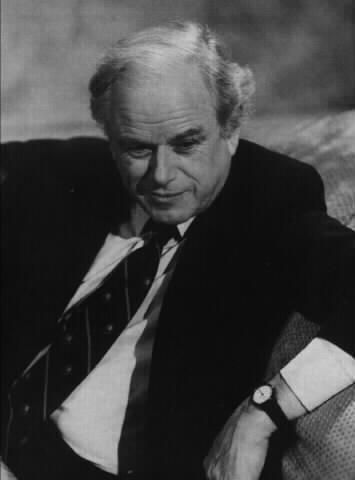
Martin Stone tonight!

Martin Stone's Talk is "Adrian of Utrecht and the Transformation of Moral Thought in Fifteenth-Century Louvain" and will be presented on Tuesday, Oct. 24th at 7:30 in the Fifth Floor Lounge of McGuinn.

Professor Martin Stone is Associate Professor of Renaissance and Early Modern Philosophy at the Hoger Instituut voor Weijsbegeerte at the University of Louvain and also a permanent Visiting Professor at King's College, London.

He did his BA at King's College, his Maitrise at the Sorbonne, his M. Phil. at Birkbeck College of the University of London and his Ph.D. at The Warburg Institute of the University of London - writing his dissertation under the superivision of David Wiggens and Jill Kraye.

He has been a Visiting Professor at the University of Melborne, the University of Wisconsin (Madison) and the University of Cologne. He has lectured at Utrecht, Budapest, Trier, Strasburg, Leipzig, Bayreuth, Munich, Cardif, Helsinki, Belfast, Fribourg en Suisse, Zurich, Prague, Vienna and is now on his way to Salt Lake City. These lectures throughout the world have been on a wide-variety of subjects (liberum arbitrium, grace, probabilism, practical reasoning, casuistry, Jesuit casuistry) and a wide variety of thinkers - some familiar: Molina, Baius, Gerson; and some less familiar: Antoninus of Firenze and Adrian of Utrecht.

As editor or co-editor, he has produced an impressive number of volumes: Humanism and Early Modern Philosophy; The Proper Ambition of Science; Theories of the Will and Human Action: From the Ancients to the Present Day; Philosophy, Science and Exegesis in Greek, Arabic and Latin Commentaries; and Reason, Faith and History.He is preparing a two-volume series for Oxford University Press entitled: The Subtle Arts of Casuistry: I: The Casuistic Tradition from Aristotle to Kant; II: Ordinary Morality and Practical Reasoning. More related to his present talk is his promised Oxford University Press volume: A Virtuous Man in Sad and Dangerous Times: The Life and Thought of Adrian of Utrecht.

-----------------------------------------
Shirley Gee
Department Administrator
Political Science Department
Boston College
140 Commonwealth Avenue
Chestnut Hill MA 02467
(O) 617-552-4144; (F) 617-552-2435
geesh@bc.edu


faculty page

Monday, October 23, 2006

Johan Huizinga

The importance of leisure?

Homo Ludens
wiki; Age of the Sage; another page

see also Hugo Rahner's Man at Play

Foolishness and wisdom...

Is it not the case that those who have lesser natural gifts with respect to the acquisition of knowledge and wisdom might nonetheless live a more meritorious life, and thus have a greater share in the beatific vision than those with greater natural intellectual gifts but who waste their talents?

Hence another possible understanding of the scriptural inversion of the foolish and the wise?

(Natural gifts -- primarily endowments of the body, especially the inner senses. I don't see how there can be a differences between the intellects of individuals.)

Feasibility Study wanted

1. How possible is it to start an independent college, one that issues a degree equivalent to a Bachelor's but attainable by students of secondary-school age?

2. At this school, there would be a student to teacher ratio of around 15:1 (perhaps 10:1, but that depends on tuition and operating costs).

3. Tuition would be kept as low as possible, in the range of $5000 to $10000 a year.

4. It should not need to be said that the education provided at this independent college would be a true liberal education, following a good plan of studies recognizing the hierarchy of the sciences. It would also have a strong liberal arts component, with special attention given to rhetoric and composition.

5. The number of classrooms needed would be around 6? The size of the student body: around 100 students? The length of studies, 6 years or so, terminating in the Bachelor of Arts.

6. Administrative work would be divided among the faculty as much as possible, and the number of actual administrators and support staff kept to a minimum. In this vein, maintenance and cleaning of the facilities should be done by students and teachers as much as possible, once a week, in order to eliminate the need for a janitorial staff.

7. If the only thing preventing such a project from taking off is that accreditation will not be given by any American agency since it is a threat to the status quo, then the possibility of creating a new accreditation agency that would maintain high standards and requirements, especially with respect to teacher credentials and the curriculum, should be examined.

8. The use of computers and electronic media within the classroom should be discouraged as much as possible. Any vocational training should be kept as separate as possible, especially any involving the use of computers.

9. An urban location might be ideal in so far as it would be better able to attract local students, and a project such as this should emphasize its roots in the local community. On the other hand, given the lack of economically self-sufficient communities in the United States, one should strive as much as possible to create such schools in areas where a healthy agrarian lifestyle is practiced.

10. With these sort of considerations in mind, how difficult would it be to get such a school started? What costs (like rent) be the limiting (and possibly prohibitve) factor? Can they be offset by donations from benefactors (especially donations of land and buildings)?

11. Even if such a project is feasible, does it have a future in this country? Or will it be possible only after relocalization has begun?

Other niceties:
1. An "Asian" understanding of the relationship between teacher and student. (But one removed of the family metaphor and understanding.)

2. Physical training component. (This would of course require additional facilities and equipment.)

Also, we need to examine whether a liberal education should also be universally available, or if only for individuals with certain vocations. If the latter, then what sort of education is to be given to the others?

Thursday, October 19, 2006

Some notes on personhood and humanity

Perhaps those who wish to use personhood and talk of dignity would admit that someone is human, and yet not a person (and therefore justify euthanasia being inflicted upon certain people, and so on).

X is human if X has powers a, b, c.
We know X has powers a, b, c if we observe it exercising powers a, b, c.

We do not observe it exercising powers a, b, c. --> We do not know X has powers a, b, c. --> We do not know it is human.

This is not the same as:
We do not observe it exercising powers a, b, c. --> X is not human.

Which would be a invalid conclusion.

Now is the following sound?
X is human if and only if it has powers a, b, c.

It does not seem so.

After all, it might be that:
The conceptum has the power of development, through which it is able to generate the organs needed for rational powers. And, it seems that the conceptum is the same thing as the mature adult, in so far as there is a continuity of existence. There is no external agent observed to be generating a human being from the conceptum; rather the conceptum develops itself.

(Can this be taken as an additional argument for the real distinction between the soul and its powers?)

Another word on mediocrity

If I were trying to discredit Christianity I would make sure those who appointed themselves to be defenders of Christianity against those relying on contemporary scientific dogma were bad philosophers and not very self-aware.

Stephen Barr on Dawkins, Science, and God

here


It may be that minds of the sort we encounter in living organisms arise as a consequence of the activities of complex physical structures. However, that “consequence” cannot be one that is physically explicable, in the sense that it follows logically from the mathematical laws of physics.
Yes, if spiritual activities cannot be quantified, they how can they be explained by quantities?


However, the deeper understanding provided by the more fundamental branches of science presents us with a very different picture. That order which appeared to “arise spontaneously” from chaos or slime did no such thing. It arose from profound principles of order that were there from the very beginning.

The wonderful structure of the solar system emerged because the dust and gas from which it formed obeyed the deep and beautiful laws discovered by Newton. Those laws in turn flow from the deeper and more beautiful laws of General Relativity discovered by Einstein. The slime from which life arose was made of atoms that had all the structure and intricacy and potentiality that chemists devote their lives to studying. Those laws of chemistry are themselves the consequence of the beautifully elaborate laws of electromagnetism and quantum mechanics, which in their turn come from the even more profound structures studied in “quantum field theory.”

As one moves deeper into nature—to levels about which the natural historian and zoologist can tell us nothing—one encounters not less and less form but increasingly magnificent mathematical structures, structures so profound that even the greatest mathematicians are having difficulty understanding them.

How could mathematicians, who study quantity, understand nature to begin with?

Dr. Barr accepts contemporary narrative put forth by scientists about the origin and history of creation, rather uncritically. Not surprisingly, given his training, he uses scientific laws [as expressed in the "language" of mathematics] to explain the universe. Perhaps as a way to counter a charge that his account is reductionistic by affirming that the basic constituents of Creation are, in actuality "profound structures"--more complex that we can guess, because the mathematics used to describe such entities are complex (as evidenced by quantum physics). Hence, the origin of complexity. In response to the objection that it seems he is playing with equivocal notions of complexity (complex entities are complex, basic structures are complex, basic structures therefore completely explain complex entities), he might even argue that those things which are constituted from the basic elements are even more complex than we now recognize. Still, this does not really solve the problem of complexity--either complex things are more complex than basic things, or they are not, and one who claims that they are not is going against our basic knowledge of the world. Ultimately Barr is being reductionistic, even if he thinks his reductionism can serve to prove God's existence. If there is complexity in the basic elements of nature, it is there in potentia, not in actu; what is complex in actu are those actually existing complex things, such as human beings. It's an intellectual sleight of hand to explain complexity through what is more simple. This line of reasoning is valid if one is looking at material causes, but not if one is looking at formal causes. An argument that incorrectly proves God's existence while discarding real differences between substances and their formal causes is a useless argument, no matter how much it may appeal to the scientist who wants to defend his religious beliefs.

At the foundations of the natural world, we do not find merely slime or dust or some dull insensate stuff. We find ideas of sublime beauty. Dawkins looks at mind and sees atoms in motion. Physicists look at those atoms, and deep below those atoms, and see—or, at least, some of them have seen—the products of “sublime reason,” “a great thought,” a Mind.

In other words, in nature we see a different arrow: It moves from Mind to ideas and forms, and from ideas and forms to matter. In the beginning was the Logos, St. John tells us, and the Logos was God.

If he relied on an Aristotelian account of nature I wouldn't have any problems with this last part, but it seems more amenable to an early Platonic/Pythagorean understanding, and if so, it has its problems. The danger for scientists who are believers is that they can attempt philosophical arguments* reconciling what they believe as scientists with what they believe as Christians, but being a scientist (and a Christian) is no guarantee that their reasoning is correct.

*Virtually any reasoning that goes beyond the scientific method and dealing with something other than the object of their experiments; or something that attempts a general [causal] account of reality (fundamental philosophy of nature, or physike)--for example, laying out the basic principles or laws of nature.

Wednesday, October 18, 2006

First potentiality

Alexander Pruss, "A Miscellany of Pro-Life Arguments; IV: Personhood"

3. Hardware and Software

But perhaps I was unfair to the pro-choice arguer in aligning the position with Aristotle. Maybe the distinction to be made is between having the capacity to develop certain mental structures and having the mental structures in place. The fetus lacks the mental structures on this view, while the sleeping adult has them (there they are, in the brain).

However, this distinction would be problematic, at least outside an Aristotelian framework. For it is not like that there is are helpful distinctions between hardware and software (i.e., structures and the information they hold), or between having a structure and being able to engage in an activity, that would allow one to make the distinction the way one needs to.

We could imagine an organism that for the winter encodes all of the information in its brain into a very small cyst, then eats the brain, and in the spring grows a new brain and populates it with the information from the cyst. When the information is in the cyst, do we say that there are developed structures or not? If we answer in the negative, then our criterion seems to be that the information doesn't count because it cannot be used immediately--a brain needs to regrown first. But by this criterion, a sleeping adult human does not have developed structures, since she needs various changes--physical (electrochemical) changes--to occur in her brain before she can be awake.

But if we say that there are developed structures when the brain is replaced by a cyst in this hypothetical organism, then how is this different from a case where structures are encoded in DNA?

Now one distinction that could be made is that not all the information necessary for us to become persons is found in the DNA. Interaction with the environment is necessary. Could be. But can we make such a sharp distinction between what forms solely from internal influence and requires mere sustenance from the outside, and what comes from the outside?

The use of thought experiments to clarify reality... I've critiqued this practice before, haven't I?

The point is that we have a better understanding of development now, which can be used to "update" Aristotle's biology, rather than invalidate it. Does the developing conceptum have the same organs that the mature adult has? Obviously not. Does this mean that it does not have the same capacities/powers as the adult? Yes, in one way, no in another.

If a power is dependent upon a corporeal organ and seated on it, does that power really exist when the organ is absent? What if that power is not purely spiritual (like the intellect) but is corporeal?

(It seems to me that "mental structures" is less precise than "organ" or "tool." Is this just the analytic disposition to create and use new technical terminology when ordinary language and the Western intellectual tradition suffice? It seems so to me.)

When the information is in the cyst, do we say that there are developed structures or not? If we answer in the negative, then our criterion seems to be that the information doesn't count because it cannot be used immediately--a brain needs to regrown first.
A very questionable hypothesis to begin with. What exactly is information? Is it the act of a power/organ? Or merely the material correlate to that act? I deny that there can be such information in the cyst, since a cyst cannot be the bearer of information.

If we accept the genetic reductionist model of life, then DNA may encode for "mental structures" but in a conceptum those mental structures do not exist in actuality, only in potentiality--only when DNA is transcribed and the structures are really generated do they come into existence.

So it is correct to say that the conceptum has a first potentiality, or do we need to speak of something like a pre-potentiality? At the moment I am leaning more towards the second than the first; what impact would this have on our understanding of natures? I think we can understand that a thing has a certain nature, even if not all of its first potentialities are yet present, as long as other potentialities are being exercised which lead to the development of those absent potentialities.

Tuesday, October 17, 2006

David Quinn debates Richard Dawkins

on the reasonableness of religious belief

Click here to listen to the debate.
The Turbidy Show

Via Amy Welborn.

Monday, October 16, 2006

Downsizing academia

If we manage to transition to a post-oil economy, many teachers will be out of jobs, since no one (including the government) will be able to afford to pay for most of them. Universal secondary education may no longer be possible--and certainly universal college education not at all. All of the useless studies will fall on the wayside, and those secondary schools that survive will have to streamline themselves and focus on the basics. Nonetheless, a Catholic school, aware of its tradition, is in a good position to continue passing on our intellectual heritage--one does not need to read up on the latest scholarship in science, history, and so on, to have a basic foundation in natural philosophy, for example, one that affirms the existence of God rather than blindly denying Him. As for history--if local communities can be restored, one will be less concerned with the history of giant nation-states (though this may still be valuable, if such links are consciously maintained, but how many people care about their Anglo-Saxon or French or Italian or Germany identity?), and perhaps the American project itself can be evaluated with new eyes.

Sunday, October 15, 2006

Meocracy now

by Jeff Mirus

In this article Dr. Mirus contrasts theocrats with meocrats. What are meocrats? "Those who ultimately regard their own materialistic selves as the measure of all things."

How do we identify meocrats, and how does one become a meocrat? There is some difficulty in identifying meocrats because a meocrat looks very much like a person of principle caught in an inconsistency, or a religious person caught in sin. You become a meocrat only when you persistently, over an extended period of time, deal with your inconsistencies (or sins) by redefining your principles to suit your inclinations. If you do this, you will also find yourself taking delight in the failures of persons of principle to live up to what they believe, and you will publicly denounce sin and failure as hypocrisy whenever you can, the better to discredit those who claim a transcendent point of view.
If this sort of behavior sounds familiar, it may be because meocracy is one of the most potent forces in American politics today, and it is rooted in that unbridling of the passions which we call vice. By its very nature, vice clouds the intellect. It begins by making it difficult for people to reach sound conclusions about how best to live personally and how best to promote the common good politically. It continues by causing increasingly stupid people to deny that transcendent principles and values are anything more than peculiar prejudices. And it ends in the blind defense mechanism by which people define good as evil and evil as good, adopting false principles to protect their passions.
Why make up "meocrat" then--let's just call a spade a spade--what Dr. Mirus is talking about is rule by the vicious and the corruption of reason.

Although it is very hard to find a theocrat in America, it is not hard to find those who create the same kind of conflict by denying transcendence and redefining reality to suit their own inclinations. Yet transcendence is essential to both public discourse and the proper exercise of authority. Without transcendence, there is only meocracy, because without transcendence there is only me.
Is it more important to have knowledge of the transcendent than to have a genuine love of the political common good? Is it possible for a virtuous agnostic to exist and rule well? It seems to me that this is a false dichotomy--one does not need to believe in God or recognize His existence in order to be aware of the common good and to live in accordance with it.

Evangelical Catholic Apologetics

website

Of particular interest, philosophy page, writings on creationism

Incompetence as a punishment

God's permitting of the vicious to have positions of authority is certainly a punishment for the community or people. But what about the ascendancy of the mediocre, the incomptent, and those who are unqualified in other ways?

Whether it be leadership roles in a political community, or the position of teacher within academia (with the noble but serious role of imparting the truth), where is merit recognized?

Confucius could not serve in government, though he wanted to. Teaching for him was a fall-back; if he could not serve, perhaps he could pass the tradition along to the next generation and they would succeed in obtaining a position. One recalls in A Man for All Seasons, St. Thomas encourage young Roeper to teach instead of seeking a post in government, because he did not have the integrity or character to serve the common good (but apparently he had the gift to be a good teacher? or maybe not even that).

Now? Academia itself is filled with those who seek status and fame and the incompetent. The imparting of wisdom and truth? There is no such thing, within the Humanities, and in the Sciences usually some form of materalism undergirds what is being written and taught. The medieval project was to restore secular learning to its proper place, but subordinated to God as the ultimate end. If God is not the Standard of Truth, then what else could be? Now, instead we have the ignorant and unreasonable passing off their ignorance as wisdom, and they have made themselves the standard of truth. They have no training in logic, and cannot evalute the epistemic status of their own first principles and presuppositions, nor defend them.

Clyde Wilson writes:
In all countries, the bulk of the population are mediocre in talent. In the U.S. we put them in charge of government, armies, news media, public discussion, universities, and most of our other important institutions. Especially if their mediocre talents are accompanied by impenetrable self-importance.

Sir Anthony Kenny


He will be honored with the Aquinas medal at this year's ACPA meeting.
School of Advanced Study
British Academy
Gifford lectures
wiki
Portrait at Balliol College.
Review of Aquinas on Mind by Gyula Klima
Review of Aquinas on Being by Robert Pasnau
Review of Aristotle on the Perfect Life
Sir Anthony Kenny - an Oxford philosopher expelled for talking about Aristotle
An agnostic happy to nurse the 'vice' of religion

Also:
Peter Geach (wiki)
Portrait of Dr. Geach and Dr. Anscombe

A review of his Truth and Hope. A review by Fr. Kerr.

Notes on Geach on the resurrection (not sure what the source is for the notes--an obsession with personal identity?)

In the Ryle Room

GEM Anscombe, Contraception and Chastity
Oswald Sobrino comments
Obituary in First Things; John Haldane; Fr. Rutler
Anscombe's Virtues: Simply Wrong?
Remarks on Anscombe's "Causality and Determination" by Dr. Freddoso
War and Murder

Luke Gormally (Linacre Centre for Healthcare Ethics)
(married to Mary Geach, daughter of Peter Geach and GEM Anscombe)

Whatever happened to Thomism?

The Analysis of Memory

In Our Time programs

"In Our Time" is a program on BBC4. While I can't say all of the experts invited on to the show are good, there are some of interest:

GREYFRIARS AND BLACKFRIARS (audio file)
Contributors
Henrietta Leyser, medieval historian and Fellow of St Peter's College, Oxford

Alexander Murray, medieval historian and Emeritus Fellow of University College, Oxford

Anthony Kenny, philosopher and former Master of Balliol College, Oxford

AVERROES (audio file)
Contributors

Amira Bennison, Senior Lecturer in Middle Eastern and Islamic Studies at the University of Cambridge

Peter Adamson, Reader in Philosophy at King's College London

Sir Anthony Kenny, philosopher and former Master of Balliol College, Oxford


HEROISM
(audio file)
Contributors

Angie Hobbs, Lecturer in Philosophy at the University of Warwick and author of Plato and the Hero: Courage, Manliness and the Impersonal Good (Cambridge University Press, 2000)

Anthony Grayling, Reader in Philosophy at Birkbeck College, University of London

Paul Cartledge, Professor of Greek History at the University of Cambridge

DUTY (audio file)
Contributors

Angie Hobbs, Lecturer in Philosophy at the University of Warwick

Annabel Brett, Fellow of Gonville and Caius and Lecturer in History at the University of Cambridge

Anthony Grayling, Reader in Philosophy at Birkbeck, University of London

FREEDOM (audio file)
Guests
John Keane
Professor of Politics, University of Westminster, author of a forthcoming history of democracy

Bernard Williams
Professor of Philosophy, University of California, author of the forthcoming Truth and Truthfulness (Princeton Press, October 2002)

Annabel Brett
Lecturer in History, University of Cambridge, editor with Quentin Skinner of Liberty, Right and Nature (Cambridge University Press).

VIRTUE(audio file)
Guests
Galen Strawson, Professor of Philosophy at the University of Reading
Miranda Fricker, Lecturer in Philosophy at Birkbeck, University of London
Roger Crisp, Uehiro Fellow and Tutor in Philosophy at St Anne's College, Oxford.

MACHIAVELLI AND THE ITALIAN CITY STATES (audio file)
Contributors:
Quentin Skinner, Regius Professor of History at the University of Cambridge
Evelyn Welch, Professor of Renaissance Studies at Queen Mary, University of London
Lisa Jardine, Director of the Centre for Editing Lives and Letters at Queen Mary, University of London

THE OATH (audio file)
Contributors:
Alan Sommerstein , Professor of Greek at the University of Nottingham
Paul Cartledge , Professor of Greek History at the University of Cambridge
Mary Beard , Professor in Classics at the University of Cambridge

The rest of the archive.

Saturday, October 14, 2006

M. Pakaluk takes on J. Whiting's interpretation of Aristotle

Her reading of the NE, in particular. Jennifer Whiting's faculty page.

Never Say Never AgainBut This Cannot Be the Correct Reading!Whiting on Philanthropia
Another
Apologia


From the latest post:

We should distinguish: an interpretation which aims to get it right about Aristotle's thought, from an interpretation in which the interpreter, really, is engaging in a kind of 'systematic' philosophy, though using a discussion of Aristotle as a means to doing so.

The latter is, to my mind, disreputable, although it is extremely common. Systematic philosophy should stand on its own. To such interpreters I would say: "Instead of giving us an interpretation of Aristotle as a Rawlsian, please write an essay on justice using Rawls' ideas. Instead of an article arguing that Aristotle is a 'naturalist' (in our sense), write an article defending philosophical naturalism (if you can). " And so on. Each philosopher is what he is, and not another philosopher. Aristotle is not a naturalist (in our sense) or a materialist; he is not an exponent of Rawlsianism or Parfitianism; Aristotle is not a thomist or a neo-platonist. Aristotle is Aristotle.

But the alternative, the only legitimate path, in my view--to get it right about Aristotle's thought--most definitely requires great accuracy in reading and understanding an Aristotelian text. So these are not simply small points.
How very true.

Dr. Pakaluk has been looking at select essays from The Blackwell Guide to Aristotle's Nicomachean Ethics, edited by Richard Kraut. Previously he dealt with the essays by Susan Sauvé Meyer and Rosalind Hursthouse.

His most recent posts on Myer's essay.
Precise of Myer on the Voluntary
More Difficulties
Meyer on the Voluntary--One Last Loose Thread

Note: look up Aristotle on light
Allen Speight
Annette Baier lecture

One has to wonder about the quality of scholarship these days and how the passing on of wisdom and knowledge has suffered because the academy has succumbed to political correctness and the multiculturalist/diversity-for-diversity's-sake agenda.

Friday, October 13, 2006

Integrated Humanities Program

UNFLINCHING FRENCH BENEDICTINES MAKE U.S. BEACHHEAD
By Kirk Kramer

Great article about the foundation at Clear Creek, but I'm excerpting the part that discusses the work of Dr. John Senior and others at the University of Kansas:

In 1970, at the height--or more accurately, the nadir--of the student upheavals which were at the heart of the social revolution which shook the West as profoundly as the Communist Revolution of 1917 shook Russia, with the same destructive consequences for the human happiness of individuals and the common good of society, three professors, Frank Nelick, Dennis Quinn, and John Senior, received a grant from the American government to begin "an experiment in tradition" at Kansas University. They established a course of studies in the liberal arts, first known simply and elegantly as Pearson College, a name later changed to the more bureaucratic-sounding Integrated Humanities Program. This program, for first- and second-year undergraduates and undergraduettes, was a four-semester sequence of classes in which the students read the Great Books of Western civilization. Many studied Latin, taught orally. For the purposes of this article, it will be enough to give Pearson College's motto and say a word about it.

Nascantur in admiratione. Let them be born in wonder. Aristotle in the Metaphysics says that philosophy begins in wonder. By 'wonder' he does not mean the vice of curiosity, by which, for example, men are tempted to read newspapers and watch the evening news on television. He is speaking of the thing we experience when we look up at the starry sky or enter Chartres Cathedral or behold a "tall ship" with all her sails catching the wind, cutting through the sea. It is the wonder that the cowboy knew who sang, in words that became part of the state song of Kansas:

How often at night/When the heavens are bright/With the light of the glittering stars/Have I stood there amazed/And asked as I gazed/If their glory exceeds that of ours.

Home, home on the range. . . .

This passion of wonder that Aristotle wrote about, and that every man, no matter how debased, has the capacity for, is the reason that men create poetry, understanding that word in the broadest sense: not only poems, but also stories, plays, dance, music, ultimately everything man makes or does that is not merely useful, but for his delight. In Pearson College, Mr. Senior (he earned a Ph.D. at Columbia, but eschews the pretentious title Doctor, in a gesture reminiscent of C.S. Lewis' saying that the only people who get doctorates are Americans and women) and his colleagues taught, and asked their students to read, poetically--to study Plato and Chaucer and Shakespeare in order to know and to understand and ultimately to love the world better. The professors did not seek to cram facts into their students' skulls in the fashion of Thomas Gradgrind. Still less did they wish to "deconstruct" or debunk the texts read in their classes. They wished their students to read the Odyssey and the Aeneid and the Song of Roland in the spirit St Benedict enjoined in the opening lines of the Holy Rule: "Hearken, O my son, to the precepts of thy master, and incline the ear of thy heart."

The heart. The great books of our civilization (by which the present writer does not mean Hegel or Marx or Sylvia Plath) are not addressed only or chiefly to the mind. They speak to men's hearts. "Were not our hearts burning within us as he spoke to us on the way?" Not our feelings, not our intellects--our hearts. Just as women are prone to emotionalism, men (viri) are prone to rationalism, and one is as disordered as the other. Great teachers teaching the great books in the poetic mode to docile (the word is not an obscenity) students--this dymanic will move hearts and give a true integration to the human person with all its faculties. If grace is allowed to work, as it was at K.U. thanks to the example of three Catholic professors who simply lived their Faith, the results can be remarkable. In Pearson College, the results were extraordinary. Hundreds of students sought instruction in the Catholic Faith (freely, it should hardly be necessary to add).

Stuff on Dr. John Senior:
Our Schoolmaster Remembered
Magister Johannes

His books: The Death of Christian Culture and The Restoration of Christian Culture are out of print, and difficult to find.