Monday, April 07, 2008

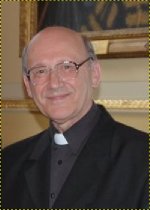
Servais Pinckaers, OP: RIP


Thomistica.net: Servais Pinckaers, OP: RIP

Vox-Nova: Rumor: Servais Pinckaers, O.P. passes
Fr. Servais Pinckaers dies at the age of 82.

Fribourg: Décès du dominicain Servais Pinckaers, ancien doyen de la Faculté de théologie

Un spécialiste de théologie morale né à Liège le 30 octobre 1925

Fribourg, 7 avril 2008 (Apic) Le Père dominicain Servais-Théodore Pinckaers, professeur émérite de théologie morale à la Faculté de théologie de l'Université de Fribourg, dont il fut également doyen, est décédé le 7 avril à l'âge de 82 ans.

Né le 30 octobre 1925 à Liège, en Belgique, "une ville détruite par Charles le Téméraire, en 1468, à cause de son amour de la liberté", aimait-il à dire, Servais Pinckaers est entré à l'âge de 20 ans dans l'ordre des dominicains. Un ordre auquel il allait rester fidèle toute sa vie.

Profès dans l'Ordre des frères prêcheurs en 1946, il est ordonné prêtre en 1951. En 1952-53, il passe son doctorat à Rome. Il est ensuite enseignant à La Sarte, en Belgique, de 1954 à 1966. De 1966 à 1973, le Père Pinckaers est supérieur de la maison des dominicains de Liège avant d'être appelé comme professeur de théologie morale à l'Université de Fribourg. En 1989-1990, il est doyen la Faculté de théologie, et plusieurs fois prieur du couvent de l'Albertinum, à Fribourg.

Il est nommé en juin 1989 consulteur à la Congrégation pour l'Education catholique par le pape Jean Paul II. Auteur de nombreux ouvrages théologiques, il a donné sa dernière leçon à l'Université de Fribourg en juin 1996. En l'an 2000, le professeur de théologie morale était fait docteur "honoris causa" de l'Université du Latran à Rome.

De nombreuses distinctions

La distinction de docteur en "théologie du mariage et de la famille" lui avait été remise en présence du cardinal Camillo Ruini, Grand chancelier de l'Université, et du cardinal Angelo Sodano, secrétaire d'Etat au Vatican. En 1975, 10 ans après le Concile, le Père Pinckaers participait, notamment avec le Père Raphaël Oechslin, et ses confrères Guy Bedouelle et Georges Cottier, à la fondation de "Sources", une nouvelle revue dominicaine bimestrielle éditée à Fribourg. Son objectif était de garder le "juste milieu" dans la mise en pratique des réformes issues du Concile Vatican II.

Il fut également consulteur de la Congrégation pour l'éducation catholique, organe de la Curie romaine, responsable de la formation et des séminaires, et membre de la Commission théologique internationale, un important collège du Saint-Siège qui réunit 30 membres sous la présidence du préfet de la Congrégation pour la doctrine de la foi et traite des questions centrales de la théologie.

Le Père Pinckaers est l'auteur de nombreux ouvrages théologiques qui sont devenus des références en la matière. L'Université de Fribourg l'avait honoré à l'occasion de son 65e anniversaire en 1990, notamment par la parution d'un recueil d'hommages sous le titre "Aux sources du renouveau de la morale chrétienne". La messe d'obsèques du Père Pinckaers aura lieu au couvent de Ste-Ursule à Fribourg jeudi 10 avril à 14h30. (apic/be)

07.04.2008 - Jacques Berset

ND Center for Ethics and Culture profile: Servais Pinckaers, O.P.
University of Fribourg bio

Google Books:
The Sources of Christian Ethics - 1995 - 519 pages
Morality: The Catholic View - 2001 - 141 pages
The Pinckaers Reader: Renewing Thomistic Moral ... - 2005 - 422 pages

Fr. Servais Pinckaers, OP 16 June 1999 Fides et Ratio-13 Reflections

Telegraph UK: Nobel laureate Sir Martin Evans attacks Catholic view on embryos

Via NOR:

Nobel laureate Sir Martin Evans attacks Catholic view on embryos

I haven't written much about hybrids; if the matter is tampered with to the point that it is no longer able to receive the proper form, then a human being will not be created. Without knowing the techniques involved though I won't say anything further.

Sunday, April 06, 2008

Questions about racial discrimination

And what sort of laws are unjust...

Now if someone or some company is offering a service to the public and provides different types of service (or requires patrons to follow different rules), the only basis of discrimination being skin color, that does seem to be unjust, according to distributive justice. Similarly, it manifestly wrong for the government to distribute unequally according to race or skin color. But is it unjust for a business owner to not sell his goods or services to someone of a different color because is a bigot? Let us not use the argument of libertarians, who appeal to "property rights" and such to reject laws against such discrimination. In that case it does not seem to me that commutative justice is being violated. Now someone might say that the business owner, like the bus company, is offering a service to the public. Is there no distinction between the two? Is the business owner providing a service, or is he selling some external good?

What serves the public? Who is obligated to serve the public?

Or is the problem not of commutative justice, but of legal justice? (Surely this problem also pertains to the (natural) love of neighbor and civic friendship, but can the acts of beneficence be legislated? Can someone be required by human law to be a good Samaritan? If I cannot be compelled by human law to save the life of another when I am able, or punished for failing to do so, can I be compelled by human law to sell soap to someone else? If not soap, then, how about food?) If members of a community stop having economic transactions with one another because of racial discrimination, then the community is in danger of fragmenting. And so laws might be enacted to prohibit such discrimination, not because commutative justice is being violated, but because it is detrimental to the common good. But is legislation the best way to bring about change? If a community is not allowed to dissolve or separate, then would it not be better to work for the change of hearts, if the use of law and punishment too would also threaten social cohesiveness and the common good?

Wednesday, April 02, 2008

Monday, March 31, 2008

Michal Heller's homepage


here

DogfightAtBankstown: Michał Heller

From Wiki:
Templeton Prize website
New Scientist interview
An article by Stanislaw Wszołek about Heller's life and philosophy (pdf)

Confucianism and the Zhou classics

Reminder: see if primary sources are available in translation and in the original language.

Confucius as an expositor or bearer of a tradition versus Confucius as an innovator or creator.

How much of traditional Chinese ethics goes back further than Confucius? How much of it is explainable by sociological/anthropological models? (or by an appeal to Natural Law?)

Ethics of Shang, Zhou and the Classics by Sanderson Beck
Chinese Literature - Confucian classics (www.chinaknowledge.de)
Confucianism
Confucianism - Han Confucianism
Confucius [Internet Encyclopedia of Philosophy]
Before Confucius: Studies in the Creation of ...
Confucius and the Analects: New Essays - Google Books Result
xinhua article

Saturday, March 29, 2008

Academic publishing

Is anything more emblematic of the problems with academic publishing than The Blackwell Philosophy and Pop Culture Series? Lost and Philosophy and 24 and Philosophy! Open Court has a similar series, dealing with The Sopranos, The Simpsons, and The Matrix (and, ahem, Buffy).

Are the artifacts of pop culture really worth the sort of analysis that is written in these books? Now, some sort of art criticism and explanation may be helpful for those seeking deeper layers of meaning, but to attach the name "philosophy" to these efforts... does that not debase the name even further? It's bad enough that some equate philosophy with BSing or a never-ending inquiry that yields no definite answers.

Lost - Home - ABC.com
Lost TV Show Fansite Lost-Media.com
LOST-TV // the unofficial fansite for the abc series 'lost' [http ...
FOX Broadcasting Company: 24
FOX Broadcasting Company: The Simpsons
Simpsons Movie
HBO: The Sopranos
BUFFY THE VAMPIRE SLAYER
BBC - Cult Television - Buffy the Vampire Slayer Homepage
BuffyWorld -- A complete guide to all of the "Buffy the Vampire ...

Wednesday, March 26, 2008

Dr. McInerny's testimony to Mortimer Adler

here

Armand Maurer, RIP

I found out through Thomistica.net.

A collection of essays written in his honor: Praise for Armand Maurer, CSB

Thursday, March 20, 2008

ABC News: Why Men Should Pair Off With Younger Women

via LRC--Why Men Should Pair Off With Younger Women

Last year, a study of Swedish census information suggested a 4 to 6-year age gap is best, but new research has found that in some circumstances a surprisingly large gap – 15 years – is the optimum.

Martin Fieder at the University of Vienna and Susanne Huber of the University of Veterinary Medicine, also in Vienna, Austria, studied the Swedish data and found that a simple equation related the age difference of the parents to the number of offspring. For people who had maintained monogamous relationships throughout adulthood, the most children were found in couples where the man was 4.0 to 5.9 years older than the woman.

The probable reasons behind this state of affairs are not controversial: "Men want women younger than themselves because they are physically attractive," says Fieder, while women tend to prioritise a partner who can provide security and stability, and so tend to opt for older men.

Mum's the Word

However, Fieder and Huber's calculations drew criticism. For example, Erik Lindqvist at the Research Institute of Industrial Economics in Stockholm, Sweden, pointed out that the age of the mother is likely to be more important than any age difference: the older the mother, the lower her chances of having more children.

"We added that factor into the calculation," says statistician Fred Bookstein at the University of Washington, a colleague of Fieder and Huber. "The importance of the age difference didn't change."

Even if it holds true for Sweden, the 4 to 6-year age gap is unlikely to be optimal in all cultures. Samuli Helle at the University of Turku in Finland read Fieder and Huber's paper and says it stirred memories of an unpublished study he conducted a few years ago.


Statistical correlation coupled with sociobiological nonsense? How about looking at it from a developmental/maturity perspective?

Wednesday, March 19, 2008

2008 ISN Summer Seminar

ISN website seems to be down still. Info about this year's summer seminar (to be held at MIT) at Real Physics. I expect that info about the summer conference will be available eventually.

Misc:
Doubting Darwin blog

Zenit: Interview with Cardinal Aponte

5th Marian Dogma Nothing New

Interview With Puerto Rico's Cardinal Aponte

SAN JUAN, Puerto Rico, MARCH 18, 2008 (Zenit.org).- By declaring Mary the Spiritual Mother of All Humanity, Benedict XVI wouldn't be saying anything new about her, only clarifying her role in salvation, says Cardinal Luis Aponte Martínez.

The retired archbishop of San Juan is one of the five cardinal co-sponsors of the 2005 International Symposium on Marian Co-redemption, held in Fatima, that are asking Benedict XVI to declare a fifth Marian dogma.

The petition urges the Pope to proclaim Mary "the Spiritual Mother of All Humanity, the co-redemptrix with Jesus the redeemer, mediatrix of all graces with Jesus the one mediator, and advocate with Jesus Christ on behalf of the human race."

In this interview with ZENIT, Cardinal Aponte discusses his views in favor of the proposed dogma.

Q: Your Eminence, what has led you to take a leadership role in the present petition to Benedict XVI for this new Marian dogma?

Cardinal Aponte: Our Lady has always been a source of particular strength and the object of particular love for me. These roles of the Blessed Virgin as our spiritual mother have always been part of our Catholic tradition. For Latin American Catholics, it is all contained in her manifestation as Our Lady of Guadalupe who shows herself as a merciful mother, ready to intercede for us in our gravest needs, and to use her maternal intercession to bring us closer to Jesus.

I first spoke of the importance of this dogma to my brother cardinals in the presence of Pope John Paul II in Rome in 2002. There I related this Marian proclamation to the Church’s new evangelization. As the first great evangelization of Latin America was led by Our Lady of Guadalupe, so should the Mother of Christ be invoked to lead this new evangelization of the third millennium.

The solemn definition of her motherly roles as co-redemptrix, mediatrix, and advocate will simply release Our Lady all the more to perform these motherly functions of intercession for our age for the maximum effectiveness in leading a new evangelization.

There are new times for the world and the Church. Just imagine how much Our Lady can help us in the new evangelization and with other elements of difficulty and crisis in our present age if we solemnly acknowledge her in these God-given roles of intercession for humanity.

Q: How would you respond to the objection that the Church doesn’t need a new teaching on Mary at this time?

Cardinal Aponte: There is nothing new in this teaching. It is actually very ancient. It is important to keep in mind that this truth is already an official doctrine of the Church regarding Mary as taught at the Second Vatican Council -- "Lumen Gentium," Nos. 57, 58, 61, 62 -- and has been the consistent teaching of the papal magisterium for centuries.

John Paul II called Mary the “co-redemptrix” six times during his pontificate. The role is always understood in complete dependency to Jesus and as a human participant with the redeemer in the work of salvation.

When Blessed Pope Pius IX proclaimed the doctrine of the Immaculate Conception as a dogma in 1854, he explained that a dogmatic statement would add greater light and appreciation of the doctrine, leading to its “perfection.” That’s what this definition would do for Our Lady’s spiritual motherhood -- add nothing new, but provide greater appreciation, understanding, and clarity of the existing truth.

Q: Do you think that these functions of co-redemptrix, mediatrix, and advocate within her general role as our spiritual mother may be too difficult for the common person to comprehend?

Cardinal Aponte: On the contrary, I think, for example, that the faithful in Latin America both comprehend this Marian doctrine in their hearts and already experience these maternal roles of Mary in their lives. Once again, Our Lady of Guadalupe embodies these motherly roles in a dynamic way, as a mother who suffered with Jesus for us, a mother who comes to nourish us with the graces of Jesus, and a mother who intercedes for us in our needs. That’s co-redemptrix, mediatrix, advocate.

John Paul II, in his brilliance, always spoke of Our Lady’s mediation in terms of her motherhood, using the expression “maternal mediation.” What is more common and understandable than a mother who suffers, nourishes, and pleads for her people? That’s what Our Lady does for us as a spiritual mother. It is really quite simple and already part of the daily experience of the Catholic faithful. What may be challenging to some of the learned has already been revealed to the little ones and accepted within the Church.

Q: The principal objection to this new Marian dogma seems to be ecumenism. Would this papal definition hurt the Church’s critically important mission of ecumenism in your view?

Cardinal Aponte: Mothers by their very natures and vocations are unifiers of families. So, too, with the Mother of Jesus within the family of Jesus. The Church’s mission of ecumenism is extremely important, but by leaving the Mother out, we only impede our own progress toward eventual Christian unity in the one body of Christ.

John Paul II made it clear in his encyclical on ecumenism, "Ut Unum Sint," that authentic Catholic ecumenical activity could never include either compromise of Catholic doctrine or impede proper doctrinal development, and this includes the doctrine regarding Mary.

A solemn definition regarding Our Lady’s spiritual maternity would actually be a giant step forward in ecumenism, as it would clearly distinguish what the Church definitively teaches -- that Mary is not a goddess, that Catholics don’t place Mary on a level of equality with Jesus her divine son, and that Mary as a human participated in the historic act of redemption in a way absolutely and completely dependent on Jesus. This would clear up a myriad of misunderstandings amidst our non-Catholic Christian brothers and sisters, leading to greater dialogue and unity regarding Jesus’ mother and within his body. This is true ecumenism from a Catholic perspective.

At the time preceding the definition of the Assumption in 1950, the same objections regarding ecumenism were raised to Pius XII. After the definition, the Church experienced its greatest progress to date in ecumenism leading up to the second Vatican council.

Mary is the Mother of the ecumenical movement, the Mother of unity, not is obstacle. Let us give her the opportunity to unite us in ways only a mother can by openly and proudly declaring her maternal roles of intercession for us. Just think of how powerfully she could help us in the mission of Christian unity if we solemnly invite her to intercede for this goal.

Tuesday, March 18, 2008

Zenit: Holy See Address to UN Human Rights Council

Holy See Address to UN Human Rights Council

"Respect of the Person Is the Only Measure to Judge Any Policy"


GENEVA, MARCH 17, 2008 (Zenit.org).- Here is the address delivered March 5 by Archbishop Silvano Tomasi, permanent observer of the Holy See to the Office of the United Nations and Specialized Institutions in Geneva, at the 7th session of the U.N. Human Rights Council, under way through March 28.

* * *

Mr. President,

1. The current debates at the Human Rights Council (HRC) provide a useful supplement of reflection that leads us to the heart of the world’s expectations: a recognition of fundamental rights and their implementation. But underneath the statement of high ideals, different perceptions and convictions risk to build barriers and stifle concrete respect for people. Perhaps history can help us out of the impasse.

Walls and fences built to keep peoples apart have not blocked their movement in the long run nor prevented the flow of ideas and exchanges. At this moment in time dialogue appears more urgent than ever both to sustain mutual knowledge and to prevent dangerous misunderstandings. Now that the HRC has practically successfully completed its organizational structure and developed its operational mechanisms, an even more critical task is left to accomplish, the building of a larger sense of trust and a more precise understanding of the different points of departure and of the different visions that persist in the interpretation and daily implementations of human rights.

2. The core rules of human rights is often coloured by the historical experience and cultural traditions of the States and regions where it must be applied. In particular, it seems that at the root of various conflicting positions is the focus of attention placed on the relationship between persons and collectivities. Thus, it becomes important to clarify and identify where the source and foundation of human rights are found. In reality the very expression ‘human rights’ offers the key for an appropriate understanding because it deals exactly with what is ‘human’, that is the common link among every person and the foundation of human rights.

3. The great progress achieved in articulating human rights and in improving their application is due in large part to the wisdom of the framers of the Universal Declaration of Human Rights where the universal value of the inherent dignity and worth of the human person was deliberately agreed upon as the cornerstone of all rights. Avoiding a purely collectivist or individualistic approach to human rights, this historical document sets out rights as well as duties and thus it establishes a range of connections between the individual, community and society. In this way, rights attributed to groups or collective entities are rooted in the dignity inherent equally in each of their individual members.

This approach cannot be turned upside down by deriving fundamental rights of persons from the community to which they belong as if it were the subject of basic rights. If the latter were the case, the whole architecture of human rights would crumble. But human rights are universal, interdependent and indivisible: civil, political, economic, social and cultural, and all require effective implementation through an engagement at various levels of social life, of the village, the city, the nation and the international community through its institutions. An integral implementation of all human rights expresses the concrete position of the person in society. A new understanding of the tension between individual persons and community becomes possible by balancing the attention to the rights of the individual within a social dimension.

In this context, it remains a concerted responsibility to eliminate those destructive structures that see war, the arms race and unlimited military spending, unbridled profit and unfair trade as acceptable options since they undermine the universal protection of human rights. An essential expression of human dignity is the right to freedom of religion, and here as well the tension between individual persons and community takes on significant dimensions that demand new reflection stemming from the solid base of the UDHR and the two Covenants of 1966.

4. A person’s fundamental right to believe and to practice a specific religion, in the ways proper to it, provided these will not discriminate or condone i.a. torture genocide or slavery, is the juridical foundation of the organized form of that belief, of its functioning in freedom and of its preserving and defending its own specific identity. It is a bottom-up approach. With his fundamental rights, starting with that of religious freedom, the individual person contributes to defend the identity and the freedom of the organized form of his religion and develops harmoniously in relation to others.

Identities, however, cannot be used as a means to justify violations of human rights that are a common heritage of the entire human family and of every culture. Then, respect of the human person from conception to natural death is the only measure to judge any policy be it the fight against terrorism or the fight against hunger and underdevelopment. Dialogue and interaction become possible when our common human dignity is the guiding value. On its part, the State does not have the power to create human rights by enacting a law, but it has only the capacity to recognize and discipline their existence and ensure their protection, specifically in case of discrimination. Persons then can exercise their human rights individually and in community: it is a continuum for the common good.

Mr. President,

5. As the UN Special Rapporteur on Freedom of Religion or Belief has reminded the Council, present instruments protect religious freedom in its manifold manifestations and forbid any advocacy of national, racial and religious hatred that leads to discrimination or violence. The implementation in every country of existing human rights protection instruments, especially the UDHR and the related Covenants, is the best way to ensure respect of all beliefs and of a peaceful coexistence within pluralistic and interactive contemporary societies.

Unfortunately, victims of religious intolerance are particularly numerous where the international law of human rights is not incorporated into national legislations that risk in this way to allow impunity of violators of fundamental human rights. The way ahead includes a renewed engagement in appropriating through education the juridical instruments developed by international law. But it is not enough to communicate a series of documents. It is important to change attitudes, a long range process that transforms the person and ensure an effective support for dignity and freedoms such as freedom of religion and expression and freedom from want and fear.

6. In conclusion, Mr. President, allow me to recall the well known aspiration of Pope John XXIII, a still valid and timely message expressed in Pacem in Terris "that the United Nations Organization may be able progressively to adapt its structure and methods of operation to the magnitude and nobility of its tasks. May the day be not long delayed when every human being can find in this organization an effective safeguard of his personal rights; those rights, that is, which derive directly from his dignity as a human person, and which are therefore universal, inviolable and inalienable. This is all the more desirable in that men today are taking an ever more active part in the public life of their own nations, and in doing so they are showing an increased interest in the affairs of all peoples. They are becoming more and more conscious of being living members of the universal family of mankind." (n. 145)

The HRC, as the other organs of the United Nations, are called to realize this wish in our time. The human family and the peoples of the United Nations cannot wait another 60 years.

Monday, March 17, 2008

Michael Heller, Deciphering the Mind of God

Via First Things

March 17, 2008

Deciphering the Mind of God

By Michael Heller

The seventeenth-century German mathematician and philosopher Gottfried Wilhelm Leibniz is my philosophical hero. I am proud (but not quite happy) that I share with this great philosopher at least one feature. He was a master in spreading, not to say dissipating, his genius into too many fields of interest. If he had a greater ability to concentrate on fewer problems, he would have become not only a precursor but also a real creator of several momentous scientific achievements. But in such a case, the history of philosophy would be poorer by one of its greatest thinkers. This is not to say that in my case the history of philosophy would lose anything. This is only to stress the fact that I am interested in too many things.

Amongst my numerous fascinations, two have most imposed themselves and proven more time resistant than others: science and religion. I also am too ambitious. I always wanted to do the most important things, and what can be more important than science and religion? Science gives us Knowledge, and religion gives us Meaning. Both are prerequisites of a decent existence. The paradox is that these two great values seem often to be in conflict. I am frequently asked how I could reconcile them with each other. When such a question is posed by a scientist or a philosopher, I invariably wonder how educated people could be so blind as not to see that science does nothing else but explore God’s creation. To see what I mean, let us go to Leibniz.

In a copy of his Dialogus, in the margin we find a short sentence written in his own hand. It reads: “When God calculates and thinks things through, the world is made.” Everybody has some experience in dealing with numbers, and everybody, at least sometimes, experiences a feeling of necessity involved in the process of calculating. We can easily be led astray when thinking about everyday matters or pondering all pros and cons when facing an important decision, but when we have to add or multiply even big numbers everything goes almost mechanically. This is a routine task, and if we are cautious enough there is no doubt as far as the final result is concerned. However, the true mathematical thinking begins when one has to solve a real problem, that is to say, to identify a mathematical structure that would match the conditions of the problem, to understand principles of its functioning, to grasp connections with other mathematical structures, and to deduce the consequences implied by the logic of the problem. Such manipulations of structures are always immersed into various calculations, since calculations form a natural language of mathematical structures.

It is more or less such an image that we should associate with Leibniz’s metaphor of calculating God. Things thought through by God should be identified with mathematical structures interpreted as structures of the world. Since for God to plan is the same as to implement the plan, when “God calculates and thinks things through,” the world is created.

We have mastered a lot of calculation techniques. We are able to think things through in our human way. Can we imitate God in His creating activity?

In 1915, Albert Einstein wrote down his famous equations of the gravitational field. The road leading to them was painful and laborious—a combination of deep thinking and the tedious work of doing calculations. From the beginning, Einstein saw an inadequacy of Newton’s time-honored theory of gravity: It did not fit into the spatio-temporal pattern of special relativity, which was a synthesis of classical mechanics and Maxwell’s electrodynamical theory. He was hunting for some empirical clues that would narrow the field of possibilities. He found some in the question, Why is inertial mass equal to gravitational mass in spite of the fact that, in Newton’s theory, they are completely independent concepts? He tried to implement his ideas into a mathematical model. Several attempts failed. At a certain stage, he understood that he could not go further without studying tensorial calculus and Riemannian geometry. It is the matter distribution that generates space-time geometry, and the space-time geometry that determines the motions of matter. How to express this illuminating idea in the form of mathematical equations? When finally, after many weeks of exhausting work, the equations emerged before his astonished eyes, a new world had been created.

In the beginning, only three, numerically small, empirical effects corroborated Einstein’s new theory. But the world newly created by Einstein soon became an independent reality. Yet, in his early work, the field equations suggested to Einstein the existence of solutions describing an expanding universe. He discarded them by modifying his original equations, but in less than two decades it turned out that the equations were wiser than Einstein himself: Measurements of galactic spectra revealed that, indeed, the universe is expanding. In the subsequent period, lasting until now, theoretical physicists and mathematicians have found a host of new solutions to Einstein’s equations and interpreted them as representing gravitational waves, cosmic strings, neutron stars, stationary and rotating black holes, gravitational lensing, dark matter and dark energy, late stages of life of massive stars, and various aspects of cosmic evolution. In Einstein’s time, nobody would have even suspected the existence of such objects and processes, but nearly all of them have been found by astronomers in the real universe.

Perhaps now we better understand Leibniz’s idea of God’s creating the universe by thinking mathematical structures through. We should only free the above sketched image of creating physical theories from all human constraints and limitations, and take into account a theological truth that for God to intend is to obtain the result, and to obtain the result is to instantiate it. Einstein was not far from Leibniz’s idea when he was saying that the only goal of science is to decode the Mind of God present in the structure of the universe.

And what about chancy or random events? Do they destroy mathematical harmony of the universe, and introduce into it elements of chaos and disorder? Is chance a rival force of God’s creative Mind, a sort of Manichean principle fighting against goals of creation? But what is chance? It is an event of low probability which happens in spite of the fact that it is of low probability. If one wants to determine whether an event is of low or high probability, one must use the calculus of probability, and the calculus of probability is a mathematical theory as good as any other mathematical theory. Chance and random processes are elements of the mathematical blueprint of the universe in the same way as other aspects of the world architecture.

Mathematical structures that are parts of the composition determining the functioning of the universe are called laws of physics. It is a very subtle composition indeed. Like in any masterly symphony, elements of chance and necessity are interwoven with each other and together span the structure of the whole. Elements of necessity determine the pattern of possibilities and dynamical paths of becoming, but they leave enough room for chancy events to make this becoming rich and individual.

Adherents of the so-called intelligent design ideology commit a grave theological error. They claim that scientific theories that ascribe a great role to chance and random events in the evolutionary processes should be replaced, or supplemented, by theories acknowledging the thread of intelligent design in the universe. Such views are theologically erroneous. They implicitly revive the old Manichean error postulating the existence of two forces acting against each other: God and an inert matter; in this case, chance and intelligent design. There is no opposition here. Within the all-comprising Mind of God, what we call chance and random events is well composed into the symphony of creation.

When contemplating the universe, the question imposes itself: Does the universe need to have a cause? It is clear that causal explanations are a vital part of the scientific method. Various processes in the universe can be displayed as a succession of states in such a way that the preceding state is a cause of the succeeding one. If we look deeper at such processes, we see that there is always a dynamical law prescribing how one state should generate another state. But dynamical laws are expressed in the form of mathematical equations, and if we ask about the cause of the universe we should ask about a cause of mathematical laws. By doing so we are back to the Great Blueprint of God’s thinking the universe. The question of ultimate causality is translated into another of Leibniz’s questions: “Why is there something rather than nothing?” (from his Principles of Nature and Grace). When asking this question, we are not asking about a cause like all other causes. We are asking about the root of all possible causes.

When thinking about science as deciphering the Mind of God, we should not forget that science is also a collective product of human brains, and the human brain is itself the most complex and sophisticated product of the universe. It is in the human brain that the world’s structure has reached its focal point—the ability to reflect upon itself. Science is but a collective effort of the Human Mind to read the Mind of God from the question marks out of which we and the world around us seem to be made. To place ourselves in this double entanglement is to experience that we are a part of the Great Mystery. Another name for this Mystery is the Humble Approach to reality—the motto of all John Templeton Foundation activities. True humility does not consist in pretending that we are feeble and insignificant, but in the audacious acknowledgement that we are an essential part of the Greatest Mystery of all—of the entanglement of the Human Mind with the Mind of God.

Michael (Michał) Heller is a Polish cosmologist and Catholic priest. These remarks were made at the news conference announcing his reception of the 2008 Templeton Prize.

Zenit: Papal Address to Greek Envoy

Papal Address to Greek Envoy

"Paul's Memory Is Forever Planted in Her Soil"

VATICAN CITY, MARCH 17, 2008 (Zenit.org).- Here is the address Benedict XVI gave Saturday in English upon receiving in audience Miltiadis Hiskakis, the new ambassador of Greece to the Holy See.

* * *

Your Excellency,
It is a pleasure for me to welcome you to the Vatican and to accept the letters by which you are appointed Ambassador Extraordinary and Plenipotentiary of the Hellenic Republic to the Holy See. I am grateful for the courteous greeting which you have conveyed from His Excellency Mr Karolos Papoulias, and I would ask that you assure him, the leaders of your country and the people of Greece of my good wishes and prayers for their well-being and peace.

Recently, several significant encounters have strengthened the bonds of goodwill between Greece and the Holy See. In the wake of the Jubilee Year of 2000, my venerable predecessor Pope John Paul II visited your country during his pilgrimage in the footsteps of Saint Paul. This led to an exchange of visits from Orthodox and Catholic delegations to and from Rome and Athens. In 2006, I was happy to receive your President here at the Vatican, and I was graced by a visit from His Beatitude Christodoulos, whose recent death Christians in your country and throughout the world continue to mourn. I pray that the Lord will grant this devoted pastor rest from his labours and bless him for his valiant efforts to mend the breach between Christians in the East and West. I avail myself of this occasion to extend to the new Archbishop of Athens and All Greece, His Beatitude Ieronymos, my sincere fraternal greetings of peace, together with an assurance of my constant prayers for his fruitful ministry and good health.

Let me also take this opportunity to reiterate my eagerness to work together as we travel the road towards Christian unity. In this regard, Your Excellency has highlighted the signs of hope emerging from the ecumenical meetings that have taken place over the past decades. Not only have these reaffirmed what Catholics and Orthodox already hold in common, but they have also opened the door to deeper discussions about the precise meaning of the Church's unity. Undoubtedly, honesty and trust will be required from all parties if the important questions raised by this dialogue are to continue to be addressed effectively. We take courage from the "new spirit" of friendship that has characterized our conversations, inviting all participants to ongoing conversion and prayer, which alone are able to ensure that Christians will one day attain the unity for which Jesus prayed so fervently (cf. Jn 17:21).

The imminent Jubilee dedicated to the bi-millennial anniversary of the birth of Saint Paul will be a particularly auspicious occasion to intensify our ecumenical endeavours, for Paul was a man who "left no stones unturned for unity and harmony among all Christians" (cf. Homily at the Vespers celebration of the Solemnity of Saints Peter and Paul, 28 June 2007). This brilliant "Apostle to the Gentiles" dedicated his energies to preaching the wisdom of the cross of Christ amidst the people of Greece, who were formed by the highly sophisticated Hellenistic culture. Because Paul's memory is forever planted in her soil, Greece will play an important role in this celebration. I am confident that the pilgrims who come to Greece in order to venerate the holy sites associated with his life and teaching will be embraced with the warm spirit of hospitality for which your nation is renowned.

The vibrant exchange between Hellenistic culture and Christianity allowed the former to be transformed by Christian teaching and the latter to be enriched by Greek language and philosophy. This enabled Christians to communicate the Gospel more coherently and persuasively throughout the world. Even today, visitors to Athens can contemplate Paul's words -- now etched on the monument overlooking the Areopagus -- which he proclaimed to the learned citizens of the polis. He spoke of the one God in whom "we live and move and have our being" (cf. Acts 17:16-34). Paul's powerful preaching of the mystery of Christ to the Corinthians, who highly esteemed their philosophical heritage (cf. 1 Cor 2:5), opened their culture to the salutary influence of the Word of God. His words still resound in the hearts of men and women today. They can help our contemporaries to appreciate more deeply their human dignity, and thus promote the good of the entire human family. It is my hope that the Pauline Year will become a catalyst that will spark reflection upon the history of Europe and stir its inhabitants to rediscover the inestimable treasure of values they have inherited from the integral wisdom of Hellenistic culture and the Gospel.

Mr Ambassador, I thank you for the assurance of your government's resolve to address administrative issues concerning the Catholic Church in your nation. Among these, the question of its juridical status is of particular significance. The Catholic faithful, though few in number, look forward to the favourable results of these deliberations. Indeed, when religious leaders and civil authorities work together to formulate fair legislation in regard to the life of local ecclesial communities, the spiritual welfare of the faithful and the good of all society are enhanced.

In the international arena, I commend Greece's efforts to promote peace and reconciliation, especially in the surrounding area of the Mediterranean basin. Her efforts to quell tensions and dispel the clouds of suspicion which have long stood in the way of a fully harmonious coexistence in the region will help to rekindle a spirit of goodwill between individuals and nations.

Finally, Mr Ambassador, I cannot help but recall the devastation caused by the wildfires that raged through Greece last summer. I continue to remember in my prayers those who were affected by this disaster, and I invoke God's grace and strength upon all those involved in the process of rebuilding. As you assume your responsibilities within the diplomatic community accredited to the Holy See, I offer you my prayerful good wishes for the success of your mission and assure you that the various offices of the Roman Curia will always be ready to assist you in your duties. I cordially invoke upon you and all the beloved people of Greece the abundant blessings of Almighty God.

© Copyright 2008 -- Libreria Editrice Vaticana