Showing posts with label Ralph McInerny. Show all posts

Tuesday, August 11, 2020

Hadley Arkes on Ralph McInerny


The Catholic Thing

Friday, August 28, 2015

ICU

The International Catholic University Solution by Randall Smith

In this post Professor Smith mentions Fr. Benedict Ashley and the River Forest School.

Monday, January 19, 2015

David Solomon on Ralph McInerny


And a lecture from the Big Mc in 2005...

Wednesday, June 18, 2014

"Big Mc"


Tuesday, January 29, 2013

Remembering Ralph McInerny by Christopher Kaczor (via TAC)

Thursday, December 13, 2012

Crisis Magazine: “Go Read Your Thomas” by Brian Jones

"Following and expanding upon the tradition handed down to him, St. Thomas taught that reality had an intelligible order to it which aligned with our internal knowledge-based development."

??? I will have to think about what the author is trying to say here...

"Modern man is frequently provided with more education than ever before, but seems to understand himself less and less. There is no metaphysical framework that allows us to understand ourselves, the world we are in, how we ought to act, and ultimately, God. College has become the summum bonum for the youth, but it has not proven to be a community that truly helps young people to ask the deepest questions concerning life that make it more authentically human."

Metaphysics is important and the highest of the naturally knowable sciences, but it is unlikely to be attained by more than a few. There is no "metaphysical framework" because our society at large has rejected Christianity and continues to do so, while lacking the intellectual "elites" lack the requisite skills and moral character to recognize their ignorance.

Tuesday, July 17, 2012

Friday, September 02, 2011

Thomistica.net: The Aquinas Center of Ave Maria University and the 'New' Thomistica.Net

The university has a lot of good people, but will it ultimately survive the bad leadership of the past? It looks like there are plans to publish the proceedings for the conference honoring Ralph McInerny:

In pursuit of this aim, The Aquinas Center hosts international conferences on the thought of Aquinas, grants annual awards for superlative books and dissertations written on the thought of Aquinas, and publishes substantial volumes on Aquinas’ thought.  These volumes include, to date, Reading John with St. Thomas (CUA Press), Aquinas the Augustinian (CUA Press), Rediscovering Aquinas and the Sacraments (Hillenbrand Books), Reading Romans with St. Thomas (in preparation), and a forthcoming volume on the role of philosophy in theological education in honor of Ralph McInerny.

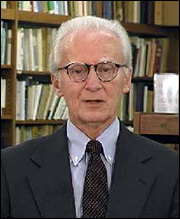
Ralph McInerny on rights

Updating some links: On Natural Law and Natural Rights and Natural Law and Human Rights.

Saturday, June 18, 2011

Thomistica.net: Reflections on Ralph McInerny

Which reminds me, I should contact St. Augustine Press.

Sunday, June 20, 2010

Friday, February 19, 2010

Friday, February 05, 2010

The Succession of Masters

American graduate programs are disinclined to accept applicants who attended the same university for their undergraduate education. The same sort of mentality exists when it comes to hiring faculty -- American universities are reluctant to hire graduates. The alumnus candidate must be truly exceptional to be admitted or hired. The reason? It looks bad on the quality of the program or school if they accept or hire too many of their own. It is expected that a university will admit students from other instutions and regions, as this sort of diversity is supposed to reflect well upon the school or program. Most schools or programs want to avoid the appearance of not being good enough to attract students or teachers from elsewhere (in particular other schools with a reputation for excellence). Of course, such thinking encourages rootlessness and mobility.

From an East Asian perspective (or what I imagine it would be)... such admission policies go against the stability of the master-student relationship. It resembles a purely commercial relationship more than anything else. A teacher might permit his student to find another teacher if he knows he is not qualified or he cannot teach him any more, but this is not what American professors believe about themselves.

As to the selection of new faculty members, for a faculty to not consider one of its own graduates for a position may not mean a lack of confidence in his ability to teach their students, but it may give that impression. Let us suppose that the choice is between a graduate and a non-graduate. If everything else is equal and the non-graduate is hired solely because he is not a graduate of the program, then doesn't appearance take precedence over loyalty? It is more important for a school to base its reputation on its ability to attract faculty from diverse educational backgrounds (from institutions within a certain range of quality, with the proper recommendations -- the right pedigree) than it is to be loyal towards one's own.

There seems to be an excessive concern with appearances and the opinion of others guiding the decision-making for both processes. What is the criteria for judging the quality of a school or program? The quality of the faculty is primary, but this is evaluated through the opinion of others, their peers or reputed experts in that field, and surveys, and perhaps by what is produced by the faculty. Given the avoidance of most important truths, the modern university or college can consider only minor truths as objective evidence of someone's qualifications for an academic position -- whether they are good scholars and exegetes, if they can make a "good" argument regarding a text and provide sufficient evidence to back up their judgment. There is no expectation of or requirement for that scholarship to be in service of some higher truth.

An East Asian scholar would ask what other confirmation of his ability or honor can there be than for a student to succeed his master? Similarly, what teacher does not want want one of his students to replace him? He may naturally also wish to see his students given [important] positions elsewhere, or starting their own schools. But why would he want an outsider to replace him, rather than one of his own? This is especially important when one is passing on some sort of tradition, and not just generic skills of scholarship. Confucians, Taoists, Buddists at least agree that they are cultivating wisdom and pursuing truth, even if they disagree on the particulars. (Some Buddhists may dispute that there is truth, but they are being contradictory for the sake of appearing wise.) How many teachers today aspire to be the bearers of some intellectual tradition, as opposed to being "impartial" scholars who can dissect texts and give a proper exegesis?

The smaller, younger Catholic schools look for who is most qualified and who best fits the purpose of the college; they don't have to worry about the opinions of members of larger institutions. (Especially since few analytic philosophers consider medieval philosophy to be philosophy and so on.) As a consequence, they do not have any problems with hiring alumni, and as a result they have a stronger communal identity.

I should look into how appointments were made in the medieval universities, and what sort of criteria were used to judge candidates. The practices of religious houses of study, such as those operated by the Dominicans, appear to be somewhat similar to the East Asian ideal as I briefly lay it out here, in so far as the religious orders developed their own intellectual traditions which they passed on to each generation, and they raised members of their own orders to be teachers within their houses of study. Is the same true of the universities? (I'll have to confirm what I just wrote about the Dominican houses of study; I should read "First the Bow is Bent in Study": Dominican Education Before 1350.)

I had started this post last Thursday (1/28/10), while I was thinking about the dismal state of American universities. With Dr. McInerny's passing on Friday, it seemed appropriate to write a few words about one of the giants of his generation, and a master who taught and influenced so many. (His funeral Mass was this past Monday, at the Basilica of the Sacred Heart. A ND press release was given on Monday.) May his students be his legacy.

The Big Mac

(source)

I referred to Dr. Ralph McInerny as the "Big Mac" when I talked about him with my sister KK because his son Daniel McInerny was also at Notre Dame, as associate director of the Center for Ethics and Culture. (The Little Mac got a position at Baylor last year.) Dr. McInerny's wife died several years ago and the Big Mac had been in semi-retirement, still offering some sort of class every now and then. I believe he also helped out with the (Thomistic) reading group. I believe Dr. McInerny was a Third Order Dominican, which would not be surprising since he took St. Thomas Aquinas to be his master.

I didn't really study Aquinas until I was at OLGS, and even then I did not read his works. I can't say that I read Dr. McInerny's books right away, but he quickly became one of my early favorites. (His brother Dr. Dennis Q. McInerny still teaches at OLGS.) I became more and more aligned with Dr. McInerny, as opposed to the existential Thomists like Etienne Gilson and Jacques Maritain.

It was through Dr. McInerny (and one of his students who was a professor at Christendom) that I learned of the Laval School and Dr. Charles De Koninck. After I entered graduate school, I had the honor to make his acuqintance and the opportunity to be near him when he permitted me to spend part of a summer at the Maritain Center going over the papers of Dr. De Koninck. Towards the end of my stay, I had the opportunity to talk with him in his office for a bit, and he was quite helpful. He also told me of his studies at Laval. (I have a photo of him with me from that Summer, taken shortly after I first asked him to sign his books. I should look for it and upload it onto FB.)

While I am not competent to judge his personal sanctity, I can attest to his helpfulness and his display of the virtues proper to a gentleman and a scholar. Generous with his time and resources, he was always welcoming and friendly when I would see him at the Center for Ethics and Culture Fall conferences. And he was always happy to sign his books for me whenever I asked him. His humor, smile and gentle laugh were easily noticeable, as well as his humility and friendliness. I admire him greatly, and though I do not consider myself to be one of his students, except in so far as I have learned from his books, I pride myself as being a "fan" or a "follower." If I were to construct an intellectual lineage (or "family tree") as East Asians did in the past, I would definitely reserve a place for him on it.

One might not think of Thomism as a tradition by its own tenents concerning logic and the intellectual virtues. But the passing on of these habits from one generation to the next is a form of tradition. Beliefs are said to be "handed down" metaphorically, and this can also be said of scientiae and artes. The Laval School of Thomism* can also be distinguished from other contemporary schools of Thomism (analytic, existential, transcendental, platonic, etc.) by certain characteristic positions or teachings held in common by its members. Dr. McInerny was editing the collected works of Dr. De Koninck for UND Press. The first two volumes have already been published, and I think Dr. McInerny was working on a third. I don't know if that has been completed, or if someone else will now be taking up the work.

Dr. McInerny was a great bearer of this tradition and he will be missed; may we be as devoted as he to the service of Christ and truth and to the study of Aristotle and St. Thomas and strive to follow his example in teaching others. May he rest in peace.

*The two prominent schools of Aristotelian-Thomism in North America were the Laval School and the Dominican River Forest School. I do not know much of Aristotelian-Thomism as it existed in Europe, though Fr. Garrigou-Lagrange, O.P., while he has been called a "Thomist of Strict Observance," was also an Aristotelian-Thomist with respect to philosophy. I suspect that Aristotelian-Thomism was strong in some of the Dominican houses (Toulouse, for example, and maybe in Spain as well), but not so in others. What of its existence at Louvain? How quickly did it disappear after Dr. De Koninck completed his studies there? Did it disappear before Vatican II or afterwards?

From 1/30/02.
Zenit: Ralph McInerny Dies at Age 80
Inside Catholic: Ralph McInerny passed away this morning
I suspect some sort of notice will be published for The Catholic Thing.

2/2/02
Ralph McInerny (1929-2010)
By Robert Royal, Michael Novak, Bruce Fingerhut, and John O’Callaghan

Zenit: Funeral Held for Ralph McInerny

*Cross-posted at The New Beginning.

Thursday, January 07, 2010

Zenit: Ralph McInerny on a Forgotten Thomist

Don't know how I missed this last year...

Ralph McInerny on a Forgotten Thomist


Calls Charles De Koninck a Man of Faith, Philosopher of Science


By Annamarie Adkins

SOUTH BEND, Indiana, NOV. 6, 2009 (Zenit.org).- The renewed interest in the works of St. Thomas Aquinas in the early-to-mid 20th century produced a flowering of Catholic thought that formulated a coherent intellectual critique and alternative to modernity.

But Thomism fell out of fashion after the Second Vatican Council as the perennial philosophy and leading intellectual framework for the Catholic synthesis of faith and reason.

Today, however, Thomism is experiencing somewhat of a revival, and that can be attributed to the work of Thomists such as Ralph McInerny, who, among others, kept the flame of Thomism burning during the tumultuous intellectual milieu that followed the council.

Now, in an act of gratitude, McInerny seeks to introduce a new generation to his own teacher -- a man who helped lay the groundwork for the recent Thomistic revival: Charles De Koninck.

McInerny is in the process of editing and translating into English the collected works of De Koninck (Notre Dame Press), a layman who inspired a whole generation of Thomists that eventually took up positions in the philosophy departments of many Catholic colleges and universities.

Those professors served as an intellectual bridge between an earlier generation of Thomists and the revival going on today.

McInerny is a writer of philosophy, fiction, and cultural criticism, who has taught at Notre Dame since 1955.

He spoke with ZENIT about his relationship with De Koninck, the motivation for making the great professor's writings known to a wider audience, and what they offer us in the challenge of confronting contemporary problems.

ZENIT: Who was Charles De Koninck? What role did he play in your own formation and intellectual training?

McInerny: De Koninck was dean of the Faculté de Philosophie at the Université Laval in Quebec, and played an enormous role in the formation of American Thomists who began to study there in the 1940s.

For almost two decades this phenomenon continued.

Easily recognizable “Laval Thomists” went on to join the faculties of colleges throughout the nation.

I myself took a licentiate and doctorate at Laval, with Professor De Koninck as my director, going there after taking a master's in philosophy from the University of Minnesota.

There is a marvelous biographical essay by his son Thomas in volume one of the Collected Writings.

ZENIT: Why did you decide to compile and translate his collected works? For what reasons does he deserve a wider, contemporary audience?

McInerny: One night I was rereading an essay by De Koninck on the Eucharist and I fell back in my chair and thanked God that I had studied under this man. But he is now all but unknown, his writings are difficult to find, and few had been translated.

I conceived the project of the collected works as an instance of pietas and gratitude.

ZENIT: How did De Koninck understand the task of philosophy and the philosopher?

McInerny: His principal mentors were Aristotle and Thomas Aquinas. He taught by subjecting the texts to a close reading, conveying a technique that one could continue to employ for a lifetime.

ZENIT: De Koninck wrote eloquently about how the Mother of God personifies Wisdom. What role did the Catholic faith play in his philosophical explorations?

McInerny: De Koninck was a Catholic philosopher, which meant that the faith – the magisterium – was always the guide for his work.

His devotion to Mary followed the teaching of St Louis Grignion de Monfort. His work "Ego Sapientia" is a florilegium of texts brought together under titles of Mary drawn from the great masters of Mariology: Bernard and Bonaventure.

ZENIT: His most notable work seems to be his treatise on the common good. What did De Koninck have to say about this often-misunderstood concept? In what contemporary context could his insights have significant value?

McInerny: The book, "The Primacy of the Common Good," was aimed at the personalists.

Who were they? Marx, Engels, various Renaissance figures whose thought on the primacy of man De Koninck regarded as tempting to contemporaries.

The book was regarded as an attack on Jacques Maritain. This is nonsense; Yves Simon saw the teaching of the two men as identical on this matter.

Father I.T. Eschmann, OP, in a lengthy and condescending study, sought to show that De Koninck's teaching was at variance with that of St. Thomas. Eschmann called his essay "A Defense of Jacques Maritain."

Maritain is not mentioned in the "Primacy," nor does he figure much in Eschmann's defense. But the unfortunate myth was created that De Koninck was attacking Maritain.

ZENIT: In the first volume, you've compiled a number of works that address the philosophy of science, as well as themes related to creation and evolution. What audiences might find these writings particularly helpful?

McInerny: De Koninck's views of evolution are of fundamental importance.

His account of the relation between natural philosophy and natural science still awaits a serious appraisal by philosophers of science.

ZENIT: Where is De Koninck's intellectual legacy found today?

McInerny: In many respects, his legacy is embodied in the approach of Thomas Aquinas College, founded by De Koninck's students and flourishing in a time of chaos in higher education.

And, of course, in his writings, which are ripe for reconsideration.

--- --- ---

On the Net:

For more information: http://undpress.nd.edu/book/P01230