website started by Fr. Powell, OP for his seminar on post-metaphysical theologies.
So is the problem one of logic, a stubborness to recognize the validity analogical naming and a preference for pure univocity?
Sunday, January 27, 2008

Saturday, January 26, 2008
Dr. Pakaluk's Solution
The Solution to the Well-Defined Problem
My advice for how to interpret that difficult passage in Nic. Eth. II.6? Simply continue reading beyond the passage-- since then it becomes clear, I think, that the words which I place in brackets below are not meant to be part of the definition at all, but rather a comment upon the definition:
Ἔστιν ἄρα ἡ ἀρετὴ ἕξις προαιρετική, ἐν μεσότητι οὖσα τῇ πρὸς ἡμᾶς [ὡρισμένη λόγῳ καὶ ὡς ἂν ὁ φρόνιμος ὁρίσειεν].If we bracket those words for the moment, then the definition of virtue given here (which is said, btw, to state the genos only, at 1114b27), is of a trait (ἕξις) which disposes someone to choose in a certain way (προαιρετική), and which is intermediate (ἐν μεσότητι οὖσα) as between two other states, in a manner relative to us (τῇ πρὸς ἡμᾶς). As Taylor points out in his commentary, that and precisely that is what Aristotle had established in his discussion which precedes the definition.
But what is the reason for the bracketed words? They comment upon the definition, and Aristotle gives the sense of that comment in the lines that immediately follow.
First Aristotle clarifies his definition with a couple of glosses:μεσότης δὲ δύο κακιῶν, τῆς μὲν καθ' ὑπερβολὴν τῆς δὲ κατ' ἔλλειψιν· καὶ ἔτι τῷ τὰς μὲν ἐλλείπειν τὰς δ' ὑπερβάλλειν τοῦ δέοντος ἔν τε τοῖς πάθεσι καὶ ἐν ταῖς πράξεσι, τὴν δ' ἀρετὴν τὸ μέσον καὶ εὑρίσκειν καὶ αἱρεῖσθαι.
It is a trait intermediate between two vices one of which is so by excess and the other by defect. And they are so because they either fall short of or exceed what they should, in emotions or in actions, whereas virtue identifies and chooses the intermediate mark.The sentence which next follows is, I think, a gloss as well on the bracketed words:That is why, with respect to its nature and the definition that states its essence, virtue is an intermediate trait, whereas with respect to what is best and what is excellent, it is a high point.The reason for this last gloss is that Aristotle is perfectly well aware that, to anyone who has actually striven to be virtuous, it will seem strange and even paradoxical to say that virtue is something intermediate. Rather, from the point of view of someone striving to be good (κατὰ δὲ τὸ ἄριστον καὶ τὸ εὖ), virtue looks like a nearly unattainable pinnacle. (Think, e.g. of the Congressional Medal of Honor, awarded it is said to "the bravest of the brave", for those who distinguish themselves "…conspicuously by gallantry and intrepidity at the risk of his life above and beyond the call of duty...". Nothing intermediate about that! And there are lots of other examples.)
So Aristotle thinks that he has to defend his definition. He therefore says that, in fact, as regards the nature of a virtue, and considering it formally (i.e. with a view to its logos), each virtue, it turns out, falls between two opposing vices. Someone immersed in the task of trying to act well might not notice this; yet this will be how a discerning person will define it.
And this is exactly what he had said in the bracketed words, and so the text should be translated:Virtue is a trait (ἕξις) which disposes someone to choose in a certain way (προαιρετική), and which is intermediate (ἐν μεσότητι οὖσα) as between two other states, in a manner relative to us (τῇ πρὸς ἡμᾶς)-- that is, when virtue is marked out by its formal definition (ὡρισμένη λόγῳ ), and in the way that a person with insight into practical matters would mark it out (ὡς ἂν ὁ φρόνιμος ὁρίσειεν).This explains perfectly the reading of the codices -- the key is to see that the problematic words are not in the definition but about the definition--
-- and it also shows why all of those dozens of articles on the passage should quietly be pushed aside and forgotten.
Friday, January 25, 2008
Thursday, January 24, 2008
Wednesday, January 23, 2008
Monday, January 21, 2008
An introduction to Georgism
by Lindy Davis, the Program Director of The Henry George Institute and an editor of The Georgist Journal, for Distributist Review
Rick Sarkasian on Catholic Answers livw
I first posted about him here.
Here's his bio from CA:
Audio:
I'll have to listen and see if this is the popularization of the NNL for which I saw an an/book.
Here's his bio from CA:
BIOGRAPHY: Rick Sarkisian, Ph.D. was born and raised in Fresno, California, an area rich in farming and agriculture. He is founder and president of Valley Rehabilitation Services, Inc. specializing in vocational and career guidance since 1976. He earned his BS and MBA in Business Administration from California State University- Fresno, and his MA and Ph.D. in Education from the University of California at Berkeley.
He is author of LIFEWORK: FINDING YOUR PURPOSE IN LIFE, THE MISSION OF THE CATHOLIC FAMILY, THE LIFEWORK INVENTORY, THE DRIVE FACTOR, THE LIFEWORK JOURNAL, NOT YOUR AVERAGE JOE – THE REAL ST. JOSEPH AND THE TOOLS FOR REAL MANHOOD IN THE HOME, THE CHURCH AND THE WORLD, TOOLS FROM JOSEPH’S WORKSHOP and THE LIFEWORK WORKBOOK. He has produced a number of Catholic videos, including JOSEPH – THE MAN CLOSEST TO CHRIST and COMPLETELY CHRIST’S – THE RADICAL CALL OF THE CONSECRATED LIFE. He also writes for various Catholic publications, including Religious Life, Lay Witness, Guardian of the Redeemer and Vocations and Prayer magazine.
He has been active in Catholic scouting and works closely with the Oblates of St. Joseph, California Province, promoting devotion to St. Joseph as well as the Institute on Religious Life in helping to form a culture of vocations.
Rick has appeared on EWTN in "The Abundant Life" series hosted by Johnnette Benkovic and "The Carpenter Shop" with Steve Wood and has been a guest on a number of Catholic radio programs. He is also a conference speaker on vocations, life-purpose, families and St. Joseph.
Rick and his wife Cheryl have been married 26 years and have five children.
Audio:
| Listen (Real) | Click here to listen to show in Real audio format | |
| Download (Real) | Right click (Mac: option-click) and select Save | |
| Listen (MP3) | Click to listen to MP3 (right-click to download) | |
I'll have to listen and see if this is the popularization of the NNL for which I saw an an/book.
Zenit: Vatican Aide: Heart of Ecumenism Is Prayer
Vatican Aide: Heart of Ecumenism Is PrayerFather Lombardi Comments on Christian Unity
VATICAN CITY, JAN. 20, 2008 (Zenit.org).- Ecumenism is prayer, the director of the Vatican's press office said in commenting on the theme of 100th Week of Prayer for Christian Unity.
Jesuit Father Federico Lombardi analyzed the theme "Pray Without Ceasing" on the most recent episode of the Vatican Television weekly program "Octave Dies." The week of prayer ends Jan. 25.
In these 100 years, he explained, "the ecumenical movement has followed a long path, but its innermost soul always remains prayer -- because the unity of Christians can only be a gift of God, to be asked for with constancy and insistence."The priest continued: "Prayer gives us the strength to let ourselves be formed by the action of God, which purifies us and gives us his grace to obey his plan for salvation.
"Prayer changes our mentality and it helps Christians to consider the other brothers, sons of the same Father. Prayer educates and accompanies, proposes and transmits the truth, the light, the life, the love that is Christ, Savior of humanity."
"Observing the week in January has become a common practice of all the Christian confessions," he added, "and it is of great importance for reconciliation, brotherhood and unity among Christians, realizing the prayer of Jesus: 'that all be one.'"
Father Lombardi said the theme "makes it clear that the life of the Christian community is really exultant and prospers only through a life of prayer, which contributes to its spiritual, moral, social and cultural growth, and constructs bridges of love, of peace and of hope."
"A deeper and more true union with God," he added, "is the surest way to rediscover and recreate union among all the believers in Christ."
Saturday, January 19, 2008
Zenit: Pray Without Ceasing for the Conversion of Hearts
Pray Without Ceasing for the Conversion of Hearts
Meditation for Day 3 of Week of Prayer for Christian Unity
VATICAN CITY, JAN. 19, 2008 (Zenit.org).- Here is the commentary prepared jointly by the Pontifical Council for Christian Unity and the Commission on Faith and Order of the World Council of Churches for Sunday, the third day of the Week of Prayer for Christian Unity.
* * *
"Admonish the idlers, encourage the faint-hearted" (1 Thessalonians 5:14)
"The repentance of Nineveh" (Jonah 3:1-10)
"Create a pure heart in me" (Psalms 51:8-15)
"Encourage the faint-hearted" (1 Thessalonians 5:(12a)13b-18)
"A house of prayer" (Mark 11:15-17)
Commentary
In the beginning and at the heart of the ecumenical enterprise can be found a pressing call to repentance and to conversion. We sometimes need to know how to call each other to task within our Christian communities as Paul invites us to do in the first epistle to the Thessalonians. If one or the other causes division, he should be rebuked; if some are afraid of all that a difficult reconciliation could imply, they should be encouraged.
Why hide the fact? If divisions between Christians exist, it is also through a lack of will to be committed to ecumenical dialogue and even, simply, to prayer for unity.
The Bible tells us how God sent Jonah to rebuke Nineveh and how the whole city repented. In the same way, Christian communities must listen to the Word of God and repent. In the course of the last century, we have not been lacking in prophets of unity who have made Christians aware of the unfaithfulness manifest in our divisions and reminding them of the urgency of reconciliation.
In the image of the vigorous intervention of Jesus in the temple, the call to Christian reconciliation can seriously call into question our narrow self-understanding. We too have a great need of purification. We need to know how to rid our hearts of all that prevents them from being a true house of prayer, concerned for the unity of all peoples.
Prayer
Lord you desire truth deep-down within us: in the secret of our hearts, you teach us wisdom. Teach us to encourage each other along the road to unity. Show us the conversion necessary for reconciliation. Give to each of us a new, truly ecumenical heart, we pray you. Amen.
Zenit: Pray Always, Trusting God Alone
Pray Always, Trusting God Alone
Meditation for Day 2 of Week of Prayer for Christian Unity
VATICAN CITY, JAN. 18, 2008 (Zenit.org).- Here is the commentary prepared jointly by the Pontifical Council for Christian Unity and the Commission on Faith and Order of the World Council of Churches for Saturday, the second day of the Week of Prayer for Christian Unity.
* * *
Give Thanks in All Circumstances (1 Thessalonians 5: 18)
"The Lord indeed is God" (1 Kings 18:20-40)
"The Lord is my shepherd" (Psalm 23)
"Give thanks in all circumstances" (1 Thessalonians 5: (12a)13b-18)
"Father, I thank you for having heard me" (John 11:17-44)
Commentary
Praying is rooted in the trust that God is powerful and faithful. God alone is the one who holds all in his hands, the present and the future. His word is credible and truthful.
The story of Elijah in 1 Kings impressively demonstrates the oneness of God. Elijah berates the apostates who worship Baal, who is not answering their prayers. Yet when Elijah prays to the one God of Israel, the response is immediate and miraculous. Realizing this, the people turned their hearts back to God.
Psalm 23 is a profound confession of trust. It depicts a person who believes that God guides him and stays with him also in the darkness of life and in situations of desolation and oppression.
We may find circumstances that may be difficult, even turbulent. We may have moments of despair and resignation. Sometimes we feel that God is hidden. But he is not absent. He will manifest his power to liberate in the midst of human struggle. Thus we give thanks to him in all circumstances.
The raising of Lazarus from the dead is one of the most dramatic scenes recorded in John’s gospel. It is a manifestation of Christ’s power to break the bonds of death and an anticipation of the new creation. In the presence of the people Jesus prays aloud, thanking his Father for the mighty deeds he will do. God’s saving work is accomplished through Christ so that all will come to believe.
The ecumenical pilgrimage is a way in which we realize the wondrous deeds of God. Christian communities which have been separated from each other come together. They discover their unity in Christ and come to understand that they are each part of one church and need one another.
The vision of unity can be darkened. It is sometimes threatened by frustrations and tensions. The question may arise whether we Christians are truly called to stay together. Our continuous praying sustains us as we look to God and trust in him. We are confident that he is still at work in us and will lead us to the light of his victory. His kingdom begins with our reconciliation and growing unity.
Prayer
God of all creation, hear your children as we pray. Help us keep our faith and trust in you. Teach us to give thanks in all circumstances, relying on your mercy. Give us truth and wisdom, that your church may arise to new life in one fellowship. You alone are our hope. Amen.
Friday, January 18, 2008
B16 on faith and reason
17.1.2008
The University of Rome Closes its Doors to the Pope. Here's the Lesson They Didn't Want to Hear
A group of teachers and students forced Benedict XVI to cancel his visit to "La Sapienza." But the professor pope did not give up: he made public, a day early, the address that he had written for the occasion. It is the follow-up to the formidable lecture in Regensburg, on the ultimate questions of faith and reason
Go to link for the text of the pope's address.
The University of Rome Closes its Doors to the Pope. Here's the Lesson They Didn't Want to Hear
A group of teachers and students forced Benedict XVI to cancel his visit to "La Sapienza." But the professor pope did not give up: he made public, a day early, the address that he had written for the occasion. It is the follow-up to the formidable lecture in Regensburg, on the ultimate questions of faith and reason
Go to link for the text of the pope's address.
Thursday, January 17, 2008
Zenit: That We May Be One, and Never Lose Heart
That We May Be One, and Never Lose Heart
Meditation for Day 1 of Week of Prayer for Christian Unity
VATICAN CITY, JAN. 17, 2008 (Zenit.org).- Here is the commentary prepared jointly by the Pontifical Council for Christian Unity and the Commission on Faith and Order of the World Council of Churches for the first day of the Week of Prayer for Christian Unity, which begins Friday.
* * *
Pray always, "Pray without ceasing" (1 Thessalonians 5:17)
Isaiah 55:6-9 "Seek the Lord while he may be found"
Psalm 34 "I sought the Lord, and he answered me"
1 Thessalonians 5:(12a), 13b-18 "Pray without ceasing"
Luke 18:1-8 "To pray always and not to lose heart"
Commentary
Paul writes, "Rejoice always, pray without ceasing, give thanks in all circumstances; for this is the will of God in Christ Jesus for you." His epistle is written to a faithful community that is anxious about death. Many good and believing brothers and sisters have "fallen asleep" before the Lord's return to bring all into his resurrection. What will happen to these faithful dead? What will happen to the living? Paul assures them that the dead shall be raised with the living and exhorts them to "pray without ceasing." What does it mean to pray without ceasing? We find insights to answer this question in today's readings. Our whole lives are to be a seeking of the Lord, convinced that in seeking, we shall find.
In the midst of the exile, when all seemed hopeless and dry, the prophet Isaiah proclaims, "Seek the Lord while he may be found, call upon him while he is near." Even in exile, the Lord is near and urging his people to turn to him in prayer and to follow his commandments so that they may know his mercy and pardon. Psalm 34 affirms the prophetic conviction that the Lord will answer those who call upon him, and adds praise to the call to pray without ceasing.
In Luke's gospel, Jesus teaches his disciples with the parable of the widow seeking justice from a judge who neither feared God nor respected people. The story serves as a reminder of the need for constancy in prayer -- "to pray always and not to lose heart" -- and for confidence that prayer is answered: "Will not God grant justice to his chosen ones who cry to him day and night?"
As Christians in search of unity, we reflect on these readings to find "the will of God in Christ Jesus for you." It is Christ who lives within us. Our call to pray without ceasing becomes part of his eternal intercession to the Father: "That all may be one, ... that the world may believe." The unity we seek is unity 'as Christ wills' and the 'octave' observance of Christian prayer for unity reflects the biblical notion of completion, that some day our prayer will be answered.
Unity is a God-given gift to the church. It is also a call of Christians to live out this gift. Prayer for Christian unity is the source from which flows all human endeavor to manifest full visible unity. Many are the fruits of 100 years of an octave of prayer for Christian unity. Many are also the barriers that still divide Christians and their churches. If we are not to lose heart, we must be steadfast in prayer so that we may seek the Lord and his will in all we do and all we are.
Prayer
Lord of unity, Father, Son and Holy Spirit, we pray without ceasing that we may be one, as you are one. Father, hear us as we seek you. Christ, draw us to the unity that is your will for us. Spirit, may we never lose heart. Amen.
Tuesday, January 15, 2008
Latest Proceedings of the Pontifical Academy of St. Thomas Aquinas
I hadn't been to Thomistica.net for a while, but on my last visit I found this post:
Proceedings of the Pontifical Academy of St. Thomas Aquinas
The address of the PAST: Casina Pio IV, 00120 Città del Vaticano, Email:past AT acdscience.va
Proceedings of the Pontifical Academy of St. Thomas Aquinas
The address of the PAST: Casina Pio IV, 00120 Città del Vaticano, Email:past AT acdscience.va
Doctor Communis n.s. 10/1-2 (2007)
- G. Cottier, Loi naturelle et Décalogue
- R. Cessario, Saint Thomas and the Enculturation of the Natural Law : Doing Moral Theology on Earth
- U. Galeazzi, Sulla prossimità spirituale a Tommaso d’Aquino nel pensiero di Charles Tayler. Aspetti antropologici ed etici
- F. Jacques, Thomas d’Aquin et Emmanuel Kant: Loi naturelle et impératif catégorique. Et après ?
- J. Merecki, La visione etica di Karol Wojtyla
- R. Hittinger, John Rawls : The Basis of Social Justice and Intercultural Dialogue in a Globalized World
- H. Seidl, Etica di responsabilità in D. Hume e H. Jonas
- R. McInerny, Ethics and Virtue Ethics
- L. Clavell, Verità e libertà
- R. Ferrara, Legge naturale e legge nuova nel recente Magistero e nelle teologia di San Tommaso
- B. Mondin, Cultura e valori per una società globalizzata
- V. Possenti, Stato, diritto e religione. Il dialogo tra J. Habermas e J. Ratzinger
- I. Biffi, Gesú Cristo “misura” dell’ uomo in Tommaso d’Aquino
- M. Beuchot, La polémica de Las Casas con Sépulveda. Su dependencia respecto de la Escuela de Salamanca
Sunday, January 13, 2008
Roger Scruton

Roger Scruton - Writer and Philosopher
Roger Scruton: Internet Bibliography
Archive of Roger Scruton's publications
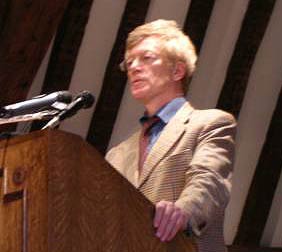
Roger Scruton on Immigration, Multiculturalism and the Need to ...
Why I became a conservative by Roger Scruton
Right Reason: The Joy of Conservatism: An Interview with Roger ...
What Ever Happened to Reason? by Roger Scruton, City Journal ...
A Righter Shade of Green
Kitsch and the Modern Predicament by Roger Scruton, City Journal ...
Essays: 'The sacred and the human' by Roger Scruton | Prospect ...
'The sacred and the human', Prospect Magazine issue 137 August ...
Salon Feature | On good authority
Art, Beauty, and Judgment
Michael Oakeshott, On Human Conduct

On Human Conduct by Michael Joseph Oakeshott - 1975 - 342 pagesbooks.google.com - About this book - More book results »
Oxford University Press: On Human Conduct: Michael Oakeshott
Amazon.com: On Human Conduct (Clarendon Paperbacks): Books ...
Home Page of the Michael Oakeshott Association
Michael Oakeshott: An Introduction: The Independent Review: The ...
Michael Oakeshott - Wikipedia, the free encyclopedia
Michael Oakeshott and the Political Economy of Freedom - The World ...
Oxford University Press: On Human Conduct: Michael Oakeshott
Amazon.com: On Human Conduct (Clarendon Paperbacks): Books ...
Home Page of the Michael Oakeshott Association
Michael Oakeshott: An Introduction: The Independent Review: The ...
Michael Oakeshott - Wikipedia, the free encyclopedia
Michael Oakeshott and the Political Economy of Freedom - The World ...
Thursday, January 10, 2008
Indian logic
Indian logic - Wikipedia, the free encyclopedia
Indian Logic Forum :: Index
Logic and Ontology in Ancient India. A survey of Contemporary Readings
The Hindu : Studies in Indian logic
E-sangha, Buddhist Forum and Buddhism Forum -> Indian Logic Forum
Formalisation of ancient logics: Dignaga
ILKB home
Nyaya-kosa - Dictionary of Indian Logic
Indian Logic: A Reader - Google Books Result
Universals: Studies in Indian Logic and Linguistics - Google Books Result
Amazon.com: Universals: Studies in Indian Logic and Linguistics ...
Staal, Frits: Universals
A System of Indian Logic: The Nyana Theory of Inference - Google Books Result
Logic, Language, and Reality: An Introduction to Indian ... - Google Books Result
Reason and Tradition in Indian Thought: An Essay on the Nature of ... - Google Books Result
Indian Logic: A Reader
A System of Indian Logic: The Nyana Theory of Inference
Is Indian logic nonmonotonic? Philosophy East and West Find ...
Formal structures in Indian logic
Amazon.com: The Character of Logic in India (Suny Series in Indian ...
Internet Archive: Details: A Primer Of Indian Logic
A History of Indian Logic : Ancient, Mediaeval and Modern Schools
A History of Indian Logic : Ancient, Mediaeval and Modern Schools ...
[FOM] Chinese and Indian logic
Phenomenology East and West Journal Indian Logic Forum
IngentaConnect Indian Logic and Indian Syllogism
Indian Logic Forum :: Index
Logic and Ontology in Ancient India. A survey of Contemporary Readings
The Hindu : Studies in Indian logic
E-sangha, Buddhist Forum and Buddhism Forum -> Indian Logic Forum
Formalisation of ancient logics: Dignaga
ILKB home
Nyaya-kosa - Dictionary of Indian Logic
Indian Logic: A Reader - Google Books Result
Universals: Studies in Indian Logic and Linguistics - Google Books Result
Amazon.com: Universals: Studies in Indian Logic and Linguistics ...
Staal, Frits: Universals
A System of Indian Logic: The Nyana Theory of Inference - Google Books Result
Logic, Language, and Reality: An Introduction to Indian ... - Google Books Result
Reason and Tradition in Indian Thought: An Essay on the Nature of ... - Google Books Result
Indian Logic: A Reader
A System of Indian Logic: The Nyana Theory of Inference
Is Indian logic nonmonotonic? Philosophy East and West Find ...
Formal structures in Indian logic
Amazon.com: The Character of Logic in India (Suny Series in Indian ...
Internet Archive: Details: A Primer Of Indian Logic
A History of Indian Logic : Ancient, Mediaeval and Modern Schools
A History of Indian Logic : Ancient, Mediaeval and Modern Schools ...
[FOM] Chinese and Indian logic
Phenomenology East and West Journal Indian Logic Forum
IngentaConnect Indian Logic and Indian Syllogism
Wednesday, January 09, 2008
Friedrich August von Hayek
Biography of FA Hayek
Friedrich August von Hayek - Curriculum Vitae
Friedrich von Hayek
Friedrich Hayek - Wikipedia, the free encyclopedia
PBS: Think Tank: Transcript for "Freidrich Hayek"
Freidrich von Hayek / The Use of Knowledge in Society
Hayek Page -- The Friedrich Hayek Scholars' Page (Hayek Center for Multdisciplinary Research)
FRIEDRICH AUGUST VON HAYEK
THE POLITICAL THOUGHT OF FRIEDRICH A. HAYEK
Why I Am Not a Conservative by F. A. Hayek
Why I Am Not a Conservative - Institut HAYEK
Find "The Principles of a Liberal Social Order."
The Road to Serfdom
The Road to Serfdom
The Illustrated Road to Serfdom
IEA Road to Serfdom
Friedrich Hayek : The Road to Serfdom by Aruni Mukherjee
Reason Magazine - The Road from Serfdom
Hayek, F. A.: The Road to Serfdom
Hoppe, Hans-Hermann
Hans-Hermann Hoppe: Archives
Friedrich August von Hayek - Curriculum Vitae
Friedrich von Hayek
Friedrich Hayek - Wikipedia, the free encyclopedia
PBS: Think Tank: Transcript for "Freidrich Hayek"
Freidrich von Hayek / The Use of Knowledge in Society
Hayek Page -- The Friedrich Hayek Scholars' Page (Hayek Center for Multdisciplinary Research)
FRIEDRICH AUGUST VON HAYEK
THE POLITICAL THOUGHT OF FRIEDRICH A. HAYEK
Why I Am Not a Conservative by F. A. Hayek
Why I Am Not a Conservative - Institut HAYEK
Find "The Principles of a Liberal Social Order."
The Road to Serfdom
The Road to Serfdom
The Illustrated Road to Serfdom
IEA Road to Serfdom
Friedrich Hayek : The Road to Serfdom by Aruni Mukherjee
Reason Magazine - The Road from Serfdom
Hayek, F. A.: The Road to Serfdom
Hoppe, Hans-Hermann
Hans-Hermann Hoppe: Archives
Subscribe to:
Posts (Atom)