Climate Change a Grave Issue, Says Benedict XVI
Urges Care for God's Creation
VATICAN CITY, SEPT. 6, 2007 (Zenit.org).- Benedict XVI reiterated his concern for the environment, saying that the attention being given to global warming is very important.
The Pope made his appeal for the protection of the planet, and especially the prudent use and distribution of water, before concluding the general audience Wednesday in St. Peter's Square.
He made these comments as he greeted the participants of the symposium titled "The Arctic: Mirror of Life." The conference, held in Greenland and inaugurated by Orthodox Patriarch Bartholomew I of Constantinople, began today.
The Holy Father wanted "to greet all the participants -- various religious leaders, scientists, journalists and other interested parties -- and to assure them of my support for their endeavors."
"Care of water resources and attention to climate change are matters of grave importance for the entire human family," the Pontiff added. "Encouraged by the growing recognition of the need to preserve the environment, I invite all of you to join me in praying and working for greater respect for the wonders of God’s creation!"
The symposium is being held under the patronage of Bartholomew I; José Manuel Barroso, president of the European Commission; and Kofi Annan, former U.N. secretary-general.
The symposium is organized by an Athens-based nongovernmental organization called Religion, Science and the Environment.
This year's symposium is the seventh to be organized by the group, with the aim of raising environmental consciousness in diverse parts of the world.
Benedict XVI has repeatedly mentioned environmental issues in recent days. He discussed ecology with Israeli President Shimon Peres at Castel Gandolfo today and also told youth in Loreto, Italy, last Sunday that protecting creation is an urgent task.
Friday, September 07, 2007
Climate Change a Grave Issue, Says Benedict XVI

Papal Address on Ministry to Prisoners
Papal Address on Ministry to Prisoners
"Called to Be Heralds of God’s Infinite Compassion"
VATICAN CITY, SEPT. 6, 2007 (Zenit.org).- Here is a Vatican translation of the address Benedict XVI gave today to the participants at a world congress on pastoral care in prisons.
* **
ADDRESS OF HIS HOLINESS BENEDICT XVI TO THE PARTICIPANTS IN THE TWELFTH WORLD CONGRESS OF THE INTERNATIONAL COMMISSION OF CATHOLIC PRISON PASTORAL CARE
Castel Gandolfo
Thursday, 6 September 2007
Dear Friends,
I am pleased to welcome you as you gather in Rome for the Twelfth World Congress of the International Commission of Catholic Prison Pastoral Care. I thank your President, Doctor Christian Kuhn, for the kind words expressed on behalf of the Executive Board of the Commission.
The theme of your Congress this year, “Discovering the Face of Christ in Every Prisoner” (Mt 25:36), aptly portrays your ministry as a vivid encounter with the Lord. Indeed, in Christ the “love of God and love of neighbour have become one”, so that “in the least of the brethren we find Jesus himself, and in him…God” ("Deus Caritas Est," 15).
Your ministry requires much patience and perseverance. Not infrequently there are disappointments and frustrations. Strengthening the bonds that unite you with your bishops will enable you to find the support and guidance you need to raise awareness of your vital mission. Indeed, this ministry within the local Christian community will encourage others to join you in performing corporal works of mercy, thus enriching the ecclesial life of the diocese. Likewise, it will help to draw those whom you serve into the heart of the universal Church, especially through their regular participation in the celebration of the sacraments of Penance and the Holy Eucharist (cf. "Sacramentum Caritatis," 59).
Prisoners easily can be overwhelmed by feelings of isolation, shame and rejection that threaten to shatter their hopes and aspirations for the future. Within this context, chaplains and their collaborators are called to be heralds of God’s infinite compassion and forgiveness. In cooperation with civil authorities, they are entrusted with the weighty task of helping the incarcerated rediscover a sense of purpose so that, with God’s grace, they can reform their lives, be reconciled with their families and friends, and, insofar as possible, assume the responsibilities and duties which will enable them to conduct upright and honest lives within society.
Judicial and penal institutions play a fundamental role in protecting citizens and safeguarding the common good (cf. Catechism of the Catholic Church, 2266). At the same time, they are to aid in rebuilding “social relationships disrupted by the criminal act committed” (cf. "Compendium of the Social Doctrine of the Church," 403). By their very nature, therefore, these institutions must contribute to the rehabilitation of offenders, facilitating their transition from despair to hope and from unreliability to dependability. When conditions within jails and prisons are not conducive to the process of regaining a sense of a worth and accepting its related duties, these institutions fail to achieve one of their essential ends. Public authorities must be ever vigilant in this task, eschewing any means of punishment or correction that either undermine or debase the human dignity of prisoners. In this regard, I reiterate that the prohibition against torture “cannot be contravened under any circumstances” (Ibid., 404).
I am confident that your Congress will provide an opportunity to share your experiences of the mysterious countenance of Christ shining through the faces of the imprisoned. I encourage you in your efforts to show that face to the world as you promote greater respect for the dignity of the detained. Finally, I pray that your Congress will be an occasion for you yourselves to appreciate anew how, in attending to the needs of the imprisoned, your own eyes are opened to the marvels God does for you each day (cf. "Deus Caritas Est," 18).
With these sentiments I extend my heartfelt wishes to you and all the participants in the Congress for the success of your meeting and willingly impart my Apostolic Blessing to you and your loved ones.
© Copyright 2007 -- Libreria Editrice Vaticana
Wednesday, September 05, 2007
Tuesday, September 04, 2007
A Look at the Agora Meeting
Benedict XVI in Loreto
A Look at the Agora Meeting
ROME, SEPT. 1, 2007 (Zenit.org) - Here is an overview of the Italian bishops' three-year plan to give special emphasis to youth ministry, titled the Agora of Italian Youth. The plan's program for this year is highlighted by Benedict XVI's meeting with youth taking place today and Sunday in Loreto, Italy.
The texts, including two interviews, are provided by the Fides news agency.
* * *
Interview with Monsignor Paolo Giulietti, head of National Service for Youth Pastoral Ministry at the Italian bishops conference.
Q: Monsignor Giulietti, with what objectives did the March 2006 session of the bishops' standing council approve the proposal for a national path of special attention for the world of youth articulated in three years: the Agora of young Italians?
Monsignor Giulietti: The objectives were many within the framework of renewed attention on the part of the Catholic community for the world of youth. The bishops defined young people a "pastoral priority" and the "Agora dei giovani italiani" intends to concretize this statement.
Hopefully it will lead to greater educational effort on the part of the community, serious efforts to invest in human and material resources to offer young people space for more participation in Church life and new missionary impulse with the involvement of the young people themselves.
Q: The Agora at Loreto is also dedicated to the theme of creation. What is the best way to educate young people to respect creation and nature?
Monsignor Giulietti: It is important on the one hand to intensify knowledge and motivation, anchoring attention for nature to a sound Christian vision of the relationship between man and creation; on the other hand it is decisive to offer young people the proposal of realistic and practical actions in day to day living -- small individual and community actions that can improve the present situation and generate hope for the future. It is important to realize that we are all responsible for creation, we must not wait for someone else to solve the problem for us.
Q: Benedict XVI has confirmed his presence at Loreto. After the World Youth Day in Cologne this is the second major event he dedicates to young people. What do they expect from the meeting with the Holy Father? In your opinion why did the Pope accept to insert the meeting in Loreto among his appointments?
Monsignor Giulietti: The Pope -- as he said on June 17 in Assisi -- is anxious to be with young people, dialogue with them, propose the "great yes" of the Christian faith as the answer to their longing for a truly human life. He has confidence in the new generations and entrusts them with the mission to carry the Gospel to their peers.
For us the Pope's presence in Loreto almost puts a seal on this three-year path, to which he will make a fundamental contribution in contents and motivation. In particular, the meeting with the Holy Father will be the celebration of a year devoted to listening and will open the year devoted to proclamation in interpersonal relations.
Q: Mission is an integral part of the life of faith. It is possible in your opinion that young people today still sense the urgency to communicate the Gospel of Christ to their peers? How can we kindle in young people a desire for mission?
Monsignor Giulietti: Mission is not something to do, it is more a way of being: Communicating with word and deed the beauty, the greatness of the experience of an encounter with Christ who makes life new. It is possible to kindle missionary impulse if we help young people to view their ordinary life with new eyes and to live it in an "extraordinary" manner. Naturally it is necessary to rethink the words and ways to speak of this at work, at school, at leisure time … for witness to be effective. The problem of little missionary spirit is due too often to dis-incarnated formation and spirituality.
Q: The Church often organizes meetings and appointments but there is little real faith life in our country especially among young people. In your opinion are these great rallies helpful for the faith of young people or not?
Monsignor Giulietti: To say there is little real faith life in the country would appear to me to be a generic statement: We have many young people who live their Christian faith with consistence. Some experienced the decisive moment in their journey of faith precisely at one of these great gatherings. I do not think we can say these great events are of no use; instead we must say that there is a right way and a wrong way to approach them. If well prepared, young people who take part can benefit greatly; if left to improvisation, participation can be disappointing. The event is an opportunity, a channel, and it is up to us to use it well."
--- --- ---
Interview with Monsignor Mauro Parmeggiani, prelate secretary of the Vicariate of Rome and director of the Diocesan Service of Youth Pastoral Ministry.
Q: Benedict XVI has confirmed his presence at Loreto. After the WYD in Cologne this is the second major event he dedicates to young people. What do the young people of Rome diocese expect from the meeting with the Holy Father? In your opinion why did the Pope accept to insert the Meeting in Loreto among his appointments?
Monsignor Parmeggiani: Actually since the World Youth Day in Cologne the Pope has had other meetings with young people, for example recently in Assisi and Vigevano, and -- in greater numbers -- in Brazil -- and before that in Krakow. I am thinking of his annual meetings in Rome with the young people of his diocese on the Thursday before Palm Sunday.
Certainly the meeting in Loreto will be an important national happening for young people with the Pope. The young people of the diocese of Rome are anxious to listen to Benedict XVI, knowing that he listens to them seriously. Our young Romans have already seen how the Pope is anxious to listen to them. They realized this when he agreed to answer questions off the cuff on various issues on life in their meeting with him in 2006 and then this year when the listening was more intimate and even sacramental when Benedict XVI, like all the priests present at the Roman appointment for WYD, entered the confessional and heard the confessions of six young people.
I think that in Loreto, too, the Pope will want to listen to the young people and speak to them in the name of the One whom he represents and of this responsibility he is deeply aware. The young people are aware that the Pope knows them and he knows the world in which they live, the relativistic, secularized and de-Christianized culture in which they are submerged, their family and affective difficulties, often much greater than one would imagine.
Certainly Benedict XVI appears to be reserved and shy … but as his secretary said recently in an interview published in one of our national dailies, his shyness, rather than a mark of his character, is due to a keen awareness that the Pope represents Christ and it is to him that he must give way.
I think therefore that our young people expect the Pope to help them solve their difficulties. This will not be a meeting of superficial youth, celebrating without contents, instead it will give interesting answers for life which broaden the scope of reason to make way for Christ to enter, which propose Christ as God's magnificent "yes" to all men and women and to all the young men and women of today.
I think the meeting will be transformed into supplication, praise and prayer to the God whom the Pope will announce. I have the impression that Benedict XVI is most selective in his choice of appointments. If he has called the young people to Loreto it is to let them know that they are not alone as they strive to live their faith and to be disciples of Christ today, that the Church for them is a "trustworthy companion" in which to pronounce their yes for life, to Christ and to neighbor, and to spur them on to be together credible witness of Love."
Q: Mission is an integral part of the life of faith. It is possible in your opinion that young people today still sense the urgency to communicate the Gospel of Christ to their peers? How can we kindle in young people a desire for mission?
Monsignor Parmeggiani: Certainly. They may have doubts as to how to propose the Gospel, but they -- perhaps more than adults -- realize that as John Paul II said, faith is strengthened when it is given to others.
Through the grace of God I see every year in Rome many young members of groups, movements, parishes preparing for youth Mission at the School for Evangelization, organized by the Diocesan Youth Pastoral Service in view of our youth mission called "Jesus at the Center" now in its 4th annual edition and which will take place in Rome's city center from Sept. 29 to Oct. 7 this year.
Actually I believe that young people, more than adults, sense the urgency of mission and they desire an extroverted faith which spreads to their friends, their environments, starting with the school, leisure places, sport, university … And it is good to see how these young people, regarded by certain over-clerical lay adults or even priests at first with some diffidence, succeed in converting even the latter to mission.
Basically the truth, a sense of life, beauty, happiness is never lacking in the heart of a young person including the young person of today. This desire -- we have been told many times by John Paul II and now by Benedict XVI -- has a name: Jesus Christ, his mercy, his love. Young people need love and "Deus caritas est," God is Love!
And if we help them encounter this love by being close to them, listening, explaining the word of God, administrating of the sacraments well celebrated, if we are witnesses of charity, of life, if we are adults consistent with their decisions -- even though poor sinners -- and faithful to the love of Christ who came to encounter them and captivate them, then they too will feel impelled to witness, to be missionaries because love spreads, it cannot be kept for one's self, it demands by nature to be shared with everyone, through the power of the Holy Spirit who has been given to us -- as Benedict XVI writes in his message to the young people of the world in view of the next World Youth Day in Sydney -- "to the ends of the earth!"
--- --- ---
Agora of young Italians: three years of work
It all began during the March 2006 session of the Italian bishops' conference standing council, which approved a proposal of a national path of special attention for the world of youth articulated in three years: the Agora of young Italians. A committee was set up to support youth initiatives and Monsignor Giuseppe Betori, former secretary of the conference, was appointed president.
The objective of the Agora of young Italians is to foster the realization of this path giving new impulse to youth pastoral ministry, greater participation of the new generations in the Church's missionary activity and involvement in the path of the Church in Italy. The value of missionary activity is the fundamental dimension of the life and action of Christians, individuals and communities.
Year 1
The first pastoral year 2006-2007 was devoted to listening to the world of youth. This is the first dimension of mission; the aim is in fact to carry the Church (communities, young people, priests, pastoral workers) out of their own spaces in order to build new relations with young people on the terrain of hope, sought after and lived in the ambits of daily life, using the interpretations, analysis and proposals suggested at the 4th Church Meeting in Verona: affective relations; experience of fragility; commitment for citizenship; study/work dynamic -- celebration; relations with other generations. The first year was oriented to the national meeting in Loreto, which follows on the Verona Meeting, which gave decisive impulse (motivations and contents) to what remains to be done.
The theme "As I Have Loved You," connects the Church's becoming encounter with young people to the mystery of God becoming an encounter for humanity in Jesus Christ. The Spirit of Truth guides our listening, revealing the presence of Christ in the midst of our young people and leading the Church to "discern what is 'true' present in the guise of what is 'new.'"
Year 2
The pastoral year 2007-2008, will be devoted to the interpersonal dimension of evangelization. The objective is to continue the extrovert dynamic of year one, at the level of witness in daily life and with special initiatives of mission. The central event of year two is World Youth Day 2008 in Sydney: an opportunity for young people to deepen their sense of the mission mandate for their Christian life, in an extremely stimulating cultural and social context. Physical or "virtual," participation at the event in Sydney is therefore an important passage for those involved in the three year journey.
The theme, "You Will Be My Witnesses," shows that mission is part of the Christian identity of individuals and communities called to narrate the joyous experience of the encounter with the risen Lord. Mission is lived not as "proselytizing, which wants to 'capture' young people, but as a joyous communication of the beauty of a discovery which one feels compelled to share."
Year 3
The third pastoral year 2008-2009 will be devoted to the cultural and social dimension of evangelization. The objective is to pursue the extrovert dynamic treating the questions of Christian witness (personal, but above all as a community) exercised on frontiers of major cultural and social issues. The itinerary will conclude with an event lived simultaneously in every diocese in Italy, in the squares or diocesan shrines or some of the "new shrines" of our times such as, for example, shopping malls, railway stations, cinemas, sports grounds and places of marginalization.
The theme "To the Ends of the Earth," underlines the necessity for the Gospel to be proclaimed in the languages and cultures of young people today often very distant from those of the previous generations.
--- --- ---
First Lap: Loreto, Sept. 1- 2
"Loreto 2007" will be the first of three great gatherings in the three-year path of the "Agora of Young Italians." On Sept. 1 - 2, thousands of young people from all over Italy and delegations from European and Mediterranean countries will meet at the Marian Shrine for a great festival with the participation of Benedict XVI.
The appointment in September is a key moment for year one with the theme "As I Have Loved You," which includes the post-Verona journey and gives decisive impulse (motivation and content) to what remains to be done.
The Loreto event involves not only the organizers and participants but also the local Catholics: In the days preceding the event (Aug. 29-31) the young guests will stay with families in 32 dioceses in the regions of Marche, Umbria, Emilia Romagna and Abruzzo and take part in days of reflection and sharing, bringing the voice of the world of youth to the local Catholic communities and the civil realities.
--- --- ---
Loreto Program:
-- Hosting days (Aug. 29-31). In the 32 dioceses of Romagna, Marche, Umbria and Abruzzo the young people will meet to discuss and share their journey. The days will be characterized by consolidated dynamics (hosting families, festive events, and getting to know the local people and the territory …), as well as initiatives connected with the theme of year one of the Agora of young Italians.
-- National meeting (Sept. 1-2). Saturday, Sept. 1, pilgrimage to Loreto: Groups will make their way on foot to Montorso Plain. The pilgrimage will be animated as a path of faith. Then there will be the embrace with Benedict XVI, reflection, celebration … Sunday, Sept. 2, a day of prayer and the culminating celebration of the Eucharist at the end of which the Pope will entrust the young people with the Mission Mandate.
--- --- ---
The voices of some 800 delegates to Loreto
About 800 young delegates representing 50 countries of Europe and the Mediterranean will join their Italian peers for the meeting with Benedict XVI in Loreto from Sept. 1 to 2.
In the Montorso Valley, which will host the event, will fly the flags of England, Denmark, the Czech Republic, Finland, Estonia, Latvia, Lebanon, Moldavia, Holland, Austria, Switzerland. The most numerous delegations will include: 100 young people from Poland (including 50 from Krakow) 50 each from France and Spain, and 25 each from Croatia, Hungary, Greece, Russian, Portugal, Slovenia.
Although less numerous but just as enthusiastic, smaller groups of young people will be coming from Algeria, Egypt, Tunisia, Jordan, Syria, Palestinian Territories, Israel and Turkey. Ukraine will send representatives of Latin and Greek Catholic rite and the Libyan delegation will comprise three Iraqis, two Filipinos and one Egyptian. There will be young people from Luxembourg, Andorra, Liechtenstein, Cyprus and Malta who will be guests of the diocese San Marino-Montefeltro. The diocese of Ancona-Osimo will be twinned with Romania, Montenegro and Krakow, and that of Macerata-Tolentino-Recanati-Cingoli-Treia with Croatia and Albania. The diocese of Foligno with Belgium, Imola with Scotland, Teramo-Atri with Australia, which will offer hospitality on the occasion of the 23rd Word Youth Day in Sydney2008.
"The presence of foreign delegations," the organizers explain, "is a call to share experiences and an opportunity to build relationships to last after Loreto." And this is the spirit of the young delegates.
"For me to participate in this event," said Dalia from Lithuania, "means celebrating, sharing with young Italians the joy of belonging to the same family of believers, expressing the youthful enthusiasm of being Christians, drawing courage to continue to be His apostles among my peers."
Armantos from Cyprus says the same: "I will carry to the young people of Cyprus the message that there are many like us, different in color and nationality, but similar in way of life and thought, and with an extraordinary spirituality for our times."
"In Greece," said Maria, "as a minority, young Catholics have little occasion for sharing and expression and the ecumenical path is still long, but I hope this great event will fill everyone with the desire to be true witnesses in deed and in faith."
--- --- ---
Photo Exhibition -- John Paul II and Benedict XVI
The inauguration of the Photograph Exhibition "John Paul II and Benedict XVI, Young People, Creation, Marian devotion" at the Church of Santo Stefano at Carisolo, marked the beginning of the "5th Youth Pilgrimage to the Cross of Adamello." In view of "Loreto 2007," in memory of John Paul II, the young people made a pilgrimage to the spot where, during the Jubilee Year 2000, a cross was planted dedicated to the late Holy Father, where young people go on regular pilgrimages.
"The initiative," the organizers explained, "calls attention to the permanent educational and spiritual value of the mountains and looks towards the appointments in Loreto (September 2007) and Sydney (July 2008), where Pope Benedict XVI expects to see the boys and girls of Italy, Europe, the world."
This year the project promoted in collaboration with the autonomous province of Trent, assumes special importance with the participation of Cardinal Stanislaw Dziwisz who will meet young Agora participants and young people of the region of Trent. The pilgrimage represents the highlight of three days of formation, which completes training for volunteer group leaders who will offer their services at Loreto. Reflection will focus in the organization of major events and the importance of voluntary work on these occasions, but also on Creation and the figure of John Paul II.
On July 5, the exhibition was opened by Archbishop Giuseppe Betori, the Italian bishops' conference secretary-general, Archbishop Luigi Bressan of Trent, Dr. Vincenzo Grienti of the bishops' conference national office for communications, Professor Tiziano Salvaterra, assessor for education and youth policies of the autonomous province of Trent, and Proffesor Giovanni Morello, who organized the exhibition.
--- --- ---
Sydney 2008
The meeting in Loreto anticipates that of World Youth Day in Sydney Australia 2008. "And now, as the living presence of the risen Christ in our midst nourishes our faith and hope," Benedict XVI said before leading the recitation of the Angelus with one million young people at Marienfeld in Cologne on Sunday, Aug. 21, 2005, "I am pleased to announce that the next World Youth Day will take place in Sydney, Australia, in 2008. We entrust to the maternal guidance of Mary Most Holy, the future course of the young people of the whole world. Let us now recite the Angelus."
Sydney will host from July 15 - 20, 2008, thousands of young people from all over the world including young Italians for whom Sidney 2008 will be the second lap of the pastoral journey of the Youth Agora.
--- --- ---
Events 2009
The pastoral year 2008-2009 is dedicated to the cultural and social dimension of evangelization and the theme "To the Ends of the Earth" stresses the necessity to proclaim the Gospel in the languages and cultures of the young people of today, often very distant from those of previous generations.
The objective is to continue the extrovert dynamism proposed in the first two years, treating especially the question of Christian witness (personal, but above all community) exercised on the frontiers of great cultural and social issues.
The itinerary of the Agora will conclude with an event lived simultaneously in every Italian diocese in the squares or diocesan shrines or some "new shrine" of our times such as, for example, shopping malls, railway stations, cinemas, sports grounds and places of marginalization.
[Text adapted]
Wednesday, August 29, 2007
Tuesday, August 28, 2007
Serge Lancel, Augustine
Recommended by Fr. Z.
Amazon.com: St Augustine: Books: Serge Lancel
Books: Revealing the remade Augustine
Augustine for the New Age - New York Times
Bryn Mawr Classical Review 2004.09.06
From a review of O'Donnell's book by Brent Shaw:
Amazon.com: St Augustine: Books: Serge Lancel
Books: Revealing the remade Augustine
Augustine for the New Age - New York Times
Bryn Mawr Classical Review 2004.09.06
From a review of O'Donnell's book by Brent Shaw:
The subtitle of this new life of Augustine announces a biography. It is both that and rather more. Before O'Donnell's Augustine, there were two big standard works on Augustine's life. Peter Brown's now-classic Augustine of Hippo first appeared in the 1960's. It was a spectacular and pathbreaking work of genius written by a young man who was then only in his early thirties. Not without good reason does O'Donnell himself laud Brown as "Augustine's best biographer" (p. 73). Brown's Augustine appeared again at the turn of the millennium, with reconsiderations [End Page 132] that looked back on the author's original work from the perspective of a half-century of changes in which Brown himself had a large part. Then Serge Lancel's Saint Augustin appeared just before the turn of the millennium, first in French and then, within three years, in an English translation—a biography whose extraordinary quality was assured by the author's incomparable command of the whole range of ancient North African history. Whereas Brown's work set Augustine's life in the context of the development of Late Antique culture and thought, Lancel offered a more strictly biographical perspective that placed the man more firmly than ever in his African homeland and culture.
O'Donnell's Augustine is not like either of these now-classic lives.
Catholic publishers and a diminishing market
Ignatius Press is competing against OSV, publishing its own version of Pope Benedict's weekly lectures on the Apostles.
I suppose if I had to purchase an edition, I would go with IP. Nonetheless... does the market need two competing editions? If the economy goes south, how many of those publishers that prize themselves on printing "orthodox" books will survive?
Jesus, the Apostles, and the Early Church
I suppose if I had to purchase an edition, I would go with IP. Nonetheless... does the market need two competing editions? If the economy goes south, how many of those publishers that prize themselves on printing "orthodox" books will survive?
Jesus, the Apostles, and the Early Church
Monday, August 27, 2007
Kevin Lee on the Church and Legal Culture
Law From a Catholic Lens
Kevin Lee on the Church and Legal Culture
Buies Creek, North Carolina, Aug. 26, 2007 (Zenit.org).- Much ink has been spilled over the supposed implications of having five Catholic justices sitting simultaneously on the U.S. Supreme Court.
But beyond speculation about what results this development may produce in specific cases such as abortion, there has been little discussion of what a uniquely Catholic understanding of American law actually means and how it may apply in the various substantive areas of law.
A new book, "Recovering Self-Evident Truths: Catholic Perspectives on American Law," (CUA Press), attempts to fill this void by explaining the theological and philosophical considerations that are foundational to a Catholic understanding of the law.
Kevin Lee, a professor of law at Campbell University, and author of the chapter titled "The Foundations of Catholic Legal Theory: A Primer," shared with ZENIT the contours of a distinctively Catholic understanding of law, and how Catholics may productively contribute to the law's development.
Q: What does it mean to offer a Catholic perspective on American law? Is it simply a critique of legal institutions like feminist legal theory, or does it offer something more?
Lee: A Catholic perspective must be concerned with what it means to be committed to Christ and to his Church.
So a Catholic perspective on American law means considering what law looks like from within that commitment.
It involves a critique of institutions and theories, but it also requires critical reflection on the patterns of meaning that shape and are shaped by the law and the legal system.
Q: Why is it necessary to ground an understanding of a legal system in a distinctively Christian anthropology?
Lee: It is not "necessary," in the sense that it is possible to create a legal system rooted in some other anthropology.
Much of contemporary American legal theory, for example, can scarcely be considered compatible with a Christian anthropology.
But I think Catholic anthropology has a contribution to make. It offers a unique understanding of the irreducible dignity of the person and the giftedness of the community.
Catholic thought affirms that human beings are creatures with particular natures, capacities and limitations.
We all have dignity as bearers of the "imago Dei," but we are also sinful and prone to weaknesses. We form communities naturally, through small acts of love and kindness, but that does not mean that we are not capable of meanness and selfishness.
The Anglo-American legal system could simply abandon its Christian roots as archaic or nonsensical, but doing that would mean abandoning our tradition and denying that tradition has anything to offer.
Anyone who would advocate that position would bear a heavy burden of proof.
Q: A number of scholars are rediscovering the Catholic influence on the formation of Western legal systems -- an influence that lasted well into the last century. Does the Catholic conception of reciprocal rights and duties, so long a part of Anglo-American law, continue to govern our legal system, or have individualistic and modern liberal theories such as those of John Rawls transformed American law?
Lee: There is no doubt that the contemporary Anglo-American legal system has been massively influenced by modern liberal democratic theories.
But, I don't think that Catholic thought is in total opposition to either modernity or liberalism. It is much more complex than that.
Modern liberals, like Catholics, are concerned with rights and justice.
For example, Pope John Paul II's passion for individual freedom against totalitarian rule found support among liberals.
The critique is more nuanced than a simple rejection of modernity and liberalism.
Q: What role does natural law play in Catholic legal theory? Is the natural law the "self-evident truths" that the American founders asserted governed political life?
Lee: Natural law is based on the belief that nature has rational purposes. It seeks to read moral precepts from such purposes as they are visible in nature.
Citing St. Paul's letter to the Romans, Christian natural law theorists have held that these precepts are based on self-evident foundational principles. But, it is a theory that is no longer widely accepted.
Modern science opposes the idea that there is any purpose to nature, moral or otherwise.
Contemporary secular philosophy largely denies moral truth altogether, and even contemporary Christian ethicists tend to look to virtue rather than law when speaking about morality.
Nonetheless, natural law theory still offers many insights and poses interesting questions.
For Christians, natural law theory has to be worked out in relation to the creation stories of Genesis. There are of course two antithetical natures for human beings in Genesis: one of eternal innocence and integrity, and the other of the fall and fragmentation.
The fall suggests a limit to our ability to gain moral knowledge from examining nature. It is possible to read the signs of nature correctly only if we understand the realities to which the signs refer.
But the fall impedes our capacity to know the ultimate reality because we no longer read the signs correctly. So a complete reading of the natural law will always elude our fallen, temporal selves.
Catholics typically have been more optimistic than Protestants in assessing the depth of our fallen nature. They have tended to argue that even the fall calls us to salvation because we can remember something of our pre-fallen state.
Protestants are more likely to see the fall as a complete forgetfulness of God that can only be healed by God's initiative. Nonetheless, Catholics and Protestants agree that we are deeply marked by the fall, and reason alone does not secure our ability to "read the signs" that tell of the purposes of nature.
That is why reason alone offers no sure guide to moral life. Benedict XVI has referred to the "pathologies of reason" to suggest this danger.
Christian moral theory must always be sensitive to excessive claims about the role that nature and natural reason can play in the moral life.
God's gifts of grace -- or example what St. Thomas called the infused virtues: faith, hope and charity -- are essential to the moral life, but they are typically discounted in natural law theories because they suggest limits to natural reason, and therefore moral knowledge is not self-evident.
Q: G.K. Chesterton and many other commentators have said that the American Declaration of Independence is a very Catholic document. Why would they make such a claim when all but one of the signatories were Protestants?
Lee: I believe Chesterton was referring to the presumption of equal dignity that he saw in the declaration and in the ethos of the American democracy. Equal dignity is part and parcel of the distinctly Catholic reading of Genesis that I referred to earlier.
Because Catholics affirm that the dignity of human beings is intrinsic and therefore independent of variable traits, it is equal among all persons.
Catholics affirm that human beings have an intrinsic dignity that is not contingent or alienable, that all human beings share equal dignity in the "imago Dei." That's a distinctively Catholic view.
It is not found in Locke, for example, who related human dignity to the contingencies of consciousness. I think that's what Chesterton had in mind.
Q: You argue that Pope John Paul II left an important legacy for those seeking to explore what the Catholic intellectual tradition may offer modern legal systems. Can you elaborate?
Lee: John Paul II was one of the greatest Christian thinkers of the last century.
His thought offers a unique Catholic approach to modernity. His philosophical project sought to be a modern science of human experience.
But, his work is also fully theological. For him, the point of philosophy is to live with divine wisdom. He offers a rich theological anthropology for thinking through difficult questions about matters such as the nature of moral value, the experience of moral meaning, and the scope of human agency and responsibility.
His work strikes out against the modes of human self-creation that are common in scientific and technological thinking. His insights into moral experience, human dignity, freedom, philosophy and wisdom are all hallmarks of the depth and substance of his thought.
I think we are only beginning to understand his importance both as Pope and as scholar. His legacy will continue to grow for a long time to come.
Thursday, August 23, 2007
The need for dialectic
Couldn't it be said that one of the weakness of the neo-scholastic manuals is that first principles were usually not defended through dialectic, but merely asserted? Moreover, dialectic is very difficult to capture in writing, but is best done through conversation between the teacher and the student?
If that is the case, then could manuals be used, so long as they are supplemented by the use of dialectic in the classroom?
For another time: can the Summa Theologiae be said to be a manual and not only that, share in the weaknesses of the manualist "tradition"?
If that is the case, then could manuals be used, so long as they are supplemented by the use of dialectic in the classroom?
For another time: can the Summa Theologiae be said to be a manual and not only that, share in the weaknesses of the manualist "tradition"?
More fuzziness on capital punishment
From Michael Joseph at Vox Nova:
On August 21st, the Agenzia Fides of the Pontifical Congregation for the Evangelization of Peoples issued a 13-page dossier on the death penalty.
No discussion of the common opinion of theologians or of traditional teaching on the licitness of capital punishment. The only authority cited? That of Pope John Paul II. And so again, the contemporary problem of understanding the different weights to be given to statements given by members of the Magisterium, even by those professing to be orthodox.
On August 21st, the Agenzia Fides of the Pontifical Congregation for the Evangelization of Peoples issued a 13-page dossier on the death penalty.
No discussion of the common opinion of theologians or of traditional teaching on the licitness of capital punishment. The only authority cited? That of Pope John Paul II. And so again, the contemporary problem of understanding the different weights to be given to statements given by members of the Magisterium, even by those professing to be orthodox.
Papal Message to Interreligious Meeting
Papal Message to Interreligious Meeting
"Peace Is Both a Gift From God and an Obligation"
VATICAN CITY, AUG. 21, 2007 (Zenit.org).- Here is a Vatican translation of Benedict XVI's statement to Kahjun Handa on the 20th anniversary of the religious summit meeting on Mount Hiei.
Mount Hiei, in Japan, is home to the headquarters of the Tendai sect of Buddhism.
* * *
To Venerable KAHJUN HANDA
I am glad to greet you and all the religious leaders gathered on the occasion of the Twentieth Anniversary of the Religious Summit Meeting on Mount Hiei. I wish also to convey my best wishes to Venerable Eshin Watanabe, and to recall your distinguished predecessor as Supreme Head of the Tendai Buddhist Denomination, Venerable Etai Yamada. It was he who, having participated in the Day of Prayer for Peace in Assisi on that memorable day of 27 October 1986, initiated the "Religious Summit Meeting" on Mount Hiei in Kyoto in order to keep the flame of the spirit of Assisi burning. I am also happy that Cardinal Paul Poupard, President of the Pontifical Council for Interreligious Dialogue, is able to take part in this meeting.
From the supernatural perspective we come to understand that peace is both a gift from God and an obligation for every individual. Indeed the world’s cry for peace, echoed by families and communities throughout the globe, is at once both a prayer to God and an appeal to every brother and sister of our human family. As you assemble on the sacred Mount Hiei, representing different religions, I assure you of my spiritual closeness. May your prayers and cooperation fill you with God’s peace and strengthen your resolve to witness to the reason of peace which overcomes the irrationality of violence!
Upon you all I invoke an abundance of divine blessings of inspiration, harmony and joy.
From the Vatican, 23 June 2007
BENEDICTUS PP. XVI
Wednesday, August 22, 2007
Keynote Address From Cardinal Bertone
Keynote Address From Cardinal Bertone
"Role of the Lay Faithful"
NASHVILLE, Tennessee, AUG. 18, 2007 (Zenit.org).- Here is the text of Secretary of State Cardinal Tarcisio Bertone's Aug. 8 keynote address at the annual convention of the Knights of Columbus.
The text is provided by the Knights of Columbus.
* * *
Celebrating 125 years of Faith in Action: Witnessing to the 'Yes' of Jesus Christ
Address of His Eminence Tarcisio Cardinal Bertone, S.D.B.
Secretary of State of His Holiness Pope Benedict XVI
August 8, 2007
Knights of Columbus 125th Supreme Convention
First of all, allow me once again to express my sincere gratitude to Supreme Knight Carl A. Anderson and fellow Knights for the invitation to visit Nashville for this historic 125th Supreme Convention of the Knights of Columbus. I am honored by the opportunity to address all of you this evening on a topic as dear to me as it is to His Holiness Pope Benedict XVI: "Faith in Action: Witnessing to the 'Yes' of Jesus Christ."
This evening, I will reflect on the importance of this "Yes" for the Church's lay faithful. I will indicate some of the primary characteristics of the lay vocation within the Church and in society at large, and I will point to a few particular challenges facing the laity today.
Both in his work as a theologian and now in his ministry as the successor of Peter, His Holiness Pope Benedict XVI has repeatedly drawn attention to the distinctive and irreplaceable role of the laity in the renewal of the Church's mission in the modern world. At 78 years of age, Pope Benedict said "Yes" to his brother cardinals, to the Church, and to the Holy Spirit when he was asked to accept the Petrine ministry after the long and remarkable reign of the Servant of God, Pope John Paul II. The Holy Father's willingness to assume pastoral duties as Chief Shepherd of the universal Church bore witness to the fundamental attitude required of every Christian -- Pope, Bishop, priest, consecrated, or lay person; it is the disposition exemplified in our Lady's humble but sure response to the Lord's heavenly messenger in Nazareth: "Fiat!" -- "Yes!"
The "Yes!" of Faith in Jesus Christ
But what exactly is the essence of this "Yes"? More specifically, how is one to live it out as a member of the laity?
In regard to the first question, this "Yes" is quite simply the "Yes" of faith. It is our full, unmitigated acceptance of Jesus as Lord and our commitment to follow him as master and teacher. Indeed, the word "Yes" only makes sense within the context of a dialog between two persons: someone who utters the "Yes" and someone who accepts it. In the case of faith, the person to whom we utter this "Yes" is none other than the Son of God, the Anointed One, the Eternal Word made flesh. Pope Benedict has emphasized the critical need for each of us to encounter Jesus; more importantly, he has shown and continues to show -- both in his words and through his life -- that true fulfilment, joy, and lasting peace can only be found by saying "Yes" to God's plan of salvation as revealed in the person of Jesus Christ. Only in intimate communication with the incarnate Son of God do we discover the grace to "put our faith into action."
Your founder Father Michael McGivney was prophetic -- indeed, well ahead of his time -- in that he clearly understood that this complete and total "Yes" to Christ was in no way exclusive to those who received holy orders or had taken religious vows. On the contrary, it is a "Yes" required of every man and every woman.
As a young curate at Saint Mary's Church in New Haven, Father McGivney became keenly aware of the laity's need to be actively and fully engaged in the life of the Church by exercising virtue, cultivating prayer, and caring for others. He had a deep appreciation for the special characteristics of the lay vocation as being thoroughly immersed in the spheres of the family, civil society, and public life. He made it his goal to develop practical ways of ensuring that faith could be put into concrete action: especially by providing for the material needs of orphans, widows, the imprisoned, alcoholics, the unemployed, and the destitute.
However, it is sometimes easy to forget that Father McGivney's conviction was based on an even more fundamental insight: namely, that our concern for the needy and our perseverance in charitable works will eventually become attenuated and deprived of their deeper meaning if they are not rooted in faith -- faith understood as the indwelling of Holy Trinity in our hearts through divine grace as we renew our "Yes" each day to the person of Jesus Christ.
Faith and Love
This is precisely the message Pope Benedict XVI conveys through his Encyclical Letter Deus Caritas Est. When asked why he devoted his first Encyclical to the theme of love, he replied that he wished to manifest the humanity of the faith. Only by living the life of faith -- that is, only by deeply immersing ourselves in the love and mercy of God as revealed in Jesus Christ -- are we able to love and forgive our neighbor as ourselves. When it comes to living this faith in the midst of an increasingly complex and contradictory world, no one knows more about the obstacles and challenges that can so easily discourage us than the Church's laity. Whether in family life, in the workplace, or in the public square, lay persons are continually tempted to compromise their "Yes" to God by diluting Gospel values and by placing limits or conditions on love of neighbor.
The Holy Father underlined the unique challenges posed by the contemporary world to the lay vocation during his Pastoral Visit to Brazil. Noting that America is a "continent of baptized Christians," he asserted that "it is time to overcome the notable absence -- in the political sphere, in the world of the media and in the universities -- of the voices and initiatives of Catholic leaders with strong personalities and generous dedication, who are coherent in their ethical and religious convictions." The Pope insisted strongly that it is necessary for Christians who are active in these social and cultural milieus to strive to safeguard ethical values. Above all, he said, "Where God is absent -- God with the human face of Jesus Christ -- these values fail to show themselves with their full force, nor does a consensus arise concerning them. I do not mean that non-believers cannot live a lofty and exemplary morality; I am only saying that a society in which God is absent will not find the necessary consensus on moral values or the strength to live according to the model of these values, even when they are in conflict with private interests."[1] In short, being a Catholic in the world today takes courage; yet it takes no more courage than it did when Jesus called his first disciples in Galilee.
The role of the lay faithful: Vatican II and Benedict XVI
The Holy Father frames his teaching on the role of the laity within the context of the Second Vatican Council, and interweaves it in an unbroken line with the teaching of Pope John Paul II. The guiding principle is always the same: namely the "universal call to holiness."[2]
"It is quite clear," the Council fathers teach us, "that all Christians in whatever state or walk of life are called to the fullness of Christian life and to the perfection of charity."[3] Insofar as it is a call to holiness, the call to the lay state is no less a "vocation" than that of the priesthood or religious life. It has its own distinctive nature, which is absolutely essential to the healthy, overall functioning of the Body of Christ, the Church.[4] Lumen Gentium explains: "It is the special vocation of the laity to seek the Kingdom of God by engaging in temporal affairs and directing them according to God's will."[5]
Clearly, if lay persons are to "carry out" and "develop" temporal matters according to "Christ's way,"[6] they must first know Christ. They must take seriously Saint Paul's exhortation to have "the mind of Christ."[7] This vision of the Church as proposed by Saint Paul and elaborated by the Second Vatican Council demands not only our active engagement with the world, but primarily our active engagement with the person of Jesus. Otherwise, we can easily fall into the trap of confusing the way of Christ with the ways of the world.[8]
Through Christ's passion, death, resurrection and ascension, he has renewed the face of the earth; but -- as is evident in the words he speaks in the Gospel of Saint John -- the "world" still "has not known" Christ, and in fact often "hates" Christ.[9] It is no surprise then that Christians often encounter resistance, opposition, and even persecution in the world. Pope Benedict reminds us that the only possible response for a Christian in the face of rejection is love -- a response made possible for us through the grace of Christ. Because God's very existence is love,[10] love is the very essence of the Christian life.[11] The universal call to holiness is about patiently, deliberately, and "programmatically" sharing this love with the world.[12] It is for this reason that the metaphor of "leaven" -- used by our Lord and adopted at the Second Vatican Council[13] -- so aptly describes the concrete reality of living as a Christian in this world: the work of Christians is often hidden, but nonetheless steady and consistent, causing the entire dough to rise.
"The Church sets out with humility on her journey, between the sorrows of this world and the glory of the Lord. On this journey, we will need to grow in patience." Nevertheless, as the Holy Father noted, "the Catholic Church grows in every century. Today too, the presence of the Crucified and Risen Lord is growing. He still has his wounds, yet it is precisely through his wounds that he renews the world, giving that breath which also renews the Church despite our poverty…In this combination of the humility of the Cross and the joy of the Risen Lord…we can go ahead joyfully, filled with hope."[14]
Enthusiasm and boldness, filled with hope, have always been characteristic of the Knights of Columbus, and this will no doubt remain at the heart of their apostolate in the future.
Cooperation in the Church: A Challenge and an Opportunity
I would like to pause for a moment to reflect on this point. Our integral and persuasive witness to the truth of the Gospel depends heavily on the ability of Bishops, priests, deacons, religious and laity to work together for the spread of God's Kingdom by acknowledging the distinctive role of each vocation within the Body of Christ. For the Knights of Columbus, perhaps this is most clearly evident at the parish level. How wonderful it is to behold the pastor, the local council of Knights, and the rest of the parish mutually supporting one another as they each exercise their unique forms of service for the building up of the local community!
During your time together at this 125th Supreme Convention, I would invite you to encourage and inspire one another by sharing experiences and ideas of how to facilitate effective cooperation between yourselves, your Bishops, your pastors, members of the parish staff, and the civic communities in which you live and work. If your local community is suffering from the wounds of division, be they large or small, take the opportunity to deepen your cohesion, since when this is lacking in a parish family or a local Church, the ability to witness to Christ in the larger society is weakened. At such times, prayer and faith are all the more essential to bring about healing and reconciliation. Pope Benedict writes: "the Spirit is…the energy which transforms the heart of the ecclesial community, so that it becomes a witness before the world to the love of the Father, who wishes to make humanity a single family in his Son."[15]
Benedict XVI's Pauline Vision of the Church
On June 28th -- the eve of the Solemnity of Saints Peter and Paul -- Pope Benedict announced the opening of a special Jubilee year commemorating the bimillenary of Saint Paul's birth. Over the next year, the Church will reflect on the life and writings of this great "Apostle to the Gentiles."[16]
In fact, the vivid images Paul uses to describe the Church -- both at the local and universal level -- have always been very dear to His Holiness. He employs them often in more informal discussions with clergy and laity.
For example, in responding to a question addressed to him during an audience with members of the clergy of the Diocese of Rome, the Holy Father recently said: "The Church, though a body, is the body of Christ and therefore a spiritual body, as Saint Paul teaches. This seems extremely important to me: that people will be able to see the Church not as a super-national organization, not as an administrative body or means for power and domination, not as a social agency -- even though she carries out a social and 'supra-national' mission -- but rather as a spiritual body.[17]
Pope Benedict is not only a man of deep theological wisdom; he also brings to the Petrine ministry extensive pastoral experience. He has no illusions about the serious challenges confronting local ecclesial communities today.
One such challenge is the tendency to focus too narrowly on the administrative, bureaucratic, and financial aspects of parish and diocesan life. Not that these are unimportant -- on the contrary! However, we end up viewing worldly realities through a distorted lens if we fail to see them with the eyes of Christ. We can only be prudent stewards of worldly goods if we freely subject them to the good of eternal life.
Every concrete method and strategy taught and promoted by Father McGivney in the public square was aimed at the good of the human person destined for eternal life. Father McGivney's legacy lives on today in the Knights' continuing effort to keep themselves -- and others -- informed about complex issues regarding human life, justice, freedom, and the common good.
Friendship and Joy: The Key to Understanding Pope Benedict XVI
Finally, I must say a word about two recurring themes in Pope Benedict's teaching which are absolutely essential for the "animation" of "the entire lives of the lay faithful": friendship and joy. These, I believe, are the keys for grasping Pope Benedict's thought on what it means to translate faith into action.
The words "friendship" and "joy" echo continuously throughout his preaching, especially when he addresses himself to young people as they prepare to gather for the 2008 World Youth Day in Sydney. According to Pope Benedict, "friendship" and "joy" have God as their primary reference. The Holy Father never tires of reminding us that God is near, that he is our friend, and that he is constantly speaking to us about the most essential things in life. He accompanies us on our journey through this life, in our joys and sorrows, and -- as a Good Shepherd who cares only for his flock -- he never abandons us.
At the 2005 World Youth Day in Cologne, His Holiness said this to the young people present: "A true revolution can take place only by radically turning to God without reserve; he alone is the measure of all that is just, while at the same time existing as love eternal. And what could possibly save us if not love?"
Love is the source of the Holy Father's inspiration in all that he undertakes, and especially in his commitment to dialogue. He has spoken with countless lay persons, listening attentively to their practical ways of reasoning. He truly follows the agenda he set for himself at the beginning of his pontificate: "My true program for governing the Church is not to carry out my own will or pursue my own ideas, but to place myself together with the entire Church in listening to the Word of the Lord, discerning his will, and allowing myself be led by him, because he alone will guide the Church through this phase of history."[18]
The Holy Father always teaches with clarity and precision, and with a spirit of humility and encouragement. He wants everyone to understand how beautiful and fulfilling it is to be a Christian, to experience a personal, living encounter with a life-changing "event," to meet the One who opens a whole new horizon and gives life a new, decisive direction. It is precisely for this reason that even the commandments are never too burdensome for us if we are abiding with Christ.
In his first public interview after having been elected Pope, the Holy Father summarized his deepest wish, both for young people and for the entire world:
"I want them to understand that it is beautiful to be a Christian! The generally prevailing idea is that Christians have to observe an immense number of commandments, prohibitions, precepts, and other such restrictions, so that Christianity is a heavy and oppressive way of living, and it would therefore be more liberating to live without all these burdens. But I would like to make it clear that to be sustained by this great Love and God's sublime revelation is not a burden, but rather a set of wings -- that it is truly beautiful to be a Christian. It is an experience that gives us room to breathe and move, but most of all, it places us within a community since, as Christians, we are never alone: first of all, there is God, who is always with us; secondly, we are always forming a great community among ourselves: a community of people together on a journey, a community with a project for the future. All of this means that we are empowered to live a life worth living. This is the joy of being a Christian; that it is beautiful and right to believe!"[19]
Indeed, how beautiful it is to believe, for to believe is to say "Yes" to Christ; and to say "Yes" to Christ is to bear witness to our faith in action. My dear Knights of Columbus, may you always remain men firmly committed to this "Yes" -- "Yes" to your families, to your Church, and to your communities -- but most importantly, to Christ who is the "Yes" to all our hopes and desires. God bless you all.
--- --- ---
[1] Papal Address at the Inaugural Session of the Fifth General Conference of the Bishops of Latin America and the Caribbean (Sunday, 13 May 2007).
[2] Lumen Gentium, 39.
[3] Lumen Gentium, 40; Cf. Romans 8:28-30.
[4] Cf. Romans 12:4-5
[5] Lumen Gentium, 31.
[6] Ibid.
[7] 1 Cor. 2:16. Cf. Phil. 4:7.
[8] Matthew 7:13-14. Cf. Deut. 30:15-20; Catechism of the Catholic Church, 1696.
[9] Cf. John 15:18; 1 John 3:13; Matthew 10:22 and 24:9.
[10] 1 John 4:8.
[11] John 13:34-35; 1 Cor. 13:13.
[12] Cf. Deus Caritas Est, 31.
[13] Luke 13:20-21; Lumen Gentium, 31. Cf. Matthew 13:33; Catechism of the Catholic Church, 2832.
[14] Cf. The Holy Father's Address to the Clergy of Belluno-Feltre and Treviso at Auronzo di Cadore (Wednesday 25 July 2007).
[15] Deus Caritas Est, 19.
[16] See Pope Benedict XVI's Homily for the Celebration of First Vespers of the Solemnity of Saints Peter and Paul given at the Basilica of Saint Paul Outside-the-Walls (28 June 2007).
[17] Response to a question addressed to Pope Benedict XVI during an audience with the priests of the Diocese of Rome (22 February 2007).
[18] Homily (24 April 2005).
[19] Interview with E. von Gemmingen, the head of the German section of Vatican Radio (15 August 2005).
Thursday, August 16, 2007
2 items from Thomistica.net
Resources for Modern Aristotelians (missing at the moment)
edit: post now works; website: Resources for Modern Aristotelians: Philosophical, Theological, Socio-Political and Pastoral
Check out: “How Simon Trumps Cajetan on Analogy.” In only 3 pages, this shows why the value of Simon’s crucial contribution to analogy does NOT depend on the Cajetanian framework he employed. Click on “Contributions to Modern Aristotelian Philosophy.”
How to help out John of St. Thomas
Possible republication of Cursus Philosophicus.
edit: post now works; website: Resources for Modern Aristotelians: Philosophical, Theological, Socio-Political and Pastoral
Check out: “How Simon Trumps Cajetan on Analogy.” In only 3 pages, this shows why the value of Simon’s crucial contribution to analogy does NOT depend on the Cajetanian framework he employed. Click on “Contributions to Modern Aristotelian Philosophy.”
How to help out John of St. Thomas
Possible republication of Cursus Philosophicus.
Tuesday, August 07, 2007
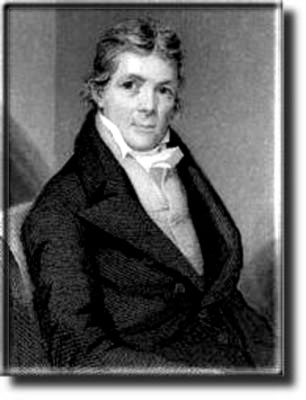
John Randolph of Roanoke

18th Annual Meeting of the John Randolph Club
Invitation by Dr. Fleming
RANDOLPH, John (1773-1833) Bibliography
John Randolph
John Randolph of Roanoke - Wikipedia, the free encyclopedia
 | ||
 | | John Randolph of Roanoke |
|---|---|---|
| A Study in American Politics Fourth Edition By Russell Kirk Table of Contents 6 x 9. 594 pages. Prefatory note, appendixes, Randolph chronology, select bibliography, index. |
The Embargo of 1807:
Jefferson, Madison, Gallatin, Randolph, and the Wreck of Republican Ideology
by Lo Faber
Skidmore College :: University Without Walls
Final Project, March 2006
Subscribe to:
Comments (Atom)