17.1.2008
The University of Rome Closes its Doors to the Pope. Here's the Lesson They Didn't Want to Hear
A group of teachers and students forced Benedict XVI to cancel his visit to "La Sapienza." But the professor pope did not give up: he made public, a day early, the address that he had written for the occasion. It is the follow-up to the formidable lecture in Regensburg, on the ultimate questions of faith and reason
Go to link for the text of the pope's address.
Friday, January 18, 2008

Thursday, January 17, 2008
Zenit: That We May Be One, and Never Lose Heart
That We May Be One, and Never Lose Heart
Meditation for Day 1 of Week of Prayer for Christian Unity
VATICAN CITY, JAN. 17, 2008 (Zenit.org).- Here is the commentary prepared jointly by the Pontifical Council for Christian Unity and the Commission on Faith and Order of the World Council of Churches for the first day of the Week of Prayer for Christian Unity, which begins Friday.
* * *
Pray always, "Pray without ceasing" (1 Thessalonians 5:17)
Isaiah 55:6-9 "Seek the Lord while he may be found"
Psalm 34 "I sought the Lord, and he answered me"
1 Thessalonians 5:(12a), 13b-18 "Pray without ceasing"
Luke 18:1-8 "To pray always and not to lose heart"
Commentary
Paul writes, "Rejoice always, pray without ceasing, give thanks in all circumstances; for this is the will of God in Christ Jesus for you." His epistle is written to a faithful community that is anxious about death. Many good and believing brothers and sisters have "fallen asleep" before the Lord's return to bring all into his resurrection. What will happen to these faithful dead? What will happen to the living? Paul assures them that the dead shall be raised with the living and exhorts them to "pray without ceasing." What does it mean to pray without ceasing? We find insights to answer this question in today's readings. Our whole lives are to be a seeking of the Lord, convinced that in seeking, we shall find.
In the midst of the exile, when all seemed hopeless and dry, the prophet Isaiah proclaims, "Seek the Lord while he may be found, call upon him while he is near." Even in exile, the Lord is near and urging his people to turn to him in prayer and to follow his commandments so that they may know his mercy and pardon. Psalm 34 affirms the prophetic conviction that the Lord will answer those who call upon him, and adds praise to the call to pray without ceasing.
In Luke's gospel, Jesus teaches his disciples with the parable of the widow seeking justice from a judge who neither feared God nor respected people. The story serves as a reminder of the need for constancy in prayer -- "to pray always and not to lose heart" -- and for confidence that prayer is answered: "Will not God grant justice to his chosen ones who cry to him day and night?"
As Christians in search of unity, we reflect on these readings to find "the will of God in Christ Jesus for you." It is Christ who lives within us. Our call to pray without ceasing becomes part of his eternal intercession to the Father: "That all may be one, ... that the world may believe." The unity we seek is unity 'as Christ wills' and the 'octave' observance of Christian prayer for unity reflects the biblical notion of completion, that some day our prayer will be answered.
Unity is a God-given gift to the church. It is also a call of Christians to live out this gift. Prayer for Christian unity is the source from which flows all human endeavor to manifest full visible unity. Many are the fruits of 100 years of an octave of prayer for Christian unity. Many are also the barriers that still divide Christians and their churches. If we are not to lose heart, we must be steadfast in prayer so that we may seek the Lord and his will in all we do and all we are.
Prayer
Lord of unity, Father, Son and Holy Spirit, we pray without ceasing that we may be one, as you are one. Father, hear us as we seek you. Christ, draw us to the unity that is your will for us. Spirit, may we never lose heart. Amen.
Tuesday, January 15, 2008
Latest Proceedings of the Pontifical Academy of St. Thomas Aquinas
I hadn't been to Thomistica.net for a while, but on my last visit I found this post:
Proceedings of the Pontifical Academy of St. Thomas Aquinas
The address of the PAST: Casina Pio IV, 00120 Città del Vaticano, Email:past AT acdscience.va
Proceedings of the Pontifical Academy of St. Thomas Aquinas
The address of the PAST: Casina Pio IV, 00120 Città del Vaticano, Email:past AT acdscience.va
Doctor Communis n.s. 10/1-2 (2007)
- G. Cottier, Loi naturelle et Décalogue
- R. Cessario, Saint Thomas and the Enculturation of the Natural Law : Doing Moral Theology on Earth
- U. Galeazzi, Sulla prossimità spirituale a Tommaso d’Aquino nel pensiero di Charles Tayler. Aspetti antropologici ed etici
- F. Jacques, Thomas d’Aquin et Emmanuel Kant: Loi naturelle et impératif catégorique. Et après ?
- J. Merecki, La visione etica di Karol Wojtyla
- R. Hittinger, John Rawls : The Basis of Social Justice and Intercultural Dialogue in a Globalized World
- H. Seidl, Etica di responsabilità in D. Hume e H. Jonas
- R. McInerny, Ethics and Virtue Ethics
- L. Clavell, Verità e libertà
- R. Ferrara, Legge naturale e legge nuova nel recente Magistero e nelle teologia di San Tommaso
- B. Mondin, Cultura e valori per una società globalizzata
- V. Possenti, Stato, diritto e religione. Il dialogo tra J. Habermas e J. Ratzinger
- I. Biffi, Gesú Cristo “misura” dell’ uomo in Tommaso d’Aquino
- M. Beuchot, La polémica de Las Casas con Sépulveda. Su dependencia respecto de la Escuela de Salamanca
Sunday, January 13, 2008
Roger Scruton

Roger Scruton - Writer and Philosopher
Roger Scruton: Internet Bibliography
Archive of Roger Scruton's publications
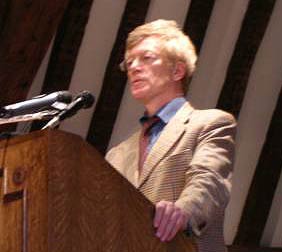
Roger Scruton on Immigration, Multiculturalism and the Need to ...
Why I became a conservative by Roger Scruton
Right Reason: The Joy of Conservatism: An Interview with Roger ...
What Ever Happened to Reason? by Roger Scruton, City Journal ...
A Righter Shade of Green
Kitsch and the Modern Predicament by Roger Scruton, City Journal ...
Essays: 'The sacred and the human' by Roger Scruton | Prospect ...
'The sacred and the human', Prospect Magazine issue 137 August ...
Salon Feature | On good authority
Art, Beauty, and Judgment
Michael Oakeshott, On Human Conduct

On Human Conduct by Michael Joseph Oakeshott - 1975 - 342 pagesbooks.google.com - About this book - More book results »
Oxford University Press: On Human Conduct: Michael Oakeshott
Amazon.com: On Human Conduct (Clarendon Paperbacks): Books ...
Home Page of the Michael Oakeshott Association
Michael Oakeshott: An Introduction: The Independent Review: The ...
Michael Oakeshott - Wikipedia, the free encyclopedia
Michael Oakeshott and the Political Economy of Freedom - The World ...
Oxford University Press: On Human Conduct: Michael Oakeshott
Amazon.com: On Human Conduct (Clarendon Paperbacks): Books ...
Home Page of the Michael Oakeshott Association
Michael Oakeshott: An Introduction: The Independent Review: The ...
Michael Oakeshott - Wikipedia, the free encyclopedia
Michael Oakeshott and the Political Economy of Freedom - The World ...
Thursday, January 10, 2008
Indian logic
Indian logic - Wikipedia, the free encyclopedia
Indian Logic Forum :: Index
Logic and Ontology in Ancient India. A survey of Contemporary Readings
The Hindu : Studies in Indian logic
E-sangha, Buddhist Forum and Buddhism Forum -> Indian Logic Forum
Formalisation of ancient logics: Dignaga
ILKB home
Nyaya-kosa - Dictionary of Indian Logic
Indian Logic: A Reader - Google Books Result
Universals: Studies in Indian Logic and Linguistics - Google Books Result
Amazon.com: Universals: Studies in Indian Logic and Linguistics ...
Staal, Frits: Universals
A System of Indian Logic: The Nyana Theory of Inference - Google Books Result
Logic, Language, and Reality: An Introduction to Indian ... - Google Books Result
Reason and Tradition in Indian Thought: An Essay on the Nature of ... - Google Books Result
Indian Logic: A Reader
A System of Indian Logic: The Nyana Theory of Inference
Is Indian logic nonmonotonic? Philosophy East and West Find ...
Formal structures in Indian logic
Amazon.com: The Character of Logic in India (Suny Series in Indian ...
Internet Archive: Details: A Primer Of Indian Logic
A History of Indian Logic : Ancient, Mediaeval and Modern Schools
A History of Indian Logic : Ancient, Mediaeval and Modern Schools ...
[FOM] Chinese and Indian logic
Phenomenology East and West Journal Indian Logic Forum
IngentaConnect Indian Logic and Indian Syllogism
Indian Logic Forum :: Index
Logic and Ontology in Ancient India. A survey of Contemporary Readings
The Hindu : Studies in Indian logic
E-sangha, Buddhist Forum and Buddhism Forum -> Indian Logic Forum
Formalisation of ancient logics: Dignaga
ILKB home
Nyaya-kosa - Dictionary of Indian Logic
Indian Logic: A Reader - Google Books Result
Universals: Studies in Indian Logic and Linguistics - Google Books Result
Amazon.com: Universals: Studies in Indian Logic and Linguistics ...
Staal, Frits: Universals
A System of Indian Logic: The Nyana Theory of Inference - Google Books Result
Logic, Language, and Reality: An Introduction to Indian ... - Google Books Result
Reason and Tradition in Indian Thought: An Essay on the Nature of ... - Google Books Result
Indian Logic: A Reader
A System of Indian Logic: The Nyana Theory of Inference
Is Indian logic nonmonotonic? Philosophy East and West Find ...
Formal structures in Indian logic
Amazon.com: The Character of Logic in India (Suny Series in Indian ...
Internet Archive: Details: A Primer Of Indian Logic
A History of Indian Logic : Ancient, Mediaeval and Modern Schools
A History of Indian Logic : Ancient, Mediaeval and Modern Schools ...
[FOM] Chinese and Indian logic
Phenomenology East and West Journal Indian Logic Forum
IngentaConnect Indian Logic and Indian Syllogism
Wednesday, January 09, 2008
Friedrich August von Hayek
Biography of FA Hayek
Friedrich August von Hayek - Curriculum Vitae
Friedrich von Hayek
Friedrich Hayek - Wikipedia, the free encyclopedia
PBS: Think Tank: Transcript for "Freidrich Hayek"
Freidrich von Hayek / The Use of Knowledge in Society
Hayek Page -- The Friedrich Hayek Scholars' Page (Hayek Center for Multdisciplinary Research)
FRIEDRICH AUGUST VON HAYEK
THE POLITICAL THOUGHT OF FRIEDRICH A. HAYEK
Why I Am Not a Conservative by F. A. Hayek
Why I Am Not a Conservative - Institut HAYEK
Find "The Principles of a Liberal Social Order."
The Road to Serfdom
The Road to Serfdom
The Illustrated Road to Serfdom
IEA Road to Serfdom
Friedrich Hayek : The Road to Serfdom by Aruni Mukherjee
Reason Magazine - The Road from Serfdom
Hayek, F. A.: The Road to Serfdom
Hoppe, Hans-Hermann
Hans-Hermann Hoppe: Archives
Friedrich August von Hayek - Curriculum Vitae
Friedrich von Hayek
Friedrich Hayek - Wikipedia, the free encyclopedia
PBS: Think Tank: Transcript for "Freidrich Hayek"
Freidrich von Hayek / The Use of Knowledge in Society
Hayek Page -- The Friedrich Hayek Scholars' Page (Hayek Center for Multdisciplinary Research)
FRIEDRICH AUGUST VON HAYEK
THE POLITICAL THOUGHT OF FRIEDRICH A. HAYEK
Why I Am Not a Conservative by F. A. Hayek
Why I Am Not a Conservative - Institut HAYEK
Find "The Principles of a Liberal Social Order."
The Road to Serfdom
The Road to Serfdom
The Illustrated Road to Serfdom
IEA Road to Serfdom
Friedrich Hayek : The Road to Serfdom by Aruni Mukherjee
Reason Magazine - The Road from Serfdom
Hayek, F. A.: The Road to Serfdom
Hoppe, Hans-Hermann
Hans-Hermann Hoppe: Archives
Tuesday, January 08, 2008
Avery Cardinal Dulles, Who Can Be Saved?
From the February 2008 issue of First Things
Who Can Be Saved?
by Avery Cardinal Dulles
The separation of right from good
Not right, ius, but right, rectus, as in "right reason," "That action is right," and the opposite of wrong.
Often relativism arises when one begins to doubt one's standards for right action, or fails to understand why an action is deemed to be right, how "rightness" is tied to good. The meaning of rectus is straight. So an action is right (or good) if it achieves the good that we should be aiming at, and thus is "straight."
Alisdair MacIntyre, following Elizabeth Anscombe, offers a different explanation of how this separation came to be, by looking at the history of moral philosophy. While there may be some value in his approach, I do question whether the musings of a select few really had that much of an impact on the populace. (Still, his explanation of the purpose of deontologists (primarily Kant)
to find some sort of basis of right in how reason works or applies itself to human action does make sense.)
I tend to think that this separation in the general population can be explained rather by an incomplete moral development, and the loss of tradition and obedience to the proper teaching authority(-ies). When we are growing up, we are told that certain things are right and wrong, and we act in accordance with the rules that we have been given by others. But as we mature we seek the reasons behind these standards, and if we do not get the answers, then some may be tempted to reject them as being "irrational" and not binding.
Now some may be able to intuit that some actions are right and wrong because they lead to or away from some good, and they can do this without the need for moral science. But if they do not understand moral reasoning, they may be lead astray when confronted with consequentialism, failing to see how right reason is not the same as consequentialist reasoning.
If the virtue of obedience is emphasized, and tied to charity, then a society can continue to flourish, even if most people are not educated in moral science or moral theology. But once the teaching authority of the Church is rejected, the value of tradition separate from authority cannot prevent those who are more daring from supplanting traditional norms with their own desires.
More on this topic to come, perhaps...
Often relativism arises when one begins to doubt one's standards for right action, or fails to understand why an action is deemed to be right, how "rightness" is tied to good. The meaning of rectus is straight. So an action is right (or good) if it achieves the good that we should be aiming at, and thus is "straight."
Alisdair MacIntyre, following Elizabeth Anscombe, offers a different explanation of how this separation came to be, by looking at the history of moral philosophy. While there may be some value in his approach, I do question whether the musings of a select few really had that much of an impact on the populace. (Still, his explanation of the purpose of deontologists (primarily Kant)
to find some sort of basis of right in how reason works or applies itself to human action does make sense.)
I tend to think that this separation in the general population can be explained rather by an incomplete moral development, and the loss of tradition and obedience to the proper teaching authority(-ies). When we are growing up, we are told that certain things are right and wrong, and we act in accordance with the rules that we have been given by others. But as we mature we seek the reasons behind these standards, and if we do not get the answers, then some may be tempted to reject them as being "irrational" and not binding.
Now some may be able to intuit that some actions are right and wrong because they lead to or away from some good, and they can do this without the need for moral science. But if they do not understand moral reasoning, they may be lead astray when confronted with consequentialism, failing to see how right reason is not the same as consequentialist reasoning.
If the virtue of obedience is emphasized, and tied to charity, then a society can continue to flourish, even if most people are not educated in moral science or moral theology. But once the teaching authority of the Church is rejected, the value of tradition separate from authority cannot prevent those who are more daring from supplanting traditional norms with their own desires.
More on this topic to come, perhaps...
Frank Purcell, Libertarians in Heaven
Libertarians in Heaven
Is Rosmini a liberal? And if he is, does that mean liberalism is reconcilable with Catholic teaching or traditional or classical politics?
Is Rosmini a liberal? And if he is, does that mean liberalism is reconcilable with Catholic teaching or traditional or classical politics?
Monday, January 07, 2008
Zenit: Benedict XVI's Homily on World Day of Peace
Benedict XVI's Homily on World Day of Peace
"The Natural Family … Is a Cradle of Life and Love"
VATICAN CITY, JAN. 6, 2008 (Zenit.org).- Here is a translation of the homily Benedict XVI delivered in St. Peter's Basilica on Jan. 1, Solemnity of Mary, Mother of God, and the 41st World Day of Peace.
* * *
Dear Brothers and Sisters,
Today, we are beginning a new year and Christian hope takes us by the hand; let us begin it by invoking divine Blessings upon it and imploring, through the intercession of Mary, Mother of God, the gift of peace: for our families, for our cities, for the whole world. With this hope, I greet all of you present here, starting with the distinguished Ambassadors of the Diplomatic Corps accredited to the Holy See who have gathered at this celebration on the occasion of the World Day of Peace. I greet Cardinal Tarcisio Bertone, my Secretary of State, and Cardinal Renato Raffaele Martino and all members of the Pontifical Council for Justice and Peace. I am particularly grateful to them for their commitment to spread the Message for the World Day of Peace whose theme this year is: "The human family, a community of peace".
Peace. In the First Reading from the Book of Numbers we heard the invocation: "The Lord... give you peace" (6:26); may the Lord grant peace to each one of you, to your families and to the whole world. We all aspire to live in peace but true peace, the peace proclaimed by the Angels on Christmas night, is not merely a human triumph or the fruit of political agreements; it is first and foremost a divine gift to be ceaselessly implored, and at the same time a commitment to be carried forward patiently, always remaining docile to the Lord's commands.
Inspired by family values
This year, in my Message for today's World Day of Peace, I wanted to highlight the close relationship that exists between the family and building peace in the world. The natural family, founded on the marriage of a man and a woman, is "a "cradle of life and love'" and "the first and indispensable teacher of peace". For this very reason the family is "the primary "agency' of peace", and "the denial or even the restriction of the rights of the family, by obscuring the truth about man, threatens the very foundations of peace" (cf. Nos. 1-5). Since humanity is a "great family", if it wants to live in peace it cannot fail to draw inspiration from those values on which the family community is based and stands. The providential coincidence of various recurrences spur us this year to make an even greater effort to achieve peace in the world.
Sixty years ago, in 1948, the General Assembly of the United Nations published the "Universal Declaration of Human Rights"; 40 years ago my venerable Predecessor Paul VI celebrated the first World Day of Peace; this year, in addition, we will be commemorating the 25th anniversary of the Holy See's adoption of the "Charter of the Rights of the Family". "In the light of these significant anniversaries" -- I am repeating here what I wrote precisely at the end of the Message -- "I invite every man and woman to have a more lively sense of belonging to the one human family, and to strive to make human coexistence increasingly reflect this conviction, which is essential for the establishment of true and lasting peace" [No. 15]. Our thoughts now turn spontaneously to Our Lady, whom we invoke today as the Mother of God. It was Pope Paul VI who moved to 1 January the Feast of the Divine Motherhood of Mary, which was formerly celebrated on 11 October.
Indeed, even before the liturgical reform that followed the Second Vatican Council, the memorial of the circumcision of Jesus on the eighth day after his birth -- as a sign of submission to the law, his official insertion in the Chosen People -- used to be celebrated on the first day of the year and the Feast of the Name of Jesus was celebrated the following Sunday. We perceive a few traces of these celebrations in the Gospel passage that has just been proclaimed, in which St Luke says that eight days after his birth the Child was circumcised and was given the name "Jesus", "the name given by the Angel before he was conceived in [his Mother's] ... womb" (Luke 2:21). Today's feast, therefore, as well as being a particularly significant Marian feast, also preserves a strongly Christological content because, we might say, before the Mother, it concerns the Son, Jesus, true God and true Man.
Mary's immense privilege
The Apostle Paul refers to the mystery of the divine motherhood of Mary, the "Theotokos," in his Letter to the Galatians. "When the time had fully come", he writes, "God sent forth his Son, born of woman, born under the law" (4:4). We find the mystery of the Incarnation of the Divine Word and the Divine Motherhood of Mary summed up in a few words: the Virgin's great privilege is precisely to be Mother of the Son who is God. The most logical and proper place for this Marian feast is therefore eight days after Christmas. Indeed, in the night of Bethlehem, when "she gave birth to her first-born son" (Luke 2:7), the prophesies concerning the Messiah were fulfilled. "The virgin shall be with child and bear a son", Isaiah had foretold (7:14); "Behold, you will conceive in your womb and bear a son", the Angel Gabriel said to Mary (Luke 1:31); and again, an Angel of the Lord, the Evangelist Matthew recounts, appeared to Joseph in a dream to reassure him and said: "Do not fear to take Mary for your wife, for that which is conceived in her is of the Holy Spirit; she will bear a son" (Matthew 1:20-21).
The title "Mother of God", together with the title "Blessed Virgin", is the oldest on which all the other titles with which Our Lady was venerated are based, and it continues to be invoked from generation to generation in the East and in the West. A multitude of hymns and a wealth of prayers of the Christian tradition refer to the mystery of her divine motherhood, such as, for example, a Marian antiphon of the Christmas season, "Alma Redemptoris mater," with which we pray in these words: "Tu quae genuisti, natura mirante, tuum sanctum Genitorem, Virgo prius ac posterius -- You, in the wonder of all creation, have brought forth your Creator, Mother ever virgin". Dear brothers and sisters, let us today contemplate Mary, ever-virgin Mother of the Only-Begotten Son of the Father; let us learn from her to welcome the Child who was born for us in Bethlehem. If we recognize in the Child born of her the Eternal Son of God and accept him as our one Saviour, we can be called and we really are children of God: sons in the Son. The Apostle writes: "God sent forth his Son, born of woman, born under the law, to redeem those who were under the law, so that we might receive adoption as sons" (Galatians 4:4).
Same but different Child
The Evangelist Luke repeats several times that Our Lady meditated silently on these extraordinary events in which God had involved her. We also heard this in the short Gospel passage that the Liturgy presents to us today. "Mary kept all these things, pondering them in her heart" (Luke 2:19). The Greek verb used, "sumbállousa," literally means "piecing together" and makes us think of a great mystery to be discovered little by little. Although the Child lying in a manger looks like all children in the world, at the same time he is totally different: he is the Son of God, he is God, true God and true man. This mystery -- the Incarnation of the Word and the divine Motherhood of Mary -- is great and certainly far from easy to understand with the human mind alone. Yet, by learning from Mary, we can understand with our hearts what our eyes and minds do not manage to perceive or contain on their own. Indeed, this is such a great gift that only through faith are we granted to accept it, while not entirely understanding it.
And it is precisely on this journey of faith that Mary comes to meet us as our support and guide. She is mother because she brought forth Jesus in the flesh; she is mother because she adhered totally to the Father's will. St Augustine wrote: "The divine motherhood would have been of no value to her had Christ not borne her in his heart, with a destiny more fortunate than the moment when she conceived him in the flesh" ("De Sancta Virginitate," 3, 3). And in her heart Mary continued to treasure, to "piece together" the subsequent events of which she was to be a witness and protagonist, even to the death on the Cross and the Resurrection of her Son Jesus.
Dear brothers and sisters, it is only by pondering in the heart, in other words, by piecing together and finding unity in all we experience, that, following Mary, we can penetrate the mystery of a God who was made man out of love and who calls us to follow him on the path of love; a love to be expressed daily by generous service to the brethren.
May the new year which we are confidently beginning today be a time in which to advance in that knowledge of the heart, which is the wisdom of saints. Let us pray, as we heard in the First Reading, that the Lord may "make his face to shine" upon us, "and be gracious" to us (cf. Numbers 6:24-7) and bless us. We may be certain of it: If we never tire of seeking his Face, if we never give in to the temptation of discouragement and doubt, if also among the many difficulties we encounter we always remain anchored to him, we will experience the power of his love and his mercy. May the fragile Child who today the Virgin shows to the world make us peacemakers, witnesses of him, the Prince of Peace. Amen!
[Translation of the Italian original by L'Osservatore Romano]
Sunday, January 06, 2008
Mind in the Heart
an Orthodox blog
From the post An Introduction to the Russian Orthodox Church by Fr. Andrew Louth, Fr. Louth's introduction
From the post An Introduction to the Russian Orthodox Church by Fr. Andrew Louth, Fr. Louth's introduction
Fr. Wallace on the Dominicans and the Intellectual Life
From the Dominican House of Studies on Blip TV:
Related:
Dominican House of Studies, Washington, D.C.
for more on their building campaign: Theological Library and Academic Center
Priory of the Immaculate Conception, The Dominican House of Studies
Dominican Province of St. Joseph - Home
Province of St. Joseph blog
The Dominican Order and the Intellectual Life
Wednesday, January 02, 2008, 7:43:38 PM
An interview with Father William Augustine Wallace, O.P., a Dominican priest of the Province of St. Joseph (Eastern Province) filmed in 1982 at the Dominican House of Studies. Video shot by Dr. Gavin Colvert, nephew of the interviewer, Fr. Antoninus Wall, O.P., a friar of the Province of the Most Holy Name of Jesus, the Western Dominican Province. Edited at the Dominican House of Studies, Washington, D.C.
Comments
Dhspriory-TheDominicanOrderAndTheIntellectualLife919.mov
Related:
Dominican House of Studies, Washington, D.C.
for more on their building campaign: Theological Library and Academic Center
Priory of the Immaculate Conception, The Dominican House of Studies
Dominican Province of St. Joseph - Home
Province of St. Joseph blog
Saturday, January 05, 2008
Friday, January 04, 2008
Magister's latest
The Cardinal Writes, the Prince Responds. The Factors that Divide the Pope from the Muslims
The contrast is not only one of faith. It also concerns the achievements of the Enlightenment: from religious freedom to equality between men and women. The Catholic Church has made these its own, but Islam has not. Will they be able to discuss this, when Benedict XVI and the Muslims of the letter of the 138 meet together?
The contrast is not only one of faith. It also concerns the achievements of the Enlightenment: from religious freedom to equality between men and women. The Catholic Church has made these its own, but Islam has not. Will they be able to discuss this, when Benedict XVI and the Muslims of the letter of the 138 meet together?
Monday, December 31, 2007
Sunday, December 23, 2007
Fr. Flynn reviews Matlary book
The New Political Bible of Human Rights
Janne Haaland Matlary Addresses Dangers of Relativism
By Father John Flynn, LC
ROME, DEC. 23, 2007 (Zenit.org).- In Benedict XVI's Dec. 1 address to an audience with participants in the Forum of Catholic-Inspired Nongovernmental Organizations, he warned against basing international relations on a relativistic logic.
We can look with satisfaction, the Pope said, to an achievement such as the universal recognition of the juridical and political primacy of human rights. Nevertheless, he continued, discussions at the international level "often seem marked by a relativistic logic which would consider as the sole guarantee of peaceful coexistence between peoples a refusal to admit the truth about man and his dignity, to say nothing of the possibility of an ethics based on recognition of the natural moral law."
If the relativistic position is accepted, the Pontiff warned, we run the risk of laws and relations between states being determined by factors such as short-term interests or ideological pressures. Benedict XVI urged those present to counter the trend toward relativism, "by presenting the great truths about man's innate dignity and the rights which are derived from that dignity."
The Pope's long-standing concern over the dangers of relativism is well-known. He is far from alone in recognizing the danger this presents in the area of human rights.
Janne Haaland Matlary, professor of international politics at the University of Oslo, supports the natural law tradition as defended by the Catholic Church. Matlary, who was state secretary for foreign affairs for Norway from 1997-2000, released earlier this year an English translation of her collection of essays titled "When Might Becomes Human Right: Essays on Democracy and the Crisis of Rationality" (Gracewing).
A new bible
Today, Matlary comments, human rights have become a sort of new political bible, but unfortunately this bible is often affected by a profound relativism when it comes to its fundamental values.
Matlary's book is focused on the situation in Europe, where, she warns, relativism is leading to attempts to redefine human rights. In fact, she continues, there is a real paradox present, because on the one hand Europe and the West urge the world to respect human rights, but on the other hand refuse to define, in an objective manner, what these rights mean.
Matlary explains that the contemporary emphasis on human rights stems from the rejection of the evils of the Nazi regime, which saw the dangers of subjects obeying orders by a legal ruler that were, however, contrary to morality. The subsequent 1948 Universal Declaration of Human Rights is formulated in such a way, she argues, that it is clear they are to be regarded as inborn for every person. The declaration can, therefore, be regarded as a natural-law document.
Today, however, human rights are often regarded as being dependent on the political process, Matlary continues. While the 1948 declaration defends the right to life, many states have legalized abortion. Similarly, the 1948 text proclaims the right of a man and a woman to marry, but there is increasing pressure in many countries to establish a "right" to same-sex marriage.
Another example is the Convention on the Rights of the Child, approved by the U.N. General Assembly in 1989. It stipulates that a child should have the right to know and be cared for by its parents. Only a few years later, this is ignored by the use of anonymous donors for invitro fertilization treatments, Matlary comments.
Underlying causes
Matlary examines a number of factors that have contributed to the triumph of an ethical relativism in Europe. One of these is secularization, which means forgetting the Continent's Christian roots, as well as the values Christianity has contributed to politics and law. To this is added increasing immigration from other cultures, and uncertainty over the concept of tolerance. As well, an aversion to the concept of objective truth, often combined with the mentality of political correctness, undermines attempts to define common values.
There has also been a marked politicization of human rights, Matlary observes, as was evident in a number of conferences organized by the United Nations in the 1990s, on themes such as demography, the family and women's rights.
The debate on values and human rights, Matlary states, is also marked by a profound subjectivism. In many countries religion increasingly ceases to be based on adherence to an institutional identity and becomes "religion à la carte." Subjectivism has also contributed to the decline of ideology, but has replaced it with a superficial desire to follow the latest fashionable public personality and the trends popularized in the media.
Based on truth
The last section in Matlary's book considers how the case for natural law can be made in the midst of the prevailing relativism. Christianity has a vital role to play in this effort, she maintains, through its teaching in the area of anthropology, including the strong emphasis the Church places on inherent human dignity.
We cannot impose Christian norms in the political sphere, Matlary acknowledges. Nevertheless, on many points regarding the human person and rights there is no contradiction between faith and reason. The task, therefore, is not to create Christian states, but states based on the truth about the human being. What Europe needs, consequently, is politicians who are prepared to dedicate themselves to the common good, according to what is universally right and wrong based on the standard of human dignity.
Matlary admits that even among Christians there is often a legitimate plurality in the political arena, allowing flexibility between diverse courses of action. There are, however, some issues over which there cannot be compromise, those that concern human dignity.
This concluding section also looks at the contribution made by the Vatican to the debate over human rights. In a chapter dedicated to Pope John Paul II, Matlary commented on his skillful public diplomacy, as well as the quieter, but also very effective, contribution made by Vatican diplomats around the world.
A further chapter examines the analysis of modern rationality made by the current Pope, in many writings authored when he was still Cardinal Joseph Ratzinger. One of the matters dealt with by him was the notion of human freedom, which many today regard as having no limits.
The lack of willingness to limit personal autonomy, Matlary comments, ultimately lies in the inability to define the human being and what is good and bad about human nature.
Reasoning correctly
Another defect identified by the then Cardinal Ratzinger, according to Matlary, is the idea that rationality is limited to the technical area only. Accepting this means we no longer have any idea of how to reason about right and wrong, as well as denying there is any standard of ethics outside of an individual.
In addition, Cardinal Ratzinger criticized a purely materialistic concept of rationality that ignores the philosophical and theological dimensions of our nature, thus reducing the idea of progress to the merely technical and economic dimensions; an argument still present in the thought of Benedict XVI.
Juridical norms need to be founded on morality, which in turn is grounded in nature itself, explained the Pontiff in his message for the World Day of Peace. Without this solid foundation, the Pope counseled, the juridical norms will be "at the mercy of a fragile and provisional consensus" (No. 12).
"The growth of a global juridical culture depends, for that matter, on a constant commitment to strengthen the profound human content of international norms, lest they be reduced to mere procedures, easily subject to manipulation for selfish or ideological reasons," he warned (No. 13). A timely reminder that the political process is not the absolute master, but needs to be oriented by the truths inherent in human nature.
Monday, December 17, 2007
Synthetic DNA on the Brink of Yielding New Life Forms
Believe it or not.
I tend not to believe it, because such an assertion depends on a reductionistic view of the relationship between DNA and development. Tinkering on a grand scale may not produce a viable organism; more likely it will produce a malfunctioning one.
Via Drudge.
I tend not to believe it, because such an assertion depends on a reductionistic view of the relationship between DNA and development. Tinkering on a grand scale may not produce a viable organism; more likely it will produce a malfunctioning one.
Via Drudge.
Saturday, December 15, 2007
On Design
Lawrence Gage, Amazing Evolution!
I've read the claim about the human spine being "suboptimal" (see the comments for this post by Mark Shea) elsewhere, including Soompi--probably there is something at TalkOrigins--but how can people make such judgments, if they do not have an alternative model to use as a standard? How do we know what is suboptimal without knowing what is optimal? Just because a structure cannot cope with all stresses or problems does not imply that there exists some structure which can. (Or that there is even an alternative structure which makes up for those weaknesses but has others which the one in question lacks--how do we know such trade-offs are possible if we do not even understand development, how structures come to be?)
The same sort of noetic problems arise when critics talk about the "efficiency" and "inefficiency" of organic structures.
I've read the claim about the human spine being "suboptimal" (see the comments for this post by Mark Shea) elsewhere, including Soompi--probably there is something at TalkOrigins--but how can people make such judgments, if they do not have an alternative model to use as a standard? How do we know what is suboptimal without knowing what is optimal? Just because a structure cannot cope with all stresses or problems does not imply that there exists some structure which can. (Or that there is even an alternative structure which makes up for those weaknesses but has others which the one in question lacks--how do we know such trade-offs are possible if we do not even understand development, how structures come to be?)
The same sort of noetic problems arise when critics talk about the "efficiency" and "inefficiency" of organic structures.
Subscribe to:
Comments (Atom)