Tuesday, May 21, 2013

Renewing the Presence of Love in the World (Metropolitan Merkury of Rostov and Novocherkassk)
If we do not seek to live in friendship with others, we should understand that this is not "normal" but rather a sickness that requires an intervention by the Divine Physician. Most people are not completely anti-social, but they do need to open their hearts more to those around them.
This is not because God is retreating from us. God’s presence among people is becoming impoverished because people are not open to God and to one another; man’s will often opposes God’s will and he is not in a condition to accept God in his life. This is because, by accepting God in his life, man accepts an enormous responsibility before both God and his neighbors. It is much easier to live irresponsibly, because nothing will disturb you apart from your own evil, your own personal pleasures, needs, and prosperity. When one’s entire human core is directed towards this, then of course one becomes removed from God, since one is not in a condition to accept God in one’s life. Accepting God into oneself means that one will have to change the vicious structure of one’s life.
If we do not seek to live in friendship with others, we should understand that this is not "normal" but rather a sickness that requires an intervention by the Divine Physician. Most people are not completely anti-social, but they do need to open their hearts more to those around them.
Monday, May 20, 2013
Sunday, May 19, 2013
Saturday, May 18, 2013
Holy Resurrection Monastery Divine Liturgy at IRL Event Mundelein, Illinois
Bright Friday
The homily has sparked some controversy on FB.
My comment on the use of intellectual history:
"Too often intellectual history is used (poorly) as a substitute for real philosophy/theology - and in the case of theology, what is needed is an engagement with the sources and authorities so that these are understood well. Undoubtedly a good Latin theologian familiar with the various schools or traditions in Western Christendom will dispute the points made in Abbot Nicholas's homily, and I personally think it might have been better if he had refrained from attempting a comparison within the homily, and just focused on the "positive." But as someone who seeks to bring healing, he may have felt justified in making this correction, though we would disagree with his diagnosis."
The homily has sparked some controversy on FB.
My comment on the use of intellectual history:
"Too often intellectual history is used (poorly) as a substitute for real philosophy/theology - and in the case of theology, what is needed is an engagement with the sources and authorities so that these are understood well. Undoubtedly a good Latin theologian familiar with the various schools or traditions in Western Christendom will dispute the points made in Abbot Nicholas's homily, and I personally think it might have been better if he had refrained from attempting a comparison within the homily, and just focused on the "positive." But as someone who seeks to bring healing, he may have felt justified in making this correction, though we would disagree with his diagnosis."
Friday, May 17, 2013
Thursday, May 16, 2013
More New Offerings from Angelico Press
I had not noticed that these were available, in addition to the latest from Stratford Caldecott -
Behold the Heritage: Foundations of Education in the Dominican Tradition by Sister Matthew Marie Cummings (Editor), O.P., Sister Elizabeth Anne Allen, O.P.
Our Way and Our Life: Christ in His Mysteries by Blessed Columba Marmion
With Christ - An Anthology of the Writings of Blessed Columba Marmion
A review of one of the last book: Catholic Thursday: With Christ - An Anthology of the Writings of Blessed Columba Marmion
Apparently no one has republished his Christ, the Ideal of the Monk yet.
It looks like the company is distributing works by Wolfgang Smith. (I don't think it is republishing them.) Here is one:
Ancient Wisdom and Modern Misconceptions: A Critique of Contemporary Scientism by Wolfgang Smith
Behold the Heritage: Foundations of Education in the Dominican Tradition by Sister Matthew Marie Cummings (Editor), O.P., Sister Elizabeth Anne Allen, O.P.
Our Way and Our Life: Christ in His Mysteries by Blessed Columba Marmion
With Christ - An Anthology of the Writings of Blessed Columba Marmion
A review of one of the last book: Catholic Thursday: With Christ - An Anthology of the Writings of Blessed Columba Marmion
Apparently no one has republished his Christ, the Ideal of the Monk yet.
It looks like the company is distributing works by Wolfgang Smith. (I don't think it is republishing them.) Here is one:
Ancient Wisdom and Modern Misconceptions: A Critique of Contemporary Scientism by Wolfgang Smith
Wednesday, May 15, 2013
One to One: Picture of the Day: East Meets West by Greg Kandra
Cardinal Cleemis Mar Baselios, major archbishop of the Syro-Malankara Church, visits with Cardinal Timothy Dolan...
Cardinal Cleemis Mar Baselios, major archbishop of the Syro-Malankara Church, visits with Cardinal Timothy Dolan...
Tuesday, May 14, 2013
Teaching the Natural Sciences
James Chastek, Classical education and the math/science problem
Re: teaching the natural sciences - I have not seen Dr. Rizzi's textbook yet - it might be useful for secondary level students. I think beyond learning the general principles of the natural sciences, students should become familiar with living things that are relevant to their own lives - animals and plants they eat, and so on. As for non-living things - some knowledge of certain chemicals/substances, but any modelling will be educated opinion. Even the use of experiments may lead only to educated opinion, at best, and so we should probably resign ourselves to the limits to the knowledge we who do not have the laboratory or materials can obtain through the analysis to elements, etc.
A book has been written based on his text - First Physics, by Murray Daw. (St. Augustine's Press)
Just saw this blog, again - no recent entries - Real Physics TM.
And something pertinent to this post - Ite Ad Thomam: Dr. Romero's Translation of Hugon's Cosmology Now in Print!!!
Re: teaching the natural sciences - I have not seen Dr. Rizzi's textbook yet - it might be useful for secondary level students. I think beyond learning the general principles of the natural sciences, students should become familiar with living things that are relevant to their own lives - animals and plants they eat, and so on. As for non-living things - some knowledge of certain chemicals/substances, but any modelling will be educated opinion. Even the use of experiments may lead only to educated opinion, at best, and so we should probably resign ourselves to the limits to the knowledge we who do not have the laboratory or materials can obtain through the analysis to elements, etc.
A book has been written based on his text - First Physics, by Murray Daw. (St. Augustine's Press)
Just saw this blog, again - no recent entries - Real Physics TM.
And something pertinent to this post - Ite Ad Thomam: Dr. Romero's Translation of Hugon's Cosmology Now in Print!!!
Medievalists.net: Medieval Academy of America rocked by resignations of Executive Directors
What future for medieval studies in Uhmerica?
What future for medieval studies in Uhmerica?
Orthodoxy & Heterodoxy: “Who is a Christian?”: A Discussion with Fr. Andrew Stephen Damick on Ancient Faith Today - podcast
Monday, May 13, 2013
Sunday, May 12, 2013
Interview with Archbishop Sviatoslav Shevchuk
Salt and Light TV
He will be coming to California for this year's Napa Institute summer conference, along with Bishop Borys Gudziak.
He will be coming to California for this year's Napa Institute summer conference, along with Bishop Borys Gudziak.
Saturday, May 11, 2013
Pope Tawadros II Visits Pope Francis
Zenit: Historic Meeting Takes Place Between Pope Francis and Coptic Pope Tawadros II
Emphasize Promotion of Ecumenical Dialogue Between Both Churches
Pope Francis' Address to Coptic Pope Tawadros II
Coptic Pope proposes to celebrate feast for Catholics and Coptic Christians on May 10
Previously...
Pope Francis to meet with Coptic Orthodox pope, Tawadros II, to mark key anniversary
Emphasize Promotion of Ecumenical Dialogue Between Both Churches
Pope Francis' Address to Coptic Pope Tawadros II
Coptic Pope proposes to celebrate feast for Catholics and Coptic Christians on May 10
Previously...
Pope Francis to meet with Coptic Orthodox pope, Tawadros II, to mark key anniversary
Friday, May 10, 2013
MosPat: Metropolitan Hilarion celebrates Paschal service at the church of the ‘Joy to All the Afflicted” Icon of the Mother of God
"Concelebrating were schema-archimandrite Gabriel (Bunge) from the Korsun diocese..."
"Concelebrating were schema-archimandrite Gabriel (Bunge) from the Korsun diocese..."
Thursday, May 09, 2013
Wednesday, May 08, 2013
A Rebuttal to Archimandrite Taft
CWR: "Sister Churches": A Clarification by Michael J. Miller
And an Orthodox responds to some remarks made by Pope Francis: Pope Francis: Without me there is no Church
And an Orthodox responds to some remarks made by Pope Francis: Pope Francis: Without me there is no Church
Tuesday, May 07, 2013
Angelico Publishes Another Book by Stratford Caldecott
Stratford Caldecott, The Radiance of Being: Dimensions of Cosmic Christianity
The Imaginative Conservative has an excerpt.
From Public Discourse:
Truth, Responsibility, and Love
by Ryan T. Anderson on May 6th, 2013
The Regent University 2013 Commencement Address, delivered May 4, 2013.
After Beauty
by Mark Signorelli on May 3rd, 2013
Just as our culture’s rejection of an essential human nature wreaked havoc on our moral thought, so too our rejection of the concept of form has made our artwork incoherent.
All Things Made New: Announcing a new book
Second Spring
The Imaginative Conservative has an excerpt.
From Public Discourse:
Truth, Responsibility, and Love
by Ryan T. Anderson on May 6th, 2013
The Regent University 2013 Commencement Address, delivered May 4, 2013.
After Beauty
by Mark Signorelli on May 3rd, 2013
Just as our culture’s rejection of an essential human nature wreaked havoc on our moral thought, so too our rejection of the concept of form has made our artwork incoherent.
All Things Made New: Announcing a new book
Second Spring
Monday, May 06, 2013
A New Book by Lauren Pristas
Which will feature much of her previously published material on the collects of the Roman rite. Chant Cafe: An Item for the Book Budget
Pravmir: Encyclical for Holy Pascha of Patriarch Bartholomew
Paschal Message of His Holiness Kirill Patriarch of Moscow and All Russia
Ecumenical Patriarch Bartholomew: Orthodox Easter Resurrection: The Gift of Liberation and Call to Compassion [HuffPo]
Encyclical of Archbishop Demetrios for Holy Pascha
Paschal Message of His Beatitude Metropolitan Tikhon
Paschal Message of His Eminence Hilarion Metropolitan of Eastern and America
Paschal Letter of His Beatitude John X, Patriarch of Antioch and All the East
Paschal Message of His Holiness Kirill Patriarch of Moscow and All Russia
Ecumenical Patriarch Bartholomew: Orthodox Easter Resurrection: The Gift of Liberation and Call to Compassion [HuffPo]
Encyclical of Archbishop Demetrios for Holy Pascha
Paschal Message of His Beatitude Metropolitan Tikhon
Paschal Message of His Eminence Hilarion Metropolitan of Eastern and America
Paschal Letter of His Beatitude John X, Patriarch of Antioch and All the East
Sunday, May 05, 2013
Saturday, May 04, 2013
Friday, May 03, 2013
There has been some discussion of whether the requirement for clerical celibacy will be relaxed in the Roman rite (i.e. the Patriarchate of Rome). Some may saythat for an increase in vocations prayer, penance, and sacrifice, along with the presence of an "orthodox" bishop (with a seminary and vocations director to back him up) suffice. But if the local Church is to be instantiated according to a more human scale (1 priest per 150 families, let's say), will there be enough priests?
Thursday, May 02, 2013
A Calvinist Responds to Feser and Kozinski
via TK: TWO ENDS OR TWO KINGDOMS? by Peter Escalante
Related: “We Hold These Truths to be Self-Evident”: A Dialogue
Related: “We Hold These Truths to be Self-Evident”: A Dialogue
Wednesday, May 01, 2013
In the West, the new evangelization and renewal of the local Church must involve the renewal of communal life in the parishes. This cannot happen until a proper and concerted response to the modern nation-state, and the political economy upon which it is built, especially its gradually assumed dependence upon cheap energy, is undertaken by Christians - I believe this response will include a movement towards voluntary simplicity.
Shopping Our Way to Sustainability - Really?
Ready for Rationing? Why We Should Put the Brakes on Consumption If We Want to Survive
Mutual Aid Medical Care
Shopping Our Way to Sustainability - Really?
Ready for Rationing? Why We Should Put the Brakes on Consumption If We Want to Survive
Mutual Aid Medical Care
Fr. Janko Zagar, O.P. Passes
A Model of Dominican Life
Wipf and Stock have reprinted his book, Acting on Principles, available. (The editor is Fr. Augustine.)
Wipf and Stock have reprinted his book, Acting on Principles, available. (The editor is Fr. Augustine.)
One More for the Medieval Geek
The classical trivium: the place of Thomas Nashe in the learning of his time by Marshall McLuhan (his Ph.D. dissertation)
Someone posted a link to an essay which referenced McLuhan in its discussion of the trivium and how various authors differed as to the importance of rhetoric. I wasn't sure if I could find the link again, but I did - Thinking Trivially about Radical Orthodoxy. I had forgotten McLuhan had converted to Catholicism.
eighth day books blog
Someone posted a link to an essay which referenced McLuhan in its discussion of the trivium and how various authors differed as to the importance of rhetoric. I wasn't sure if I could find the link again, but I did - Thinking Trivially about Radical Orthodoxy. I had forgotten McLuhan had converted to Catholicism.
eighth day books blog
DSPT: Book Launch: “Unlocking Divine Action: Contemporary Science and Thomas Aquinas” by Fr. Michael Dodds, OP
Video of the presentation is now available:
Video of the presentation is now available:
Feast of St. Joseph the Worker
CWR: Full text: Pope Francis’ Wednesday Audience address on the Feast of St. Joseph the Worker
“Work is fundamental to the dignity of a person.”
“Work is fundamental to the dignity of a person.”
CWR Interview with Fr. Taft
CWR: Building Bridges Between Orthodox and Catholic Christians by Christopher B. Warner
An interview with Archimandrite Robert Taft, SJ, prominent Byzantine liturgical theologian and lifelong healer of Christian relations between East and West
An interview with Archimandrite Robert Taft, SJ, prominent Byzantine liturgical theologian and lifelong healer of Christian relations between East and West
Tuesday, April 30, 2013
Head of German bishops’ conference says the idea of women deacons “no longer taboo”
Some defend deaconesses as a valid Byzantine practice and a true holy order, but I wonder if this is really the case, or an aberration/novelty? Is it present in any other apostolic Christian traditions/rites?
Some defend deaconesses as a valid Byzantine practice and a true holy order, but I wonder if this is really the case, or an aberration/novelty? Is it present in any other apostolic Christian traditions/rites?
The Discussion Sparked by David Hart on Natural Law Continues...
Edward Feser has some links, plus his latest response.
Monday, April 29, 2013
Jacques Maritain’s Service to Truth by Christopher Shannon
Without minimizing the importance of his writings, Maritain initially exerted his most powerful influence at a personal level through his Thomistic Study Circle, which he founded in 1914. Although placed under the spiritual direction of Reginald Garrigou-Lagrange, O.P., renowned as the leading guardian of Thomistic orthodoxy, the Circle nonetheless attracted a broad range of avante-garde, modernist intellectuals in various degrees of association with the Church. The appeal of the meetings was as much spiritual as intellectual, for Maritain intended his circle to pursue both sanctity and study. He understood the work of the Circle as in part making reparation for the sins against the intellect committed in the modern period. This aspect of the Thomistic revival was often lost on those who knew Maritain only through his writings, and continues to elude many. For Maritain, as for Thomas and the best of the Thomistic tradition, the truths of philosophy and theology were guides for a spiritual journey toward a deeper personal encounter with Jesus Christ. Bloy had directed Maritain toward the lives of the saints and the writings of Catholic mystics well before he began his study of St. Thomas. Maritain’s turn to scholastic rationality in no way entailed an abandonment of the more experiential and existential approaches that first drew him to the Church.
Sunday, April 28, 2013
Politicizing the Papal Transition: A Retrospective by Jeffrey Tucker
My own thoughts, as we are still in the early days of the new pontificate - things may not be as dire, especially with respect to liturgical matters, as some traditionalists might fear. We may pray that much good be done and that there will be many reforms but it remains to be seen whether those in authority have a sufficient grasp of reality and the complexities of our trials.
My own thoughts, as we are still in the early days of the new pontificate - things may not be as dire, especially with respect to liturgical matters, as some traditionalists might fear. We may pray that much good be done and that there will be many reforms but it remains to be seen whether those in authority have a sufficient grasp of reality and the complexities of our trials.
Saturday, April 27, 2013
Traditionalist vs. Conservative
Jeff Mirus, OK, so what sort of renewal did Vatican II prescribe?
Christopher Ferrara responds to an earlier piece by Mirus, Pope Francis: Tough Talk About Vatican II
Some traditionalists (especially Americans) may deny that some problems pre-existed the council. But was the council itself a necessary part of the solution? (Especially given that it did not define any dogma in opposition to a heretical opinion?) How many of the previous councils can be considered to be of the same importance as Trent when it came to reforming the Latin churches?
Christopher Ferrara responds to an earlier piece by Mirus, Pope Francis: Tough Talk About Vatican II
Some traditionalists (especially Americans) may deny that some problems pre-existed the council. But was the council itself a necessary part of the solution? (Especially given that it did not define any dogma in opposition to a heretical opinion?) How many of the previous councils can be considered to be of the same importance as Trent when it came to reforming the Latin churches?
Photos of Archbishop Jorge Maria Bergoglio Concelebrating the Divine Liturgy
(via ByzCath) - here, here, here, here, and here
Was there no Byzantine-rite mitre? Or was he uncomfortable wearing one? I am not sure if he was concelebrating - he is not wearing some of the other episcopal liturgical vestments as well - maybe they had only one set. It looks like he is wearing a mantiya instead.
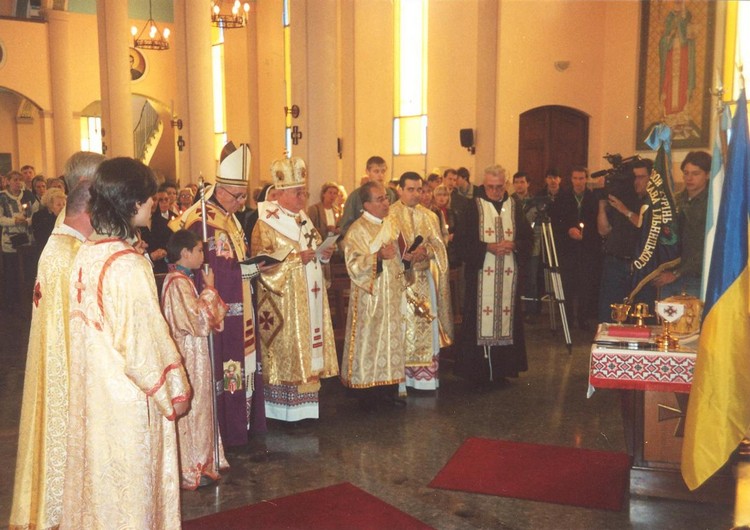
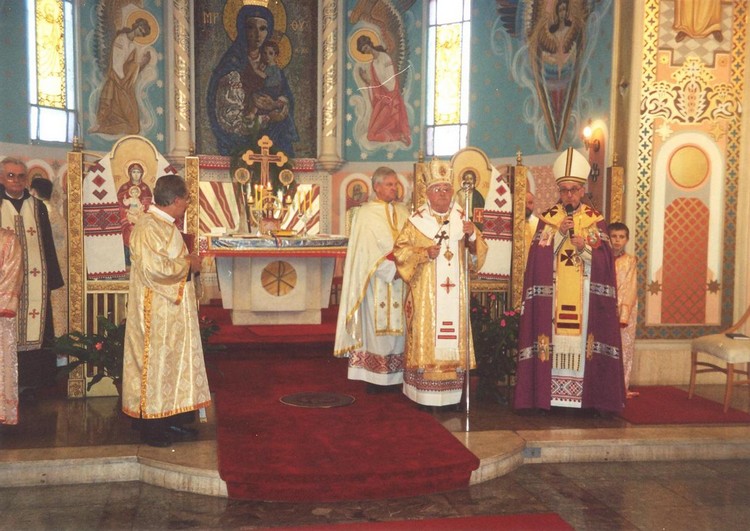
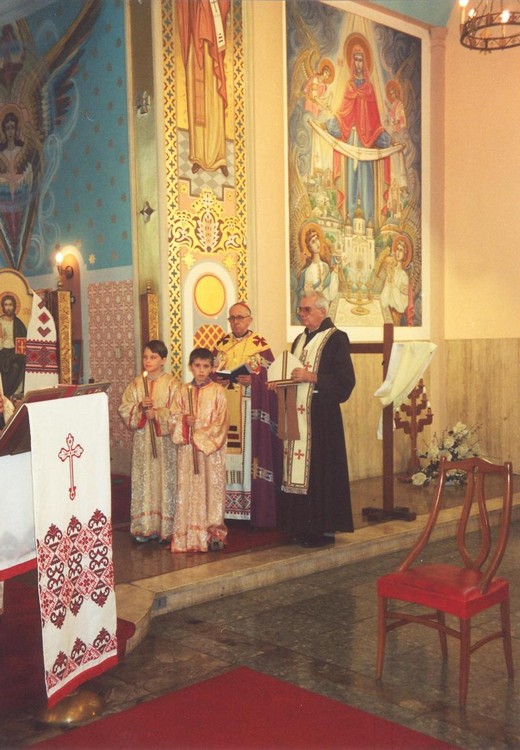
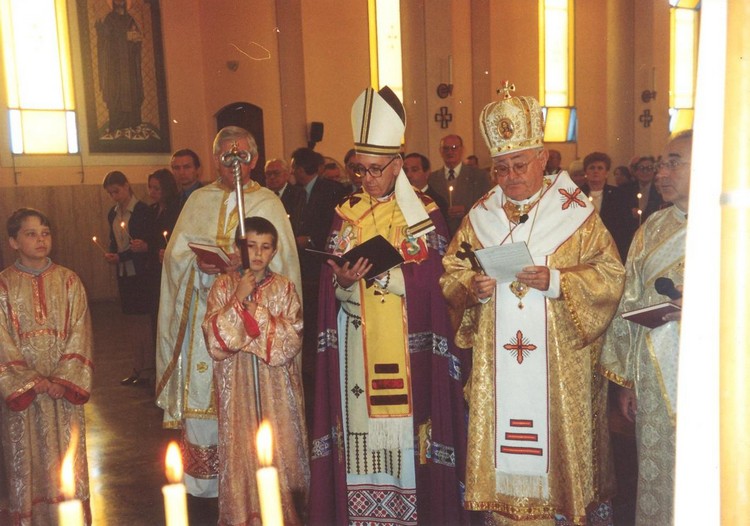
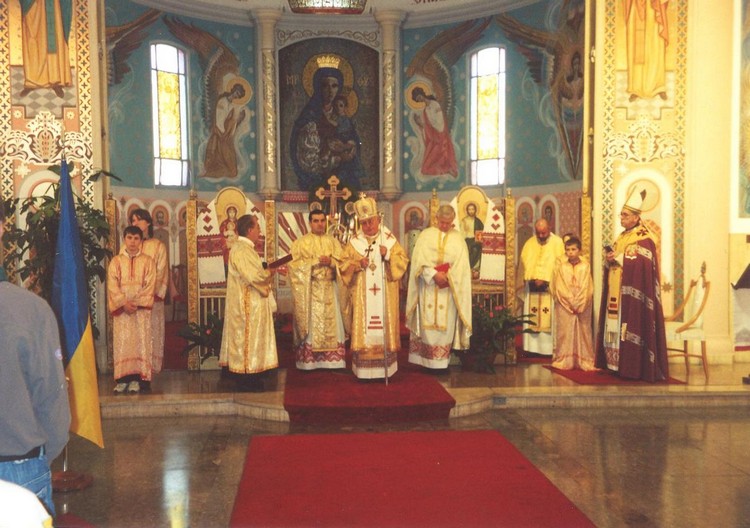
Was there no Byzantine-rite mitre? Or was he uncomfortable wearing one? I am not sure if he was concelebrating - he is not wearing some of the other episcopal liturgical vestments as well - maybe they had only one set. It looks like he is wearing a mantiya instead.
Friday, April 26, 2013
CNA: Church must evangelize humbly, Pope Francis reflects
In humility and in charity... the homily was addressed to "members of the Secretariat of the Synod of Bishops at Casa Santa Marta," and not to lay people in general.
"Also present at the Mass were Archbishop Nikola Eterovic, Secretary General of the Synod of Bishops, and police from the Vatican Gendarmerie, Vatican Radio reported."
Zenit: Pope Francis: Prepare Your Hearts For the Heavenly Homeland
Wednesday's audience: Pope Francis: “The Church is not a bureaucratic organization, but a love story”
From earlier this week: Pope's Homily on Feast of St. George
More from Sandro Magister on the need to reform the Curia: Vatican Diary / Future curia, old project
John R. Quinn, archbishop emeritus of San Francisco, has an opinion, one which he voiced before the conclave as well: American archbishop advocates new power-sharing structures in the Catholic Church - John R. Quinn advocates the expansion of the patriarchal structure in the Catholic Church and the attribution of decision making power to the synod of bishops, to remedy excessive centralization and strengthen communion
More from Bishop Quinn:
THE CLAIMS OF THE PRIMACY AND THE COSTLY CALL TO UNITY (alt)
The Reform of the Papacy
In humility and in charity... the homily was addressed to "members of the Secretariat of the Synod of Bishops at Casa Santa Marta," and not to lay people in general.
"Also present at the Mass were Archbishop Nikola Eterovic, Secretary General of the Synod of Bishops, and police from the Vatican Gendarmerie, Vatican Radio reported."
Zenit: Pope Francis: Prepare Your Hearts For the Heavenly Homeland
Wednesday's audience: Pope Francis: “The Church is not a bureaucratic organization, but a love story”
From earlier this week: Pope's Homily on Feast of St. George
More from Sandro Magister on the need to reform the Curia: Vatican Diary / Future curia, old project
John R. Quinn, archbishop emeritus of San Francisco, has an opinion, one which he voiced before the conclave as well: American archbishop advocates new power-sharing structures in the Catholic Church - John R. Quinn advocates the expansion of the patriarchal structure in the Catholic Church and the attribution of decision making power to the synod of bishops, to remedy excessive centralization and strengthen communion
More from Bishop Quinn:
THE CLAIMS OF THE PRIMACY AND THE COSTLY CALL TO UNITY (alt)
The Reform of the Papacy
I have a post on beatitude of the blessed in heaven, but haven't had the time to finish it, even though it will be a rather short post. I've been busy trying to do other things.
Rethinking Religious Liberty by Benjamin Wiker
Why religious liberty cannot mean the right to believe whatever we want.
If the National Government is committed to enforcing secularism, then how should Catholics respond?
Also of note: Germain Grisez and Patrick Lee continue to defend the use of "brain death" to judge when a person is dead: Total Brain Death: Valid Criterion of Death
by Patrick Lee and Germain Grisez
I found this while doing a search for an argument against this, from a Thomistic pov. It appears to be such an attempt: A Thomistic understanding of human death by Jason T. Eberl (If you have the relevant subscription or institutional access, here is the article online.)
Rethinking Religious Liberty by Benjamin Wiker
Why religious liberty cannot mean the right to believe whatever we want.
If the National Government is committed to enforcing secularism, then how should Catholics respond?
Also of note: Germain Grisez and Patrick Lee continue to defend the use of "brain death" to judge when a person is dead: Total Brain Death: Valid Criterion of Death
by Patrick Lee and Germain Grisez
I found this while doing a search for an argument against this, from a Thomistic pov. It appears to be such an attempt: A Thomistic understanding of human death by Jason T. Eberl (If you have the relevant subscription or institutional access, here is the article online.)
Thursday, April 25, 2013
At Christendom College: Dr. Ken Grasso to Deliver Lecture on Church and State Relations
Perhaps a version of this will be published somewhere (if it hasn't been already).
His faculty page.
Dr. Ken Grasso will deliver a lecture entitled “The Freedom of the Church and the Taming of the State: The Christian Revolution, Western Liberty & the Rise of the New Leviathan” to the students and faculty of Christendom College at 4 p.m. in St. Kilian’s Café on April 29. This lecture will be part of the college’s Faith & Reason Lecture Series.
Perhaps a version of this will be published somewhere (if it hasn't been already).
His faculty page.
"Pascha"
Pascha: The New Passover
V. Rev. Fr. Anastasios Gounaris
Dean, Greek Orthodox Archdiocesan Cathedral of the Holy Trinity, New York City
V. Rev. Fr. Anastasios Gounaris
Dean, Greek Orthodox Archdiocesan Cathedral of the Holy Trinity, New York City
Wednesday, April 24, 2013
Fr. Z: Theologian responds to Archbp. Marini’s less than helpful comment on same-sex unions
CNA interviewed Fr. Rhonheimer --
“Conferring legal equality to same-sex unions signifies to publicly establish, in the law system, the principle of dissociation of sexuality and procreation,” he explained in an April 22 telephone interview with CNA.
Archbishop Piero Marini explicitly denied that same-sex unions should be equal to marriage between a man and a woman. So the CNA article is a bit misleading, as it sets up a strawman argument... the question is, rather, whether same-sex civil unions should be recognized as such at all. (Or whether one can be conferred certain rights, without any sort of legal recognition of a sexual relationship. While liberals or individualists might think so, one can ask whether the rights of others, e.g. family members, are prior to that of someone who is not related by blood, a friend, or a same-sex "lover.")
CNA interviewed Fr. Rhonheimer --
“Conferring legal equality to same-sex unions signifies to publicly establish, in the law system, the principle of dissociation of sexuality and procreation,” he explained in an April 22 telephone interview with CNA.
Archbishop Piero Marini explicitly denied that same-sex unions should be equal to marriage between a man and a woman. So the CNA article is a bit misleading, as it sets up a strawman argument... the question is, rather, whether same-sex civil unions should be recognized as such at all. (Or whether one can be conferred certain rights, without any sort of legal recognition of a sexual relationship. While liberals or individualists might think so, one can ask whether the rights of others, e.g. family members, are prior to that of someone who is not related by blood, a friend, or a same-sex "lover.")
Tuesday, April 23, 2013
Monday, April 22, 2013
To Promote In Order to Remove
It may "save face," but maybe it isn't such a wise idea. Then again, maybe turning the papacy into a bureaucracy isn't a wise idea, either.
Fr. Z: Former papal MC comes out for same-sex unions, trashes Benedict XVI’s pontificate
Fr. Z: Former papal MC comes out for same-sex unions, trashes Benedict XVI’s pontificate
Sunday, April 21, 2013
Holy Mass on the occasion of Priestly Ordinations
From yesterday...
Re: the use of Latin - if the bishop of the Church of Rome, which should pride Latin above all other churches, does not think that the continued use of Latin in the liturgy is worthwhile, then why should anyone else care about it?
Re: the use of Latin - if the bishop of the Church of Rome, which should pride Latin above all other churches, does not think that the continued use of Latin in the liturgy is worthwhile, then why should anyone else care about it?
Saturday, April 20, 2013
Friday, April 19, 2013
On the bishop's staff (in the Byzantine rite): Orthodox Arts Journal (via Byzantine, Texas - the explanation goes beyond Moses.
Thursday, April 18, 2013
Reforming the College of Cardinals?
George Weigel has some recommendations (via Vatican Insider)
No radical suggestions here (with respect to re-imagining the exercise of the papacy).
No radical suggestions here (with respect to re-imagining the exercise of the papacy).
John Tavis: Pope Francis on the risk of a 'babysitter' church
Pope Francis: to evangelize baptism is enough
More:
Francis: We Must Submit to the Holy Spirit
Francis and Vatican II: “There's no turning back”
The Unprecedented "Presumption" of Changing the World
Vatican Diary / Collegiality yes, democracy no
Pope Francis: to evangelize baptism is enough
More:
Francis: We Must Submit to the Holy Spirit
Francis and Vatican II: “There's no turning back”
The Unprecedented "Presumption" of Changing the World
Vatican Diary / Collegiality yes, democracy no
Wednesday, April 17, 2013
Tuesday, April 16, 2013
Thomistica.net: CUA Press to Distribute Sapientia Press of Ave Maria University's Books
Ignatius Press had been the distributor; fiscal or sound business reasons for this change (not renewing the contract?) or is this another consequence of the falling-out between AMU and Fr. Fessio?
Ignatius Press had been the distributor; fiscal or sound business reasons for this change (not renewing the contract?) or is this another consequence of the falling-out between AMU and Fr. Fessio?
Fr. Schmemann on Liturgical Reform
Fr. Alexander Schmemann was familiar with the work of Fr. Bouyer. (Did they ever meet in person?) Did he agree with Fr. Bouyer on the principles of liturgical reform? He did write a review of Liturgical Piety. It is apparent that Fr. Schmemann did think that some reform was needed. In which of his books does he discuss this? There are the following essays online:
On the question of liturgical practices
Problems of Orthodoxy in America: The Liturgical Problem
Not all Orthodox have been accepting of his work.
Related:
On the Importance of Attending the Evening Divine Services by Protopresbyter Valery Lukianov
On the question of liturgical practices
Problems of Orthodoxy in America: The Liturgical Problem
Not all Orthodox have been accepting of his work.
Related:
On the Importance of Attending the Evening Divine Services by Protopresbyter Valery Lukianov
Monday, April 15, 2013
Hesed/Misericordia
Shortly after Benedict XVI became pope, Eamon Duffy gave a lecture at BC speculating on the direction of his pontificate regarding liturgical reform, and iirc, he guessed that the feast of the Divine Mercy (the second Sunday of Easter) would not be kept on the universal calendar long. It was added because of the devotion of John Paul II. (After all, Sr. Faustina was Polish.) Given the conservatism of Benedict XVI the feast has been maintained, and [Pope] Francis has not removed the feast, either.
Is the devotion of the Divine Mercy itself superfluous? Is the second Sunday of Easter the appropriate place for the observance of the devotion? Are there not other comparable Western/Latin devotions that already existed? I think Dr. Duffy mentioned the Sacred Heart of Jesus precisely in connection with the Divine Mercy.
The Difference is in the Emphasis
The Sacred Heart of Jesus and The Divine Mercy, Part Five
By Dr. Robert Stackpole, STD
(more in the website's library)
A Monk Reflects on Divine Mercy and the Sacred Heart of Jesus
Given the image that accompanies the devotion, though, is the Divine Mercy any more Trinitarian than the Sacred Heart, as Fr. Ignacy Rozycki claims (see Dr. Stackpole's essay)? Fr. Sopocko argues that the devotion to the Divine Mercy is a development of the devotion to the Sacred Heart.
I was also thinking of the comments by Fr. Louis Bouyer on the devotion to the Sacred Heart in his Liturgical Piety (p. 249, 251 ). Bouyer's criticisms of paralitugies replacing the liturgy of the Church is understandable, given his concern to ground Christian spirituality within the liturgy. There has been a multiplication of devotions in the Latin West,
each focused on a particular aspect of God or His Saving Action in history. Bouyer writes that they have served as a necessary help for a people who were not formed in an authentic liturgical spirituality. The answer to the question of whether some may obscure the spirituality of the Roman-rite liturgy would be yes, for Bouyer. (Is there anything comparable in Eastern Orthodoxy, in terms of the number of devotions?) What would Fr. Bouyer have made of the devotion to the Divine Mercy? Another modern devotion that potentially misleads? Or a beneficial corrective?
We should reflect upon the great mercy and love of God, of Christ - the Jesus Prayer of the East in many ways resonates with both of these Western devotions, but is in a way more "simpler" - with respect to the imagination, at least. It is focused less on a sensible reality (as given by the images propagated with both Western devotions) and more on the person of Christ - and more tied to the objective Mystery, as Bouyer might write?
Related:
Pius XII, Haurietis Aquas - On Devotion to the Sacred Heart
Benedict XVI, Papal Letter on 50th Anniversary of "Haurietis Aquas"
From 2006: Benedict XVI's mission to restore the glories of the Catholic liturgy
The legacy of Pope Benedict XVI
From NCR, Eamon Duffy on Liturgical Reform and Pope Benedict - Where truth and beauty meet: Understanding Benedict - 7
Is the devotion of the Divine Mercy itself superfluous? Is the second Sunday of Easter the appropriate place for the observance of the devotion? Are there not other comparable Western/Latin devotions that already existed? I think Dr. Duffy mentioned the Sacred Heart of Jesus precisely in connection with the Divine Mercy.
The Difference is in the Emphasis
The Sacred Heart of Jesus and The Divine Mercy, Part Five
By Dr. Robert Stackpole, STD
(more in the website's library)
A Monk Reflects on Divine Mercy and the Sacred Heart of Jesus
Given the image that accompanies the devotion, though, is the Divine Mercy any more Trinitarian than the Sacred Heart, as Fr. Ignacy Rozycki claims (see Dr. Stackpole's essay)? Fr. Sopocko argues that the devotion to the Divine Mercy is a development of the devotion to the Sacred Heart.
I was also thinking of the comments by Fr. Louis Bouyer on the devotion to the Sacred Heart in his Liturgical Piety (p. 249, 251 ). Bouyer's criticisms of paralitugies replacing the liturgy of the Church is understandable, given his concern to ground Christian spirituality within the liturgy. There has been a multiplication of devotions in the Latin West,
each focused on a particular aspect of God or His Saving Action in history. Bouyer writes that they have served as a necessary help for a people who were not formed in an authentic liturgical spirituality. The answer to the question of whether some may obscure the spirituality of the Roman-rite liturgy would be yes, for Bouyer. (Is there anything comparable in Eastern Orthodoxy, in terms of the number of devotions?) What would Fr. Bouyer have made of the devotion to the Divine Mercy? Another modern devotion that potentially misleads? Or a beneficial corrective?
We should reflect upon the great mercy and love of God, of Christ - the Jesus Prayer of the East in many ways resonates with both of these Western devotions, but is in a way more "simpler" - with respect to the imagination, at least. It is focused less on a sensible reality (as given by the images propagated with both Western devotions) and more on the person of Christ - and more tied to the objective Mystery, as Bouyer might write?
Related:
Pius XII, Haurietis Aquas - On Devotion to the Sacred Heart
Benedict XVI, Papal Letter on 50th Anniversary of "Haurietis Aquas"
From 2006: Benedict XVI's mission to restore the glories of the Catholic liturgy
The legacy of Pope Benedict XVI
From NCR, Eamon Duffy on Liturgical Reform and Pope Benedict - Where truth and beauty meet: Understanding Benedict - 7
Sunday, April 14, 2013
Zenit: Francis' Homily at Cathedral of St. John Lateran
"We hear many offers from the world around us; but let us take up God's offer instead: his is a caress of love"
"We hear many offers from the world around us; but let us take up God's offer instead: his is a caress of love"
Kingdom of God
Video: Robert Louis Wilken on The First Thousand Years
Robert Louis Wilken Discusses 'The First Thousand Years' at 2013 VaBook
Impertinent Questions with Robert Louis Wilken by Meredith Hindley
Impertinent Questions with Robert Louis Wilken by Meredith Hindley
Saturday, April 13, 2013
Little did I know when I prepared the post on George Weigel's book that Fr. CS would also mention the book in his latest at Chant Café: Benedict XVI: Towards a Liturgical Theology of Liberation?
There is much packed in the essay, and I need to read it again - without accepting recent theses positing the separation of the Constantinian Church from the primitive Church, might there be a more valid thesis regarding about a Constantinian temptation - the temptation to use the secular authority in a fallen world as a model of understanding Church authority? Its effect we can see not only in the West but also in parts of the Christian East? What if it is difficult to map the trappings of human Imperium (as particularly manifested in the human leadership of the ChurcH) because the analogy between human kingdoms (or empires) and the Dominion of God and we as His Pople is very weak?
We probably should not jettison everything from the Church's past in the name of returning to a more simple, apostolic state - how do we maintain a balance between respecting what we have received (including the treasures of the past) and moving forward, unencumbered by imperial pretense? Is it accurate to say that our bishops may have succumbed to imitating some of the worst excesses of those wielding temporal power in terms of fashion and ceremonial and so on? Does there need to be some sort of clean break, with the bishops focused less on competing with the secular powers and more on building up the Kingdom of God? A reconsideration of apostolic priorities?
Maybe some Orthodox observers have praised the appearance of a more humble pope in the expectation that bishop of Rome will reconsider the claims of his office. Apparently they have not seen anything in Francis's actions or motivations that would imply a criticism of their own hierarchy as well.
There is much packed in the essay, and I need to read it again - without accepting recent theses positing the separation of the Constantinian Church from the primitive Church, might there be a more valid thesis regarding about a Constantinian temptation - the temptation to use the secular authority in a fallen world as a model of understanding Church authority? Its effect we can see not only in the West but also in parts of the Christian East? What if it is difficult to map the trappings of human Imperium (as particularly manifested in the human leadership of the ChurcH) because the analogy between human kingdoms (or empires) and the Dominion of God and we as His Pople is very weak?
We probably should not jettison everything from the Church's past in the name of returning to a more simple, apostolic state - how do we maintain a balance between respecting what we have received (including the treasures of the past) and moving forward, unencumbered by imperial pretense? Is it accurate to say that our bishops may have succumbed to imitating some of the worst excesses of those wielding temporal power in terms of fashion and ceremonial and so on? Does there need to be some sort of clean break, with the bishops focused less on competing with the secular powers and more on building up the Kingdom of God? A reconsideration of apostolic priorities?
Maybe some Orthodox observers have praised the appearance of a more humble pope in the expectation that bishop of Rome will reconsider the claims of his office. Apparently they have not seen anything in Francis's actions or motivations that would imply a criticism of their own hierarchy as well.
Evangelical Catholicism by George Weigel
I am curious about this one as well - what does the noted theocon have to say about the state of the American Church? But I don't think I'd pay full price to learn the answer.
The Rise of Evangelical Catholicism
Evangelical Catholicism, Pope Francis, and the 21st-Century Church
George Weigel: New Evangelization Is Future of Catholicism
Evangelical Catholicism: George Weigel's Vision of Catholic Reform
Pope Francis Is an Evangelical Catholic, Catholic Theologian Says
Catholics on the Evangelical Trail
Catholic Review
Hugh Hewitt
The Economist
National Catholic Register review
Kirkus Reviews
Ethics & Public Policy Center
Michael Novak
Weigel made a stop at a certain church in Boston in January.
World Over, February:
And a negative review, of course, at Real Clear Religion. And then there's NCR.
Something on Radical Orthodoxy: Thinking Trivially About Radical Orthodoxy
The Rise of Evangelical Catholicism
Evangelical Catholicism, Pope Francis, and the 21st-Century Church
George Weigel: New Evangelization Is Future of Catholicism
Evangelical Catholicism: George Weigel's Vision of Catholic Reform
Pope Francis Is an Evangelical Catholic, Catholic Theologian Says
Catholics on the Evangelical Trail
Catholic Review
Hugh Hewitt
The Economist
National Catholic Register review
Kirkus Reviews
Ethics & Public Policy Center
Michael Novak
Weigel made a stop at a certain church in Boston in January.
World Over, February:
And a negative review, of course, at Real Clear Religion. And then there's NCR.
Something on Radical Orthodoxy: Thinking Trivially About Radical Orthodoxy
Friday, April 12, 2013
Latin/English Rule of St. Basil
The Rule of St Basil in Latin and English: A Revised Critical Edition, trans. Anna Silvas (Liturgical Press, May 2013)
(via Adam DeVille)
(via Adam DeVille)
Ralph Martin on the New Evangelization
Some controversy about the disappearance of a review of his book - Rorate Caeli: Forbidden text and Catholic samizdat: "Vatican II and the 'Bad News' of the Gospel"
David Paul Deavel's review of Ralph Martin's Will Many Be Saved? What Vatican II Actually Teaches and Its Implications for the New Evangelization
Can we talk about healing, divine "medicine" and salvation while acknowledging the evil of sin and the possibility of hell, the consequence of rejecting God? A "balance" needs to be maintained, but only when we admit that we are sick and in need of the Divine Physician can anything be done about it. If we do not acknowledge sin and its effects, how can we shake people out of their mediocrity and sloth?
Related:
Ralph Martin Reflects on the Mission of the New Evangelization
Articles on New Evangelization by Ralph Martin
What is New About the New Evangelization and Who Needs It? by Deacon Keith Fournier
David Paul Deavel's review of Ralph Martin's Will Many Be Saved? What Vatican II Actually Teaches and Its Implications for the New Evangelization
Can we talk about healing, divine "medicine" and salvation while acknowledging the evil of sin and the possibility of hell, the consequence of rejecting God? A "balance" needs to be maintained, but only when we admit that we are sick and in need of the Divine Physician can anything be done about it. If we do not acknowledge sin and its effects, how can we shake people out of their mediocrity and sloth?
Related:
Ralph Martin Reflects on the Mission of the New Evangelization
Articles on New Evangelization by Ralph Martin
What is New About the New Evangelization and Who Needs It? by Deacon Keith Fournier
I had seen his name on the Byzantine Catholic forum while reading some old threads, and recently I did a search on his name to see if
there was anything written by him; I did not know that he had passed away recently. (Well, fairly recently...)
More on +Archimandrite Serge Keleher
there was anything written by him; I did not know that he had passed away recently. (Well, fairly recently...)
More on +Archimandrite Serge Keleher
Thursday, April 11, 2013
Putting the "Equal" Back in Justice
Dr. Helen brings to our attention a new book by Thane Rosenbaum, Payback: The Case for Revenge. The part of the book description that caught my eye:
University of Chicago Press
Aquinas does list a virtue whose name is translated as "vengeance."
I don't expect liberals and others with mushy-headed ideas about "love" to accept Rosenbaum's case.
The Chronicle of Higher Education
Where ‘An Eye for An Eye’ Should be the Letter of the Law
Revenge, Rosenbaum argues, is not the problem. It is, in fact, a perfectly healthy emotion. Instead, the problem is the inadequacy of lawful outlets through which to express it. He mounts a case for legal systems to punish the guilty commensurate with their crimes as part of a societal moral duty to satisfy the needs of victims to feel avenged. Indeed, the legal system would better serve the public if it gave victims the sense that vengeance was being done on their behalf. Drawing on a wide range of support, from recent studies in behavioral psychology and neuroeconomics, to stories of vengeance and justice denied, to revenge practices from around the world, to the way in which revenge tales have permeated popular culture—including Hamlet, The Godfather, and Braveheart—Rosenbaum demonstrates that vengeance needs to be more openly and honestly discussed and lawfully practiced.
University of Chicago Press
Aquinas does list a virtue whose name is translated as "vengeance."
I don't expect liberals and others with mushy-headed ideas about "love" to accept Rosenbaum's case.
The Chronicle of Higher Education
Where ‘An Eye for An Eye’ Should be the Letter of the Law
Rite vs. Particular Church
I don't have time to get links (see the Vatican II Document on the Eastern churches), but it is the case that the language used to refer to churches of rites other than Roman has changed in the past 50 years. Referring to different "rites" of the Church was inadequate, since the rite is used by the local Church and not the highest reality. But it is not evident to me that replacing "rite" with "particular Churches" is an improvement. This may be a useful sociological designation replacing the earlier category or classification (by rites), but does it reflect an actual distinct ecclesiological reality? Is it "theologically correct"? It seems to me that one can refer to a group of local churches which are linked by liturgical rite and culture and ethnic composition, as well as having a common structure of governance, but to refer to this group as constituting a "Church" in some sense, while being part of the Church universal, may be going too far. Do theologians who adhere to "communion ecclesiology," whether Catholic or Orthodox, have the same difficulty?
Edit. Even ifa "Particular Church" were to be equivalent to a "National Church" (tied to a nation or people, rather than a state, though a nation may have its own state), its unity would be grounded in natural and cultural (ethnic, civic, and liturgical) identities and by the decision of the bishops to be united into a certain collective, but this unity would not be the same as the unity proper to the Church Universal.
Edit. Even ifa "Particular Church" were to be equivalent to a "National Church" (tied to a nation or people, rather than a state, though a nation may have its own state), its unity would be grounded in natural and cultural (ethnic, civic, and liturgical) identities and by the decision of the bishops to be united into a certain collective, but this unity would not be the same as the unity proper to the Church Universal.
Wednesday, April 10, 2013
Pope Francis and Museum-Piece Catholicism (via MoJ)
A tiresome example of the problems besetting Catholic academia and the American Church.
A tiresome example of the problems besetting Catholic academia and the American Church.
The Liturgy Wars Continue...
The arguing between "theocons" and "traditionalists" continue, and I am getting weary of it. (Never mind that both groups are ultramontanes, even if with some small differences.)
Anyway... The poor, impoverished materially or spiritually, have a "right" to a beautiful liturgy that enables them to elevate their souls and go beyond this vale of tears. The Church's liturgy is a better representation of the corporate nature of worship and communion with the divine that is heaven than solitary, private prayer. (Even if subjectively, the latter for those who are advanced in holiness may better approximate heaven, due to the infused gifts by God.) Something from 2006:
«Liturgy and the poor, the treasures of the Church»
An interview with Archbishop Malcolm Ranjith chosen by Pope Benedict XVI as Secretary of the Congregation for Divine Worship and the Discipline of the Sacraments
Interview with Malcolm Ranjith by Gianni Cardinale
Anyway... The poor, impoverished materially or spiritually, have a "right" to a beautiful liturgy that enables them to elevate their souls and go beyond this vale of tears. The Church's liturgy is a better representation of the corporate nature of worship and communion with the divine that is heaven than solitary, private prayer. (Even if subjectively, the latter for those who are advanced in holiness may better approximate heaven, due to the infused gifts by God.) Something from 2006:
«Liturgy and the poor, the treasures of the Church»
An interview with Archbishop Malcolm Ranjith chosen by Pope Benedict XVI as Secretary of the Congregation for Divine Worship and the Discipline of the Sacraments
Interview with Malcolm Ranjith by Gianni Cardinale
Tuesday, April 09, 2013
The Three Ways of the Spiritual Life, Orthodox Version?
The Way of Purification, Illumination and Theosis By Metropolitan Daniel of Kaisariani, Vyronas and Hymettus
Garrigou-Lagrange
Garrigou-Lagrange
The Stewardship of Creation
While reading about energy and sustainability this weekend, I briefly considered one Christian response -
Sins against environment are serious because they harm the common good and are counter to reason in other ways, but
even these sins pale in comparison to the explicit rejection of God? Even though these sins may involve great injustice and cause the suffering of many, they can still be forgiven -- Christians must keep this perspective even if they share the same concern as non-Christian environmentalists, who may be inclined toward fatalism or misanthropy, particularly when they make prognostications and talk about solutions (such as population reduction). (With the supposed affinity between Pope Francis and Ecumenical Patriarch Bartholomew in mind... I think they do give a proper Christian understanding of the stewardship of creation.)
Sins against environment are serious because they harm the common good and are counter to reason in other ways, but
even these sins pale in comparison to the explicit rejection of God? Even though these sins may involve great injustice and cause the suffering of many, they can still be forgiven -- Christians must keep this perspective even if they share the same concern as non-Christian environmentalists, who may be inclined toward fatalism or misanthropy, particularly when they make prognostications and talk about solutions (such as population reduction). (With the supposed affinity between Pope Francis and Ecumenical Patriarch Bartholomew in mind... I think they do give a proper Christian understanding of the stewardship of creation.)
Monday, April 08, 2013
A New Book from Russell Shaw
I am curious as to how Russell Shaw understands American identity and relates it to the assimilation of Catholic immigrants in his new book American Church: The Remarkable Rise, Meteoric Fall, and Uncertain Future of Catholicism in America, but I don't think there will be any surprises.
New: "American Church: The Remarkable Rise, Meteoric Fall, and Uncertain Future of Catholicism in America"
Is the problem with American Catholics - America?
New: "American Church: The Remarkable Rise, Meteoric Fall, and Uncertain Future of Catholicism in America"
Is the problem with American Catholics - America?
Sunday, April 07, 2013
Pope Francis Takes Possession of St. John Lateran
Pope celebrates 'Installation Mass' as Rome's new Bishop
Wednesday, April 03, 2013
The Ascetic Podvig of Living in the World by Metropolitan Laurus of Eastern America and New York (+2008)
Monday, April 01, 2013
The Catholic Center at NYU
Dominican Friars, Province of St. Joseph
YT
alt
I thought about dropping by for a visit when I was last in NYC, but I didn't have time to do so.
YT
alt
I thought about dropping by for a visit when I was last in NYC, but I didn't have time to do so.
Subscribe to:
Posts (Atom)